
Last updated: 9 September 2026
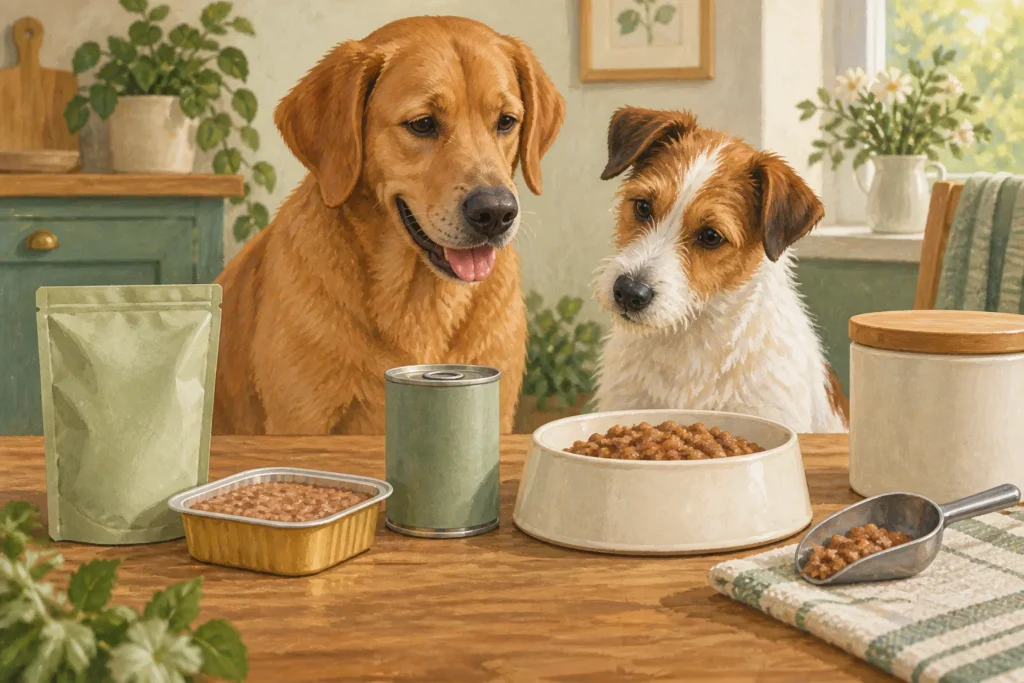
The best wet dog food pack format is the one that holds a suitable recipe in an amount you can serve and store correctly. Pouches can be convenient to pack, trays can make contents easy to portion, and tins can suit larger quantities. None of those formats tells you whether the food is nutritionally appropriate.
Choose the recipe and its role in the diet first. Then compare the pack size, daily amount, instructions after opening and actual cost of the food you will use. A large multipack is only economical when the individual units suit your household.
Table of Contents
Separate the recipe from the container
Check whether the food is complete or complementary, and whether it is intended for your dog’s life stage. Complete and complementary foods can appear in very similar trays or pouches. Packaging shape and meat percentage cannot replace the statement on the label.
Forthglade illustrates this clearly: its range includes complete wet meals, while Just 90% is complementary. Two trays from the same brand can therefore have different roles in a feeding plan. Use the exact product information rather than assuming every tray supplies a full meal.
The broader distinction between wet and dry food is covered in UK Pet Food’s food-types guidance. Within wet food, your format choice is largely a practical comparison of serving, storage and waste, once the dietary requirements are met.
How the three formats compare in daily use
| Format | Potential convenience | Check before buying |
|---|---|---|
| Pouch | Easy to pack individual unopened units | How completely it empties and how leftovers must be stored |
| Tray | Wide opening can help with weighing portions | Seal, fridge footprint and whether a separate cover is needed |
| Tin | Can offer useful larger quantities | Opening method, safe lid handling and suitable leftover storage |
These are practical possibilities, not rules for every product. Some pouches contain several servings; some trays are designed for small portions. Check net weight instead of treating “one pack” as a standard meal unit.
Consider who serves the meals. A ring-pull that one person opens easily may be difficult for someone with limited hand strength. A pack that empties neatly on a countertop may be less convenient while travelling. Try a small quantity before ordering a large supply if handling is a concern.
Match the opened pack to the feeding schedule
Compare the pack weight with the amount you actually serve each day. In an illustrative example, a dog receiving 150g of a particular wet food daily would take nearly three days to finish a 400g pack. Whether that works depends on the product’s storage instructions; the arithmetic does not establish a safe storage period.
Forthglade currently advises refrigerating opened wet food and using it within two days. That is a brand-specific instruction, not a universal rule for every tin or pouch. Follow the label of the food you buy, including any shorter deadline or different storage method.
Write the opening date on a reusable note or keep a simple fridge label. Position the pack so another family member can see it before opening a fresh one. Keep batch and best-before details available if the food is moved into another container.
Compare useful cost rather than pack count
Divide the total price by the total net weight to get a comparable price per kilogram. Then calculate the cost of your dog’s daily quantity. Include waste if the opened pack cannot be finished within its instructions.
For example, an illustrative £12 purchase containing 2kg costs £6 per kilogram. If only 1.5kg can actually be used and the remainder is discarded, the effective cost rises to £8 per usable kilogram. These numbers explain the method, rather than quoting a brand or suggesting a ration.
Mixed packs deserve another check. If several recipes do not suit your dog, a headline variety discount may be unhelpful. Confirm the exact recipes and quantities inside the box, especially when shopping results combine several bundle options under one listing.
Accessories should solve a real storage problem
This article contains Amazon affiliate links. As an Amazon Associate, we earn from qualifying purchases.
Use suitable food-storage equipment that you already own where possible. Find small food-storage containers for wet food on Amazon UK if you need a separate container for opened wet food. Check its intended food use, capacity, closure and washing directions. A container does not extend the manufacturer’s permitted storage time.
If using a tin lid, match its fit to the actual can and follow the food’s storage advice. Keep removed metal lids and empty packaging away from the dog. Do not let them lick sharp edges or chew a pouch clean after serving.
Choose for home and travel separately
An unopened format that works well in a kitchen may be awkward on a day away. Pack only as much as you can handle according to the label, and arrange appropriate storage for anything opened. Shelf-stable before opening does not mean leftovers can stay in a warm bag.
Check the pack’s recycling instructions and your local collection scheme rather than assuming all pouches, trays or tins follow the same route. Empty and prepare packaging as directed. Our dog food guide can help with recipe selection; the final pack choice should make accurate feeding and correct storage easier every day.