
Table of Contents
As an Amazon Associate, we earn from qualifying purchases. This means we may receive a small commission at no extra cost to you when you buy through links on this page.
Introduction to Crate Training
Crate training is a hugely beneficial process for both dogs and their owners. It provides your canine companion with a safe, secure den – a space they can retreat to when feeling overwhelmed, anxious, or simply wanting some peace and quiet. For owners, it aids in housetraining, prevents destructive behaviour, and offers a safe way to transport your dog. It’s important to dispel the myth that crate training is cruel. When done correctly, using positive reinforcement techniques, it’s a positive and enriching experience for your dog. It’s about creating a haven, not a prison. The key is to never use the crate as punishment; it should always be associated with positive experiences. In 2026, with increasing awareness of canine welfare, positive reinforcement remains the gold standard for training.
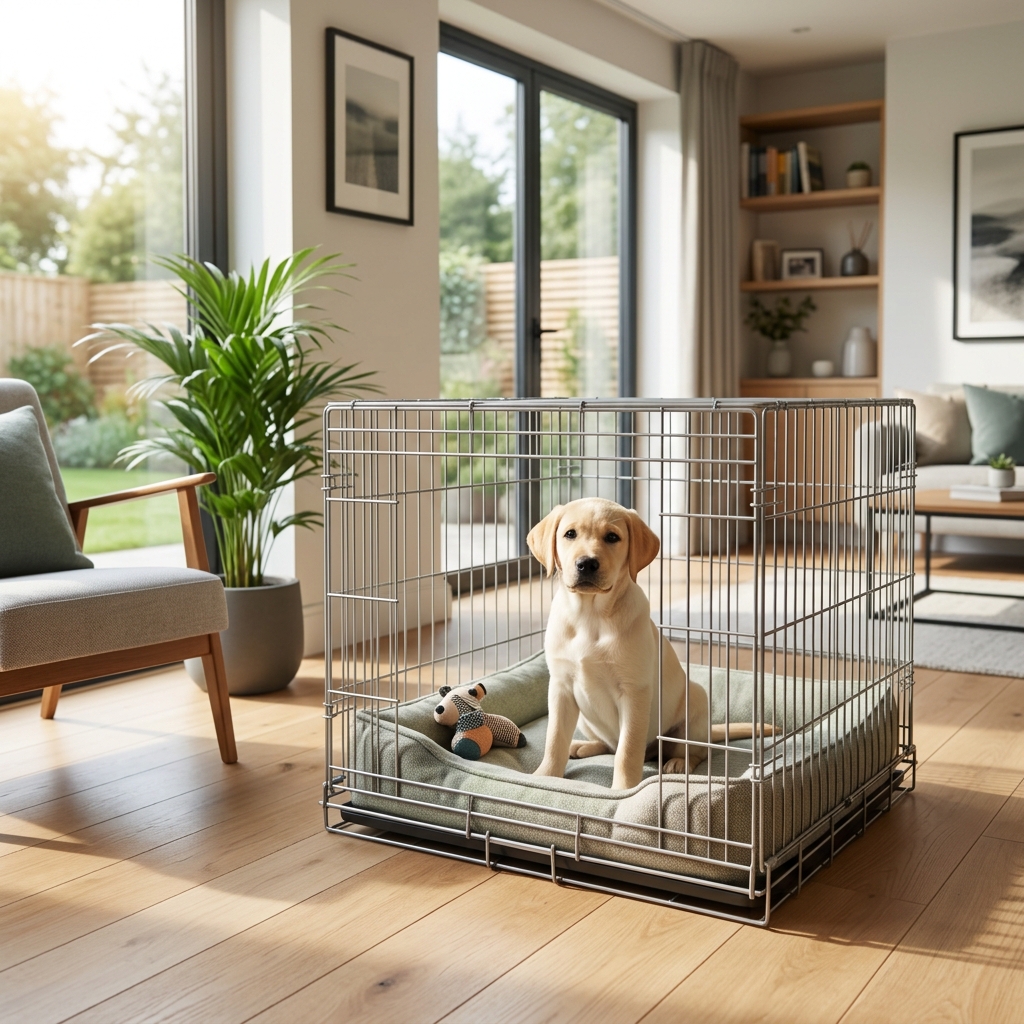
Choosing the Right Crate for Your Dog (UK Sizes)
Selecting the correct crate size is crucial. A crate that’s too large can hinder housetraining, as your dog may designate one corner as a toilet area. Too small, and it’s uncomfortable and stressful. Your dog should be able to stand up, turn around, and lie down comfortably within the crate.
Crate Types Available in the UK
Here’s a comparison of the most common crate types available in the UK:
| Crate Type | Pros | Cons | Approximate Price (GBP) |
|---|---|---|---|
| Wire Crate | Good ventilation, often foldable for storage, allows dog to see surroundings. | Can be less secure for strong chewers, may appear less den-like. | £45.99 (Amazon Basics Wire Dog Crate) |
| Plastic Crate (Airline/Travel Crate) | More secure, provides a den-like feel, good for travel. | Limited ventilation, can feel claustrophobic for some dogs, heavier. | £79.99 (Petmate Sky Kennel Plastic Dog Crate) |
| Soft-Sided Crate | Lightweight, portable, good for indoor use, often more aesthetically pleasing. | Not suitable for strong chewers, less durable, provides less security. | £35 – £80 (Depending on size and brand) |
UK Sizing Guide (Approximate)
These are approximate guidelines. Always measure your dog to ensure a proper fit.
- Chihuahua/Yorkshire Terrier: 45cm – 60cm
- Jack Russell Terrier: 60cm – 75cm
- Cocker Spaniel: 75cm – 90cm
- Border Collie: 90cm – 105cm
- Labrador Retriever: 90cm – 120cm
- German Shepherd: 105cm – 120cm
- Great Dane: 120cm+
Puppy vs. Adult Dog Crates
For puppies, consider a crate with a divider panel. This allows you to adjust the size as they grow, preventing them from using part of the crate as a toilet. Adult dogs typically need a larger, fixed-size crate.
Essential Supplies for Crate Training
Beyond the crate itself, several supplies will make the training process smoother:
- Comfortable Bedding: A soft bed or blanket makes the crate more inviting. (£29.99 – ProSelect Crate Pad)
- Water Bowl: A spill-proof water bowl is essential, especially for longer periods in the crate.
- Toys: Provide engaging toys to keep your dog entertained. A Kong Classic (£12.49) stuffed with treats is a popular choice.
- Treats: High-value treats are crucial for positive reinforcement.
- Blanket: An Ancol Timeless Comfort Blanket (£19.99) can add to the feeling of security.
Step-by-Step Crate Training Guide
This is a week-by-week guide. Adjust the pace based on your dog’s individual progress.
Week 1: Introduction
- Place the crate in a common area, leaving the door open.
- Toss treats inside to encourage exploration.
- Feed your dog meals near the crate, gradually moving the bowl closer to the entrance.
Week 2: Entering the Crate
- Start feeding meals *inside* the crate with the door open.
- Encourage your dog to enter and eat comfortably.
- Gradually close the door for short periods (a few seconds), increasing the duration as your dog becomes relaxed.
Week 3: Increasing Crate Time
- Increase the time your dog spends in the crate with the door closed, rewarding calm behaviour.
- Start with short periods (5-10 minutes) and gradually increase them.
- Give your dog a long-lasting chew toy inside the crate.
Week 4: Overnight Stays
- Once your dog is comfortable spending several hours in the crate during the day, you can start having them sleep in it overnight.
- Place the crate in your bedroom initially to provide reassurance.
- Ensure your dog has eliminated before bedtime.
Troubleshooting Common Crate Training Problems
Whining and barking are common. Ignore the behaviour *unless* you suspect your dog needs to eliminate. If they need to go outside, take them immediately and without fuss. Destructive behaviour indicates anxiety or boredom. Provide more engaging toys and ensure the crate isn’t being used as punishment. Potty accidents mean you are progressing too quickly; reduce the crate time and revisit earlier steps.
Crate Training for Puppies vs. Adult Dogs
Puppies require more frequent potty breaks and may experience more separation anxiety. Adult dogs may have pre-existing anxieties or negative associations with crates. Be patient and gentle with both, but tailor the pace to their individual needs. Re-training an adult dog may require more time and effort.
Crate Training and Separation Anxiety
Crate training can *help* manage separation anxiety by providing a safe space. However, it can also *exacerbate* it if not done correctly. Start with very short separations and gradually increase the duration. Ensure your dog has plenty of enrichment and exercise. If your dog displays severe signs of separation anxiety (excessive howling, destructive behaviour, self-harm), consult a UK-based certified dog behaviourist.
Maintaining Crate Training Long-Term
Don’t stop using the crate once training is complete. Continue to offer it as a safe space. Incorporate it into your daily routine – for example, use it during meal times or when you are away from home. Avoid using the crate as a punishment, as this will undo all your hard work. A PetSafe Staywell Deluxe Pet Door (£65.0) can be used strategically to give your dog access to an outdoor area.
FAQs About Crate Training in the UK
Q: Is it legal to leave my dog crated for extended periods in the UK?
There isn’t specific legislation in the UK solely governing crate use. However, the Animal Welfare Act 2006 states that owners have a duty to provide for their pet’s welfare needs, including the need to be able to exhibit normal behaviour. Leaving a dog crated for excessively long periods, impacting their physical and mental wellbeing, could be considered a breach of this act.
Q: What if my dog refuses to go near the crate?
Start by making the crate more appealing. Place treats and toys inside. Feed meals near the crate. Don’t force your dog to enter; let them explore at their own pace.
Q: How long can I realistically leave my dog in a crate each day?
Adult dogs can typically tolerate being crated for 4-6 hours during the day, provided they have had adequate exercise and toilet breaks. Puppies need more frequent breaks. Never leave a dog crated for longer than 8 hours.
Q: My dog is whining in the crate. Should I ignore it?
Initially, determine *why* your dog is whining. If they need to toilet, address that immediately. If it’s attention-seeking, ignore the whining until it stops, then reward quiet behaviour. Avoid reinforcing the whining by giving attention during it.
Q: Can crate training help with house training?
Yes, absolutely. Dogs naturally avoid soiling their sleeping area. By crate training, you’re reinforcing this natural instinct, which aids in house training. However, consistency and immediate reinforcement are still vital.