
Are you worried about your dog gulping down their food too quickly? A slow feeder bowl might be the answer. This comprehensive guide will explore everything you need to know about slow feeder dog bowls in the UK, from the benefits to choosing the right one for your furry friend. We’ll cover everything you need in 2026, with up-to-date product information and advice.
As an Amazon Associate, we earn from qualifying purchases. This means we may receive a small commission at no extra cost to you when you buy through links on this page.
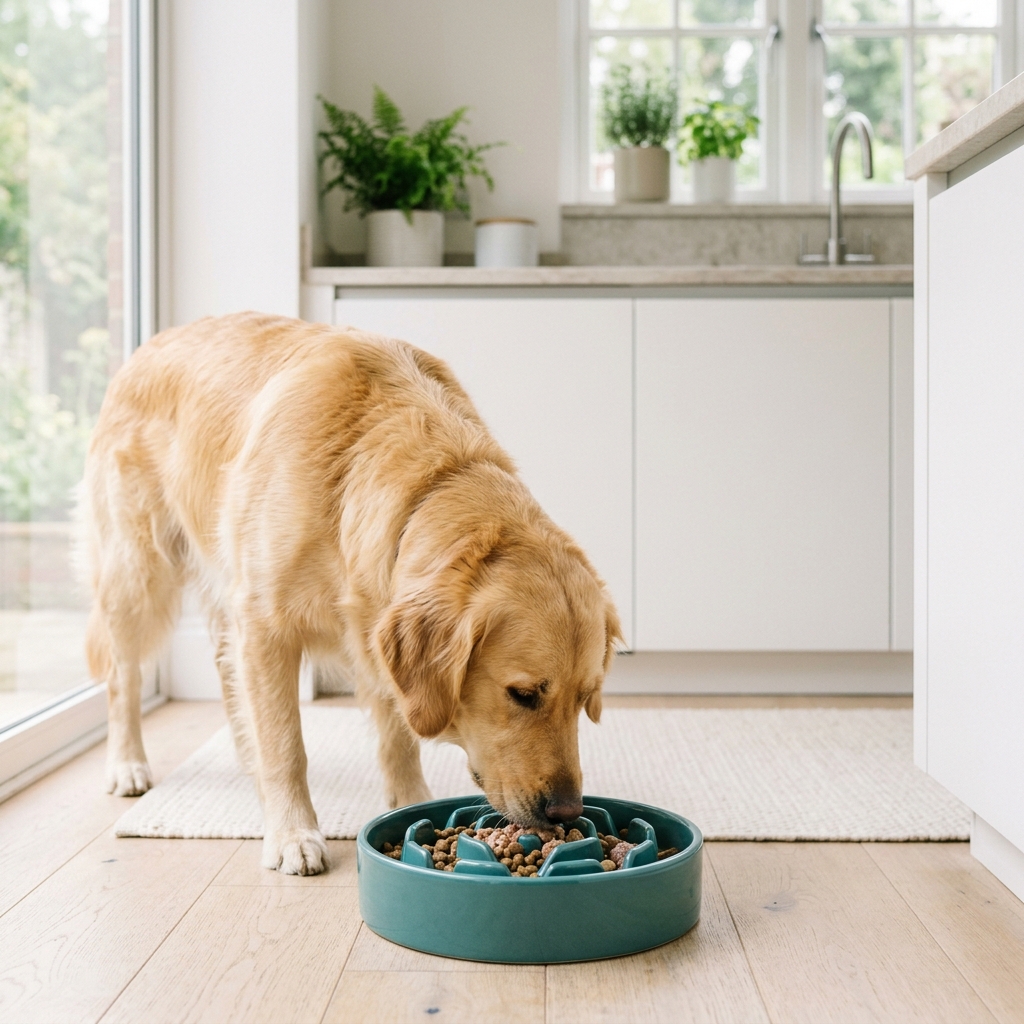
Table of Contents
What is a Slow Feeder Dog Bowl?
A slow feeder dog bowl is designed with obstacles and features that make your dog work harder to access their food. Instead of a simple, open bowl, slow feeders incorporate mazes, spirals, bumps, or raised obstacles that force your dog to eat at a slower pace. This simple change can have a huge impact on their health and wellbeing.
Fast eating can lead to several health problems, notably bloat (gastric dilatation-volvulus or GDV), a life-threatening condition where the stomach fills with gas and can twist. Other common issues include vomiting, indigestion, and even choking. Slowing down meal times gives your dog’s stomach time to prepare and reduces the risk of these complications.
There are several different designs available, each offering a unique challenge. These include maze bowls, spiral bowls, and interactive puzzle bowls, all designed to slow eating and provide mental stimulation.
Why Does My Dog Need a Slow Feeder Bowl?
The benefits of a slow feeder bowl extend far beyond simply preventing bloat. Here’s a detailed look at why your dog might benefit from one:
- Reducing Bloat: As mentioned, slowing down eating significantly reduces the risk of GDV, particularly in large and deep-chested breeds.
- Aiding Digestion: Eating slowly allows for better chewing and the production of saliva, which aids in the digestive process. This can lead to improved nutrient absorption and fewer digestive upsets.
- Weight Management: A slower eating pace can help your dog feel fuller for longer, potentially aiding in weight management and preventing obesity.
- Preventing Boredom: Slow feeders provide mental stimulation, turning mealtime into a more engaging activity. This can help reduce boredom and destructive behaviours.
- Encouraging Mental Stimulation: These bowls challenge your dog mentally, providing enrichment and keeping them entertained.
Signs your dog eats too quickly:
- Gulping down food without chewing
- Finishing their meal in under a minute
- Regurgitating food shortly after eating
- Excessive gas
- Restlessness before and during meal times
Types of Slow Feeder Dog Bowls Available in the UK
The UK market offers a wide variety of slow feeder bowls. Here’s a breakdown of the most common types:
Maze Bowls
These bowls feature intricate maze-like patterns that dogs must navigate to retrieve their food. They are generally suitable for most dogs and offer a moderate level of challenge.
- Pros: Relatively inexpensive, easy to clean, good for most breeds.
- Cons: Some dogs may learn to ‘cheat’ and scoop food from the sides.
Spiral Bowls
Spiral bowls have a central spiral feature that forces dogs to eat around the centre, slowing down their consumption.
- Pros: Simple design, effective at slowing down eating, relatively easy to clean.
- Cons: May not be challenging enough for very determined or intelligent dogs.
Raised Obstacle Bowls
These bowls feature raised obstacles or columns that the dog must eat around. They’re good for dogs who are prone to gulping.
- Pros: Effective for larger kibble, can prevent ‘shovelling’ of food.
- Cons: Can be more difficult to clean due to the obstacles.
Flower-Shaped Bowls
These bowls incorporate petal-like shapes that create obstacles and force the dog to eat more slowly.
- Pros: Visually appealing, relatively easy to clean.
- Cons: May not be as effective for very fast eaters.
Interactive Puzzle Bowls
These are more complex and often involve multiple puzzles or compartments that the dog must solve to access their food. These are best for mentally stimulating your dog.
- Pros: High level of mental stimulation, can keep dogs entertained for extended periods.
- Cons: More expensive, can be more difficult to clean, may require more supervision.
Materials: Choosing the Right Slow Feeder Bowl
The material of your slow feeder bowl is just as important as the design. Here’s a look at the most common options:
- Plastic (BPA-free): Lightweight, affordable, and readily available. Ensure it’s BPA-free to avoid harmful chemicals leaching into your dog’s food.
- Stainless Steel: Durable, hygienic, and easy to clean. A good option for dogs with allergies as it doesn’t harbour bacteria as easily as plastic.
- Ceramic: Heavy and stable, less likely to be pushed around. Can be aesthetically pleasing, but is more prone to chipping or breaking.
Consider your dog’s chewing habits and any allergies when choosing a material. Stainless steel is generally the most hygienic and durable option, while plastic is the most affordable.
Top 5 Slow Feeder Dog Bowls UK – 2026 Reviews
Here are our top picks for slow feeder bowls available in the UK market in 2026:
| Product Name | Price (GBP) | Star Rating | Pros | Cons | Suitability |
|---|---|---|---|---|---|
| Outward Hound Fun Feeder Slow Bowl | 19.99 | ⭐⭐⭐⭐ | Affordable, easy to clean, effective for moderate eaters. | Can be easily moved around by determined dogs. | Small to Medium Breeds |
| Northmate Bravo Interactif Dog Bowl | 34.99 | ⭐⭐⭐⭐⭐ | Highly adjustable, durable, suitable for various food sizes. | More expensive than basic options. | All Breeds & Sizes |
| UPSKY Dog Slow Feeding Bowl | 14.99 | ⭐⭐⭐ | Very affordable, simple design, easy to use. | Not very durable, may not be challenging enough for smart dogs. | Small Breeds |
| PetSafe IQ Treat Puzzle Bowl | 29.99 | ⭐⭐⭐⭐ | Provides mental stimulation, adjustable difficulty level. | Requires regular cleaning, can be noisy. | Medium to Large Breeds |
| Nina Ottosson by Outward Hound Dog Brick Treat Puzzle | 39.99 | ⭐⭐⭐⭐⭐ | Highly engaging, challenging puzzle, durable construction. | More expensive, requires supervision. | All Breeds & Sizes (Supervised) |
How to Introduce a Slow Feeder Bowl to Your Dog
Introducing a slow feeder bowl gradually is crucial to prevent frustration. Here’s a step-by-step guide:
- Mix: Start by mixing a small amount of your dog’s regular food with their kibble in the slow feeder bowl.
- Gradual Increase: Over several days, gradually increase the proportion of food placed in the slow feeder bowl.
- Monitor: Observe your dog for signs of frustration (whining, pawing at the bowl, giving up). If they seem overwhelmed, reduce the amount of food in the slow feeder and proceed more slowly.
- Praise: Encourage and praise your dog when they successfully eat from the slow feeder.
Addressing Picky Eaters or Resistance: If your dog is resistant to the change, try smearing a small amount of wet food or a tasty treat into the maze to entice them. Don’t force it; patience is key.
Cleaning and Maintenance
Regular cleaning is essential to maintain hygiene and prevent bacterial growth. Here are some tips:
- Dishwasher Safe: Check if the bowl is dishwasher safe. This is the most convenient cleaning method.
- Warm Soapy Water: If handwashing, use warm soapy water and a scrub brush to remove food residue.
- Avoid Harsh Chemicals: Avoid using harsh chemicals or abrasive cleaners that could damage the bowl or be harmful to your dog.
- Thorough Drying: Ensure the bowl is thoroughly dried before refilling with food.
Slow Feeder Bowls vs. Other Solutions (Puzzle Toys, Hand-Feeding)
While slow feeder bowls are a great option, other methods can also slow down eating:
- Puzzle Toys: Offer a higher level of mental stimulation, but require more supervision and aren’t ideal for every meal.
- Hand-Feeding: Can be time-consuming, but provides significant bonding and control over eating pace.
- Spreading Food: Scattering food across a clean surface forces the dog to forage and slow down, but can be messy.
Slow feeder bowls are a convenient and effective solution for most dogs, offering a balance between ease of use and benefits. Puzzle toys are great for enrichment, while hand-feeding is best for bonding and specific dietary needs.
Frequently Asked Questions (FAQs)
What size bowl do I need?
Choose a bowl appropriate for your dog’s size and breed. Smaller dogs need smaller bowls, while larger dogs need larger ones. Consider the depth of the bowl as well.
Are slow feeders suitable for puppies?
Yes, but introduce them gradually. Puppies need frequent, smaller meals, and a slow feeder can help prevent them from gulping down their food too quickly.
Can a slow feeder bowl help with weight loss?
Yes, by slowing down eating, a slow feeder can help your dog feel fuller for longer, potentially reducing their overall calorie intake and aiding in weight loss.
How often should I clean the slow feeder bowl?
Ideally, clean the bowl after every meal to prevent bacteria buildup. At a minimum, clean it daily.
My dog is getting frustrated with the slow feeder. What should I do?
Reduce the difficulty by using a less challenging bowl or mixing more of their regular food into the slow feeder bowl. Patience is key; don’t force it.