
Last updated: 9 September 2026
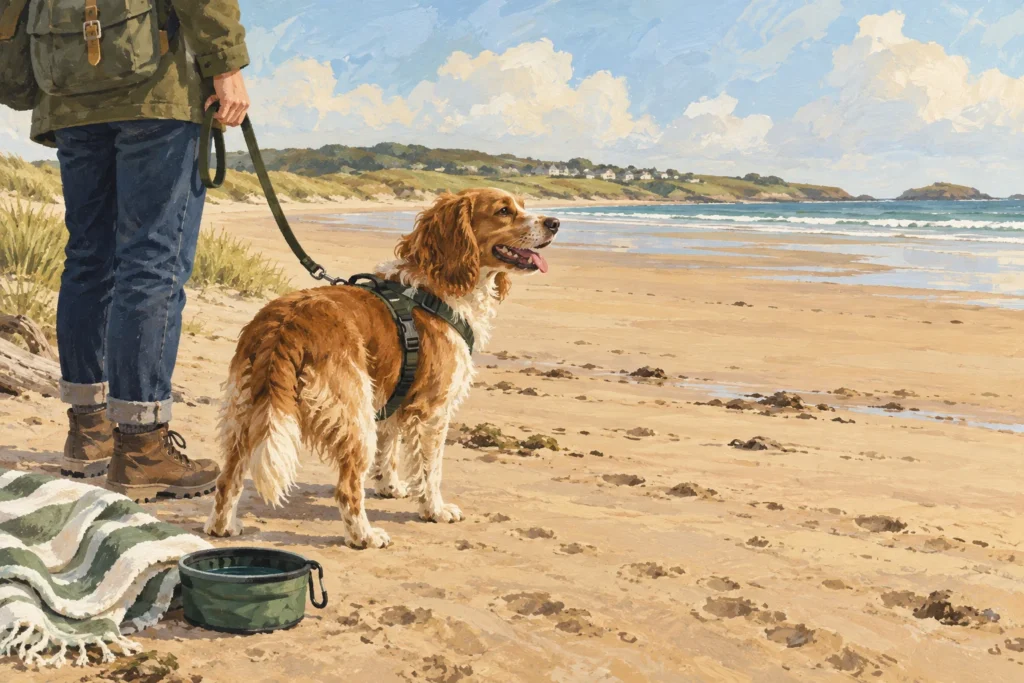
Before taking a dog to the beach, check current dog-access rules, the tide and the weather for that location and day. Choose a visit your dog can comfortably manage and keep a safe route back. A beach described as dog friendly may still have seasonal restrictions, lead requirements or areas that become cut off.
This article contains Amazon affiliate links. As an Amazon Associate, we earn from qualifying purchases.
Table of Contents
Check the exact beach and access point
Use the local council or landowner’s current information, then read signs on arrival. Look for dates, times, mapped sections and lead requirements. A neighbouring cove may have different rules even when both share a car park.
Cornwall Council’s current beach page illustrates the variation: some restrictions are seasonal and time-limited, others apply all year, and a separate location requires leads during specified periods. Use the live page for the beach you intend to visit rather than copying a general summer rule.
Plan around the tide and an exit route
Check local tide predictions and weather before leaving. Identify the route back and whether water can cover the beach, causeways or access around headlands. RNLI warns that places accessible on one visit may be cut off at a different tide.
Leave generous time to return. Do not rely on following other walkers or assuming the dog will always be able to swim around an obstacle. If conditions or access are unclear, choose a different walk.
Keep control near cliffs and moving water
RNLI advises keeping dogs on leads near cliff edges and fast-flowing water. Stay back from unstable edges and avoid throwing toys towards steep drops, channels or rough surf.
Do not force a dog into the sea. A confident swimmer can still encounter currents, waves and fatigue. Keep any suitable water activity close, supervised and within conditions you understand; equipment does not make rough water safe.
If your dog gets into trouble
Do not enter the water, mud or a dangerous cliff area after them. Call 999 or 112 and ask for the Coastguard. Give the location and explain what has happened. Move to a safe position from which the dog may be able to reach you, if possible, while following the emergency service’s advice.
Pack a small, useful beach kit
| Item | Purpose |
|---|---|
| Fresh drinking water and bowl | Offer safe drinking water without relying on beach facilities. |
| Suitable lead and fitted harness | Manage access routes, busy areas and coastal hazards. |
| Waste bags | Clear up and carry waste to an appropriate bin. |
| Towel and clean rinse water where needed | Remove sand and salt and manage wet kit. |
| Phone and location information | Contact help and describe where you are. |
| Appropriate resting provision | Take a comfortable break in suitable conditions. |
A folding bowl is convenient if space matters; Find collapsible dog travel bowls on Amazon UK. Choose one the dog can use easily and clean it after the visit. Carry enough water for the actual outing and have a refill plan.
Watch heat, sand and seawater
A sea breeze does not guarantee cool conditions. Check the dog’s comfort and avoid hot surfaces or prolonged activity. Shorten or abandon the visit if conditions are unsuitable rather than relying on shade accessories to extend it.
PDSA advises preventing seawater drinking and excessive sand swallowing. Sand can be picked up with toys as well as eaten deliberately. Offer fresh water, keep play sensible and contact a vet if the dog becomes unwell or you are concerned about ingestion.
Respect other visitors and wildlife
Keep the dog away from picnics, anglers, resting birds and people who do not want interaction. Use a lead where necessary and follow protected-area signs. An off-lead permission does not mean every part of a crowded beach is a useful place for free running.
Check the dog after the visit
Rinse sand and salt from the coat and paws with clean water as appropriate, then dry and check for discomfort or injury. Seek veterinary advice for persistent limping, a suspected sting or wound, vomiting or other concerning changes.
Our first-aid kit guide supports preparation for minor incidents. The most valuable beach plan remains a suitable location, current information and the willingness to leave while the dog is still comfortable.