
Table of Contents
What is Dog Agility & Why is it Beneficial?
Dog agility is a thrilling, fast-paced sport where dogs navigate a course of obstacles, guided by their handlers. It’s become increasingly popular in the UK in recent years, with more clubs and competitions springing up across the country. But it’s not just about winning ribbons! Agility provides fantastic physical and mental stimulation for dogs of all breeds and ages. It improves their fitness, coordination, and confidence. For owners, it’s a brilliant way to bond with their canine companion and enjoy a fun, challenging activity together. Agility caters to all levels, from casual garden fun to competitive Kennel Club trials.
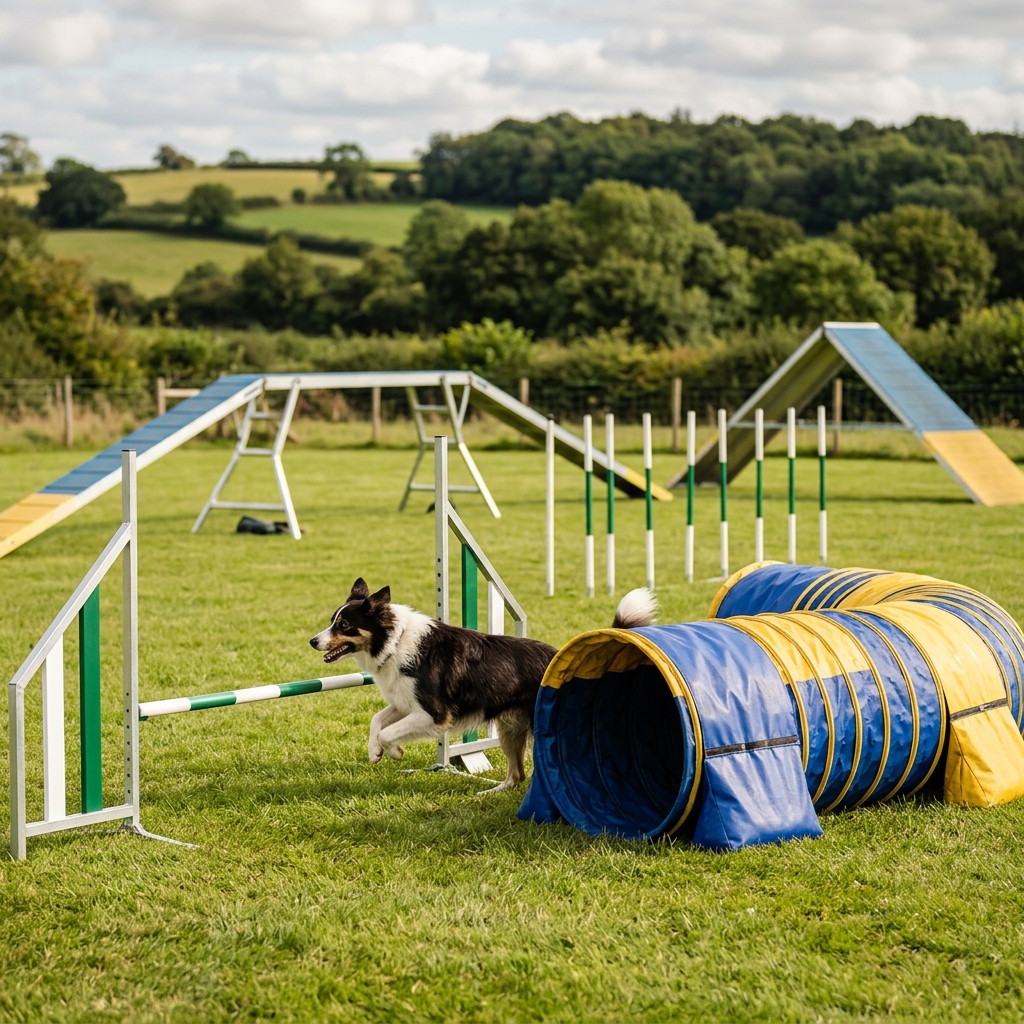
Essential Dog Agility Equipment: A Complete List
Setting up an agility course requires a range of equipment. Here’s a breakdown of the core components:
- Tunnels: Flexible tunnels that dogs run through. Varying lengths and diameters are available.
- Weave Poles: A series of upright poles that dogs must weave through in a specific pattern.
- Jumps: Adjustable height bars that dogs jump over. Different types include single bar, double bar, and spread jumps.
- A-Frame: An inverted ‘V’ shaped obstacle that dogs climb up and over.
- Dog Walk: A raised plank that dogs walk across, requiring careful footing and balance.
- Teeter-Totter (See-Saw): A pivoting plank that dogs run onto, causing it to tilt.
- Pause Table: A raised platform where dogs must pause for a specified duration.
- Contact Equipment: Specific markings on the A-Frame, Dog Walk, and Teeter-Totter that dogs must touch with at least one paw. This ensures proper technique and safety.
Choosing the Right Equipment: Factors to Consider
Before you start shopping, consider these factors:
- Dog Size and Breed: Larger breeds need sturdier equipment and higher jump settings. Smaller breeds may require narrower tunnels and lower jumps.
- Training Level: Beginners should start with basic equipment and gradually add complexity as their dog progresses.
- Space Available: A large garden is ideal, but even a smaller space can accommodate a scaled-down course.
- Budget: Agility equipment can range from affordable to expensive. Set a realistic budget before you start.
- Material Durability: Look for equipment made from weather-resistant materials that can withstand regular use. Plastic, wood, and metal are common choices.
Top UK Online Retailers for Dog Agility Equipment (2026)
Here’s a look at some of the leading UK online retailers in 2026:
Pet Emporium UK
Pros: Wide range of equipment, competitive pricing, fast delivery, excellent customer service. Offers financing options for larger purchases. Improved their stock of eco-friendly options in 2026.
Cons: Can be overwhelming with the sheer amount of choice.
Shipping: £5.99 – £9.99 (depending on order value).
Return Policy: 30-day returns, free returns for faulty items.
Happy Paws Direct
Pros: Specialises in agility equipment, knowledgeable staff, frequently runs sales and promotions.
Cons: Smaller overall product range compared to larger retailers.
Shipping: £7.50 standard delivery.
Return Policy: 14-day returns, customer pays return postage.
Doggy Days Out
Pros: Premium quality equipment, focus on durability and safety, excellent build quality.
Cons: Higher price point.
Shipping: Free delivery on orders over £100.
Return Policy: 30-day returns, full refund if returned in original condition.
Budget Breakdown: How Much Does Dog Agility Equipment Cost?
Here’s a rough estimate of costs in 2026:
| Equipment Level | Estimated Cost | Components |
|---|---|---|
| Basic (Beginner) | £150 – £300 | Tunnel, weave poles (6 poles), a few adjustable jumps. |
| Intermediate | £400 – £700 | Basic set + A-frame, dog walk, pause table, more refined jumps, full set of weave poles (12). |
| Advanced | £800+ | Intermediate set + Teeter-totter, high-quality contact equipment, multiple jump variations, potentially a full modular course. |
Example Product Costs (2026 Prices):
- PawHut Dog Agility Set – £149.99
- TRIXIE Dog Agility Training Set – £99.99
- PetFusion Ultimate Dog Agility Kit – £249.99
- DogGames Dog Agility Weave Poles (Set of 12) – £45.00
- HappyPet Dog Agility Tunnel – £35.00
- ZenDog Adjustable Dog Jumps – £60.00
- Ancol Dog Agility A-Frame – £199.00
- Rosewood Agility Dog Walk – £299.00
DIY vs. Buying: Building Your Own Dog Agility Course
Building your own agility equipment can save money, but it requires some DIY skills and careful consideration. Safety is paramount; poorly constructed equipment can be dangerous. Wood can be cheaper but needs treating to protect against the elements. PVC pipe is an option for tunnels and jumps but needs secure foundations. Building an A-frame or dog walk requires significant carpentry experience. For a basic course, DIY might be feasible, but for more complex obstacles, purchasing pre-made equipment is generally recommended. Cost-wise, a DIY basic course could be £80-£150, vs. £150-£300 for a bought one. However, the time commitment and safety concerns are significant.
Safety First: Agility Training Tips & Precautions
Safety should always be your top priority:
- Warm-up & Cool-down: Always warm up your dog before training and cool down afterwards to prevent injuries.
- Surface Considerations: Train on a soft, level surface like grass or rubber matting. Avoid hard surfaces like concrete.
- Proper Form: Ensure your dog is using correct technique for each obstacle. Consult a qualified agility instructor if needed.
- Spotting: Especially when introducing new obstacles, provide guidance and support to your dog.
- Gradual Progression: Don’t push your dog too hard too soon. Gradually increase the height and complexity of the obstacles.
Maintaining Your Dog Agility Equipment
Regular maintenance will ensure your equipment lasts:
- Plastic Equipment: Wipe down with a mild detergent and water. Check for cracks and replace damaged parts.
- Wooden Equipment: Treat with a wood preservative to protect against the elements. Regularly inspect for splinters and rot.
- Metal Equipment: Check for rust and lubricate moving parts.
- Storage: Store equipment in a dry, sheltered location when not in use.
Future Trends in Dog Agility Equipment (2026)
Several trends are shaping the future of dog agility equipment:
- Smart Agility Systems: Equipment equipped with sensors and connectivity to track your dog’s performance and provide training feedback.
- Personalized Training Tools: Customizable obstacle courses and training programs tailored to your dog’s specific needs and abilities.
- Eco-Friendly Materials: Increased demand for agility equipment made from sustainable and recycled materials. Biodegradable weave poles and recycled plastic tunnels are becoming more common.
- Modular Designs: Courses that can be easily reconfigured to create new challenges.
- Augmented Reality Integration: Apps that overlay virtual obstacles onto real-world environments for training purposes.
FAQ
Q: Is dog agility suitable for all dog breeds?
Yes! While some breeds are naturally more agile, any dog can participate in agility training. Adjust the course and obstacles to suit your dog’s size, breed, and physical capabilities.
Q: How much space do I need for a home agility course?
You can start with a small course in a relatively small garden (e.g., 10m x 5m). As your dog progresses, you may want to expand the course or join a local agility club with more space.
Q: What’s the best way to introduce my dog to agility?
Start slowly and focus on positive reinforcement. Introduce one obstacle at a time, rewarding your dog for successful attempts. Consider taking a beginner agility class with a qualified instructor.
Q: How often should I train my dog on agility equipment?
2-3 short sessions per week are ideal. Avoid overtraining, as this can lead to injuries. Always listen to your dog and stop if they show signs of fatigue.
Q: Are there any UK governing bodies for dog agility competitions?
Yes, the Kennel Club is the primary governing body for dog agility in the UK. They organise competitions and provide training resources. There are also independent agility clubs operating throughout the country.