
Last updated: 9 September 2026
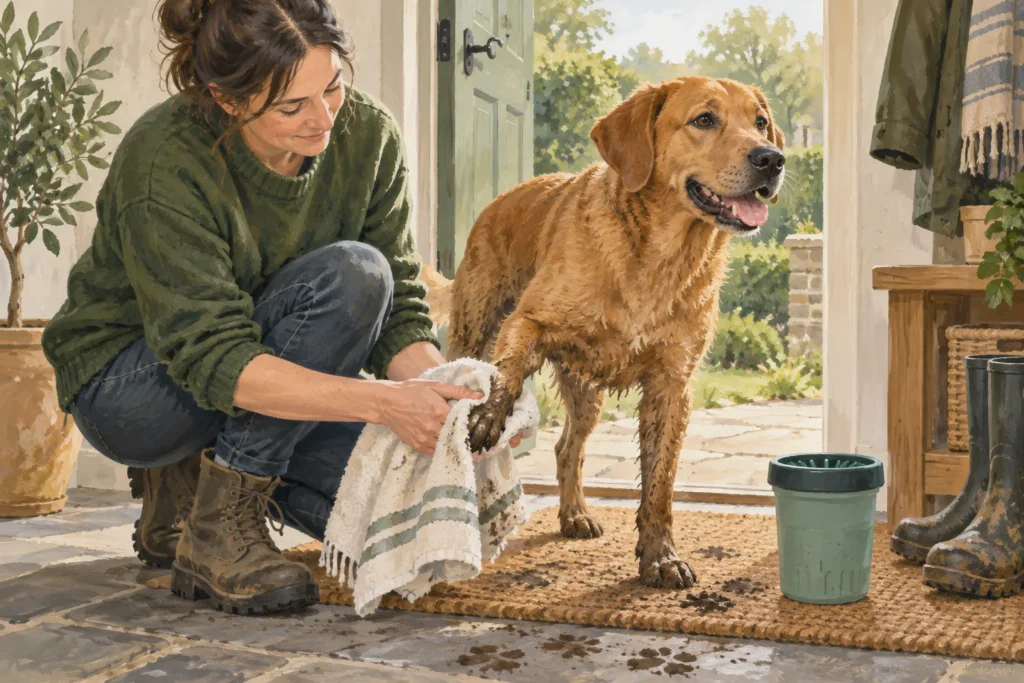
The best dog paw cleaner is one your dog can use comfortably and you can clean properly afterwards. A silicone-bristled cup can help rinse mud from paws, but a shallow rinse and towel may be quicker for light dirt or a dog who dislikes putting a foot into a container.
Choose around the dirt you actually bring home. Four lightly dusty paws need a different routine from thick clay packed into long hair. A paw cleaner also leaves the belly and legs untouched, so it may be only one part of cleaning after a wet walk.
Table of Contents
Compare the simplest workable options
| Method | Good use | Limitation |
|---|---|---|
| Damp cloth and towel | Light surface dirt | Less effective for packed mud between toes |
| Gentle water rinse | More widespread mud or grit | Needs a suitable place and drying afterwards |
| Manual paw-cleaner cup | Contained washing of individual paws | Dog must accept insertion and handling |
| Powered paw washer | Owners who specifically need its mechanism | Noise, moving parts and more cleaning requirements |
A powered model is not automatically more thorough or gentler. Before considering one, find out how the mechanism contacts the paw, whether it can be stopped immediately and how the food-free but dirty wash water is removed. A quiet manual routine is often easier to introduce.
A documented manual cup to investigate
Dexas’s MudBuster uses soft silicone bristles inside a cup. The maker instructs owners to add water, insert the muddy paw, gently move the cup, then dry the paw. Its version with a lid is intended to make carrying the unit more convenient.
This article contains Amazon affiliate links. As an Amazon Associate, we earn from qualifying purchases.
Find Dexas MudBuster paw cleaner with lid on Amazon UK. Check the model’s size chart using your dog’s paw width. The outside diameter of the cup is not the same as the usable opening, and a dog described as medium-sized may have paws that do not suit the medium cup.
Do not infer an independent “best” award or a cleaning-speed result from the product’s marketing. The useful design question is whether it contains the rinse water while allowing your dog to stand comfortably.
Measure and rehearse before a muddy walk
Measure according to the manufacturer’s instructions with the paw naturally weight-bearing where requested. Compare the widest paw you intend to clean. If the fit looks tight or your dog cannot comfortably lift a paw to the required height, choose another method.
Introduce the empty cup first. Let your dog investigate, reward calm handling near a paw and build towards a brief, voluntary interaction. Add a little water only when the earlier steps are comfortable. Avoid gripping the leg or forcing the paw down while the dog tries to pull away.
Set a towel on a stable surface by the door and keep another for drying. Arrange the cup so you can reach it without twisting the dog’s leg. For a large or unsteady dog, a low rinse area may be easier than balancing on three legs beside a tall cup.
Use clean water and check the paws
Use comfortably warm water for ordinary mud and change it when dirty. Be gentle around the pads and between toes. PDSA advises washing paws after contact with road salt and grit because these can irritate them. Dry carefully rather than leaving wet material trapped between the toes.
Do not use household cleaning chemicals or automatically add soap to every wash. If a dog-specific product is needed, follow its directions and rinse as required. A strong smell or extra foam is not evidence of better paw care.
Stop if your dog shows pain, limps, has a cut or repeatedly licks one paw. A bristled cup cannot tell you whether something is lodged in the skin and should not be used to scrub an injury. Suspected chemical exposure or poisoning needs prompt veterinary advice, not an extended product-cleaning routine.
Clean the cleaner
Look for clear instructions for removing the insert and washing the cup. Mud can remain under folded silicone and around the rim even when the water looks clear. Rinse, clean and dry the parts as directed before reassembling them; confirm dishwasher suitability rather than assuming all silicone products share the same care instructions.
Store the towel where it can dry and wash it regularly. If you routinely need a full rinse anyway, a separate cup may add work instead of saving it. Our grooming kit guide helps plan the wider routine, while the first-aid kit guide covers preparation for problems beyond ordinary dirt.
Try the method that requires the least handling your dog finds difficult. Consistent, gentle cleaning is a better buying goal than a gadget that promises spotless paws but stays unused beside the door.