
Last updated: 9 September 2026
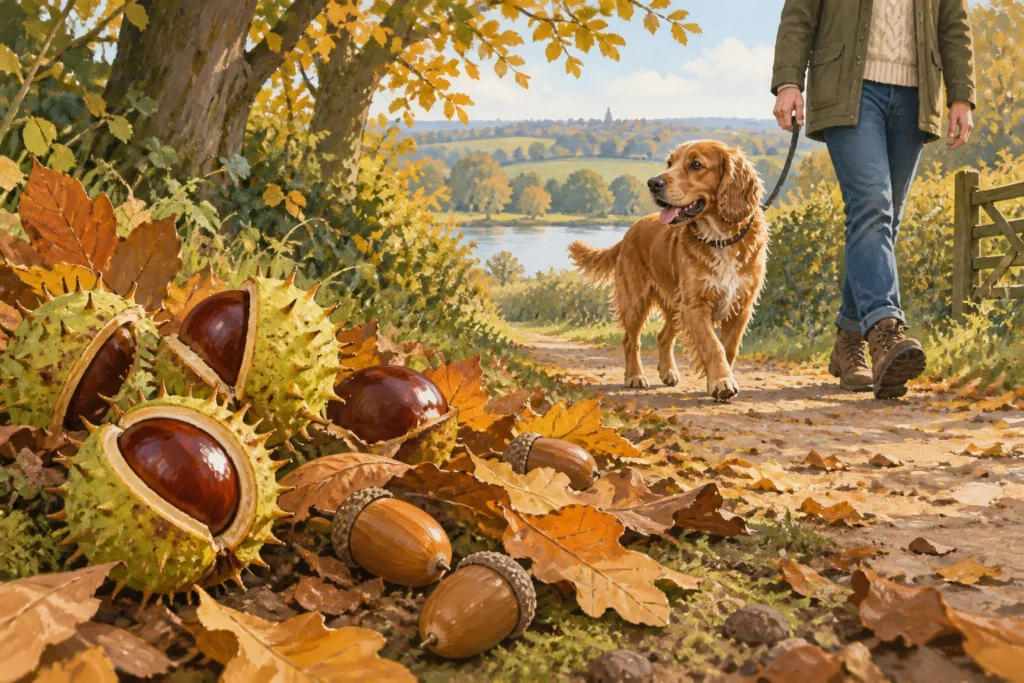
Conkers and acorns can harm dogs if chewed or swallowed. Contact your vet straight away if you think your dog has eaten either, even if they currently seem well. Both poisoning and a physical blockage are possible, so do not wait for a particular symptom or try to judge safety by counting what remains on the ground.
Table of Contents
What makes conkers and acorns hazardous?
Conkers are horse-chestnut seeds. Blue Cross identifies their toxic chemical aesculin and the possibility of blockage if swallowed. Acorns contain tannins and can also cause digestive injury or blockage; serious poisoning can affect organs.
This is different from simply encountering an autumn tree on a walk. The practical priority is preventing chewing and ingestion, particularly where seeds are scattered densely beneath leaves.
If your dog may have eaten one
Move away from the material and call your vet or the practice’s emergency service. Explain what you saw and follow their instructions. Do not attempt to make the dog vomit unless the vet specifically directs you to do so.
Gather information without delaying the call. A clear photograph of the object and nearby tree may help. If you can safely keep a sample away from the dog and people, ask the practice whether to bring it.
| Information | What to tell the practice |
|---|---|
| Possible substance | Conker, acorn or an unidentified object; be honest if unsure. |
| Timing | When chewing or swallowing happened, or when it may have happened. |
| Amount | What was observed rather than an unsupported estimate. |
| The dog | Approximate weight, relevant conditions and current medication. |
| Changes | Any vomiting, discomfort, weakness or unusual behaviour. |
Do not use symptoms as permission to wait
Vomiting, diarrhoea, abdominal discomfort, lethargy, wobbliness or collapse can be concerning after a walk. They are not specific enough for an owner to diagnose the cause. A dog can also need attention before signs become obvious.
If the dog is struggling to breathe, collapsing or very unwell, seek emergency veterinary help immediately. Avoid home remedies, leftover medication or online calculations of a supposedly harmless quantity.
Change the route when the ground is heavily covered
Scan the path before allowing close sniffing. A different route may be easier to manage than repeatedly asking a determined scavenger to ignore hundreds of tempting objects. Remember that seeds can roll away from the tree and collect along verges.
Keep the dog close enough for you to notice what they investigate, using comfortable walking equipment. In poor light, choose a route where the ground remains visible. A torch can help you inspect a path, but it does not make concealed hazards disappear.
Keep play separate from fallen seeds
Do not throw conkers or acorns for the dog to chase. Carry a suitable toy if play is part of the walk, and use a clear area. Children collecting autumn materials should keep their collection out of the dog’s reach at home and in the car.
A basket of attractive natural decorations on a low table creates another opportunity to chew. Check household displays as well as the garden.
Practise useful skills in a safe setting
Reward-based leave-it and swap training can support everyday management. Practise with safe objects and easy setups, not real conkers placed as a test. No trained cue guarantees that a dog will ignore something when you are too far away to intervene.
If the dog guards found objects or scavenges persistently, seek veterinary and qualified behaviour advice. Do not repeatedly force the mouth open or turn a risky object into a chase game.
Prepare the practical details before an incident
Save your regular and emergency veterinary numbers on your phone, and know which practice provides out-of-hours care. On holiday, identify a nearby veterinary service as part of the trip arrangements.
Our dog first-aid kit guide supports general preparation, but a kit does not treat poisoning or clear an internal blockage. Prompt professional advice is the important action when ingestion is suspected.