
Table of Contents
As an Amazon Associate, we earn from qualifying purchases. This means we may receive a small commission at no extra cost to you when you buy through links on this page.
Introduction: Why Puppy Food Matters
Bringing a puppy into your life is an incredibly exciting time! But with that joy comes a significant responsibility – ensuring your new companion gets the best possible start in life. That’s where puppy food comes in. Unlike adult dog food, puppy food is specifically formulated to meet the unique nutritional demands of a growing puppy. Puppies require higher levels of protein, fats, and essential nutrients like calcium and phosphorus to support rapid growth and development. Adequate nutrition during this crucial phase impacts everything from bone strength and muscle development to cognitive function and immune system health. Investing in high-quality puppy food is an investment in your puppy’s long-term wellbeing, potentially preventing health problems later in life.
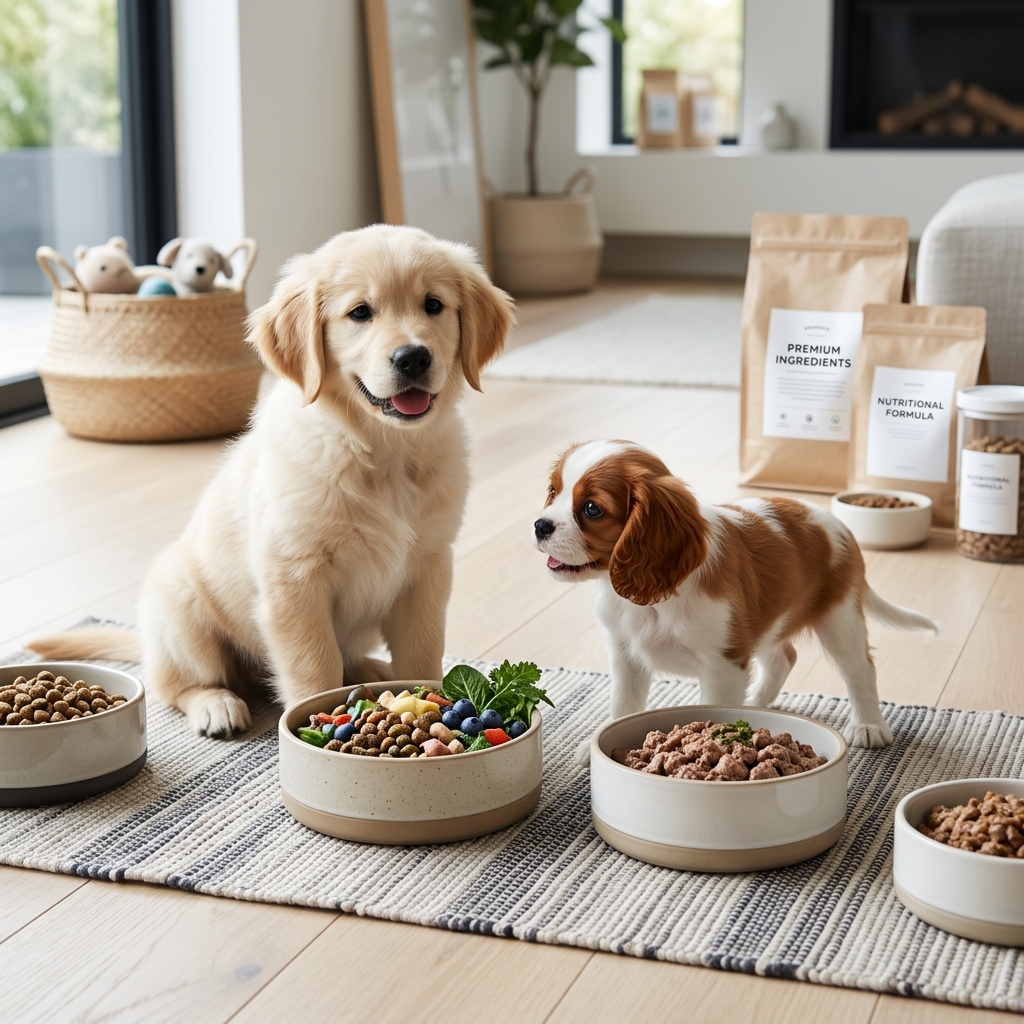
Understanding Puppy Food Labels: What to Look For
Decoding a puppy food label can feel daunting, but understanding the key components is essential for making an informed choice. First, scrutinise the ingredient list. Protein should be the primary ingredient, ideally sourced from named meat sources like chicken, lamb, or fish (avoid vague terms like ‘meat meal’). Carbohydrates provide energy, look for easily digestible options like rice or sweet potato. Fats are vital for skin and coat health, and brain development.
Look for food meeting AAFCO (Association of American Feed Control Officials) standards. Whilst an American standard, many UK brands align with these guidelines to ensure nutritional completeness and balance. A statement on the packaging saying the food is “complete and balanced” according to AAFCO standards is a good sign. Avoid foods laden with fillers like corn, wheat, and soy, as these offer limited nutritional value. Similarly, be cautious of artificial colours, flavours, and preservatives.
Remember that puppies have different needs based on their predicted adult size. Large breed puppies need formulas that control calcium and phosphorus levels to prevent rapid bone growth, which can lead to skeletal issues. Small breed puppies need smaller kibble sizes and higher calorie density.
Top 5 Best Puppy Food Brands UK 2026: Detailed Reviews
Choosing the ‘best’ puppy food depends on your individual puppy’s needs. Here’s a detailed look at five leading brands in the UK, offering a range of options and price points.
Royal Canin Puppy Food: A Breed-Specific Approach
Royal Canin consistently ranks highly for its breed-specific formulas. They understand that a Chihuahua puppy has drastically different nutritional requirements than a German Shepherd puppy. Their formulas are tailored to support the specific jaw shape, digestive system, and growth rate of different breeds. This focus on tailored nutrition can be exceptionally beneficial, particularly for breeds prone to specific health problems.
Price Example: Royal Canin Puppy Maxi Dry Dog Food 4kg – £35.99
- Pros: Breed-specific formulas, high-quality ingredients, excellent palatability.
- Cons: Can be expensive, some formulas contain corn.
Purina Pro Plan Puppy: Science-Backed Nutrition
Purina Pro Plan is backed by extensive research and development. Their puppy formulas often include ingredients like colostrum (to support immune system development) and DHA (for brain and vision development). They have lines targeted at different breeds and sizes, though not as granular as Royal Canin. They provide a solid nutritional foundation for healthy growth.
Price Example: Purina Pro Plan Puppy Chicken & Rice 14kg – £69.99
- Pros: Science-backed formulas, good ingredient quality, widely available.
- Cons: Can be pricey, some formulas contain wheat.
Hill’s Science Plan Puppy: Veterinarian Recommended
Hill’s Science Plan enjoys a strong reputation amongst veterinarians, and is often recommended for puppies with sensitive stomachs or digestive issues. Their formulas focus on easily digestible ingredients and promote healthy gut bacteria. They offer a range of options for different breeds and sizes, with a strong emphasis on overall health and well-being.
Price Example: Hill’s Science Plan Puppy Healthy Development Chicken 12kg – £74.99
- Pros: Veterinarian recommended, focus on digestive health, high-quality ingredients.
- Cons: Relatively expensive, some puppies may not find it as palatable.
Harringtons Puppy Food: A Budget-Friendly Option
Harringtons provides a more affordable option without compromising entirely on quality. While it doesn’t have the same breed-specific precision as Royal Canin or the scientific backing of Purina Pro Plan, it offers a complete and balanced diet for growing puppies. It’s a good choice for pet owners on a tighter budget.
Price Example: Harringtons Puppy Complete Dry Dog Food 12kg – £32.99
- Pros: Affordable, widely available, complete and balanced nutrition.
- Cons: Ingredient quality isn’t as high as premium brands, may contain some fillers.
Wagg Puppy Food: Natural and Wholesome
Wagg emphasizes natural ingredients and wholesome nutrition. Their puppy formulas are free from artificial colours, flavours, and preservatives. They offer a range of options, including sensitive skin and stomach formulas. It’s a good choice for owners looking for a more natural approach to puppy nutrition at a reasonable price.
Price Example: Wagg Puppy & Junior Complete Dry Dog Food 12kg – £30.99
- Pros: Natural ingredients, affordable, good variety of formulas.
- Cons: Ingredient quality isn’t exceptional, may not be suitable for puppies with severe allergies.
Specialist Puppy Foods: Grain-Free, Hypoallergenic & Raw
For puppies with sensitivities, allergies, or specific dietary needs, specialist foods can be a lifesaver. Grain-free formulas eliminate common allergens like wheat, corn, and soy. Hypoallergenic formulas use hydrolysed proteins (proteins broken down into smaller pieces) to minimise allergic reactions. Raw food diets, like those offered by Butternut Box, provide a biologically appropriate diet but require careful handling and preparation.
Price Example: Lily’s Kitchen Puppy Dry Dog Food 8kg – £52.99, Butternut Box Puppy Starter Box (5 days) – £40.0
Important Note: Raw feeding carries inherent risks of bacterial contamination. Consult with your veterinarian before starting a raw food diet.
Transitioning to Puppy Food: A Step-by-Step Guide
- Days 1-2: Mix 25% new food with 75% old food.
- Days 3-4: Mix 50% new food with 50% old food.
- Days 5-6: Mix 75% new food with 25% old food.
- Day 7: Feed 100% new food.
Monitor your puppy’s stools closely during the transition. Soft stools or diarrhoea indicate the transition is happening too quickly. If this occurs, slow down the process and consult with your veterinarian.
Feeding Guide: How Much Should You Feed Your Puppy?
Feeding amounts vary depending on your puppy’s age, breed, size, and activity level. Always follow the manufacturer’s recommendations on the food packaging as a starting point. Puppies typically need to eat more frequently than adult dogs, often 3-4 times a day. As they grow, you can reduce the frequency to twice a day. Regularly monitor your puppy’s body condition – you should be able to feel their ribs easily, but they shouldn’t be visible. Adjust feeding amounts accordingly.
Comparison Table
| Brand | Price (approx.) | Key Features | Best For |
|---|---|---|---|
| Royal Canin | £35.99 (4kg) | Breed-specific, high-quality | Breed-specific needs |
| Purina Pro Plan | £69.99 (14kg) | Science-backed, DHA & Colostrum | Overall health and development |
| Hill’s Science Plan | £74.99 (12kg) | Veterinarian recommended, digestive health | Sensitive stomachs |
| Harringtons | £32.99 (12kg) | Affordable, complete nutrition | Budget-conscious owners |
| Wagg | £30.99 (12kg) | Natural ingredients, wholesome | Owners seeking natural options |
Conclusion: Choosing the Best for Your Furry Friend
Choosing the best puppy food is a crucial decision that will impact your puppy’s health and wellbeing for years to come. Prioritise high-quality ingredients, and choose a formula appropriate for your puppy’s breed size and individual needs. Don’t be afraid to consult with your veterinarian – they can provide personalised recommendations based on your puppy’s specific health status and lifestyle. With a little research and careful consideration, you can give your furry friend the best possible start in life!
FAQ
1. How often should I feed my puppy?
Young puppies (8-12 weeks) typically need 4 meals a day. As they grow, reduce this to 3, then 2 meals a day by around 6 months of age.
2. What ingredients should I avoid in puppy food?
Avoid foods high in fillers like corn, wheat, and soy. Also, be cautious of artificial colours, flavours, and preservatives.
3. Is grain-free puppy food always better?
Not necessarily. Grain-free food is beneficial for puppies with grain allergies, but it isn’t automatically superior for all puppies. Ensure the food is complete and balanced.
4. How do I know if my puppy is getting enough food?
You should be able to feel your puppy’s ribs easily with a light covering of fat. If the ribs are prominently visible, your puppy is underweight. If you can’t feel them, your puppy may be overweight.
5. What do AAFCO standards mean?
AAFCO standards indicate the food provides complete and balanced nutrition for a growing puppy. Look for a statement on the packaging confirming this.