
Last updated: 9 September 2026
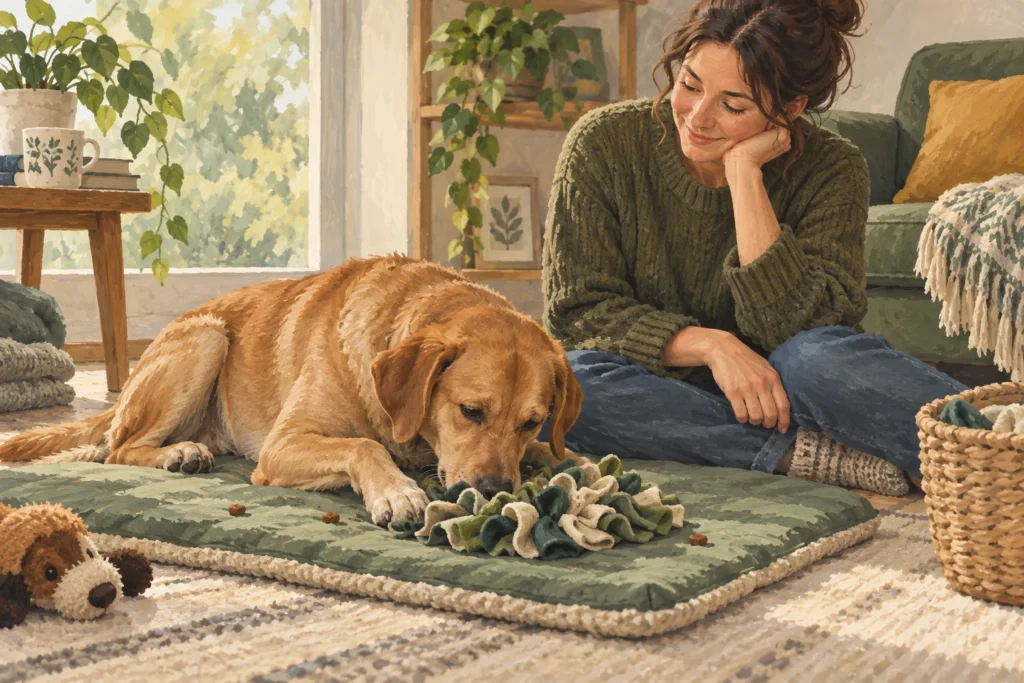
The starting point for dog enrichment on crate rest is a written explanation of what your vet permits. Ask about movements, positions, food and supervision before choosing a lick mat or puzzle. An activity that looks quiet can still involve twisting, bracing, stretching or excitement that conflicts with the recovery plan.
This guide helps you prepare those questions and organise approved activities. Your dog’s diagnosis and discharge instructions determine what is appropriate; there is no universal crate-rest timetable or set of exercises suitable for every recovery.
Table of Contents
Translate “rest” into everyday instructions
Ask the veterinary team to describe a normal day in practical terms. Confirm the permitted enclosure, how to take the dog to toilet, whether standing or changing position is unrestricted, and what to do if they become restless. If two parts of the instructions appear inconsistent, ask before trying to reconcile them yourself.
Bring photographs of the proposed resting space and any toys you hope to use. A familiar feeder may require the dog to pin it with both paws, while another encourages rolling and chasing. Showing the actual item can make the discussion more precise than asking whether “brain games” are allowed.
| Question for the team | Why the answer changes the plan |
|---|---|
| Which movements or positions must be avoided? | Determines feeder placement and whether manipulation is permitted |
| Are licking and chewing suitable? | Prevents assuming all mouth-based activities are harmless |
| What food can be used? | Respects the diet, medication routine and current appetite |
| How much interaction is appropriate? | Helps balance stimulation with undisturbed rest |
| Which changes require a call? | Gives the household a clear response to problems |
Think about the dog’s actual response
The Association of Pet Behaviour Counsellors emphasises matching enrichment to the individual and following veterinary advice during restricted exercise. Its guidance also recognises that difficult feeders can cause frustration. A puzzle is not beneficial simply because it takes a long time to solve.
Observe what happens when the dog sees the activity. Do they remain comfortable, or immediately stand, paw, spin or pull at the enclosure? Report that response when asking whether an activity can be adapted. Avoid repeatedly presenting something that triggers movements you are supposed to prevent.
Dogs Trust likewise recommends considering health, ability and preferences when selecting enrichment. During recovery, this may mean simplifying a familiar activity considerably. The aim is an appropriate, manageable experience, not reproducing the intensity of the dog’s usual walk indoors.
Ask about simple options before buying equipment
A small amount of an approved food on an approved surface may be easier to assess than a feeder with moving compartments. Ask where it should be positioned and whether you should hold or stabilise it. Do not assume a raised or floor-level position is universally preferable.
Quiet company may also be worth discussing: sitting nearby, speaking softly or reading while the dog rests. Some dogs settle better with familiar presence; others need less activity around the enclosure. Keep visitors, children and other pets from turning a quiet interaction into an exciting event.
This article contains Amazon affiliate links. As an Amazon Associate, we earn from qualifying purchases.
If your vet approves a lick mat, Find flat dog lick mats on Amazon UK. Select the size, material and cleaning method against their advice and the manufacturer’s instructions. A mat is optional equipment, and buying one does not establish that it suits this stage of recovery.
Avoid improvised scent materials, new hard chews or complicated cardboard puzzles without checking their suitability. Swallowable pieces and unfamiliar foods introduce additional questions. Use the simplest version that meets the veterinary plan and your dog’s needs.
Keep food and supervision organised
Ask whether the daily feeding allowance should change and how food used in enrichment fits into it. Do not add several extra snacks throughout the day without accounting for them. If a prescribed diet or medication schedule applies, confirm suitable ingredients and timing with the team.
Set out the approved portion before an activity so different family members do not each add more. Wash the equipment as instructed and remove it when the session is finished. Supervision matters even when a dog has used the same toy safely before; their movement and behaviour may be different during recovery.
Use a short observation diary
Record the activity, position, food amount and how the dog responded. A useful entry might say, “Approved flat feeder at lunchtime; stayed lying down, then began pawing, so session ended.” Avoid diagnosing the cause yourself. Share the record with the practice when reviewing the plan.
Contact the veterinary team about pain concerns, difficulty resting, appetite changes or other signs identified in the discharge advice. If the dog cannot cope with the restriction, ask for help promptly instead of loosening the rules or adding more strenuous games.
Our crate training guide covers ordinary familiarisation. It does not override medical confinement instructions. Recheck permitted activities at each review, and increase them only as advised, even if the dog seems keen to resume their usual routine.