
Last updated: 9 September 2026
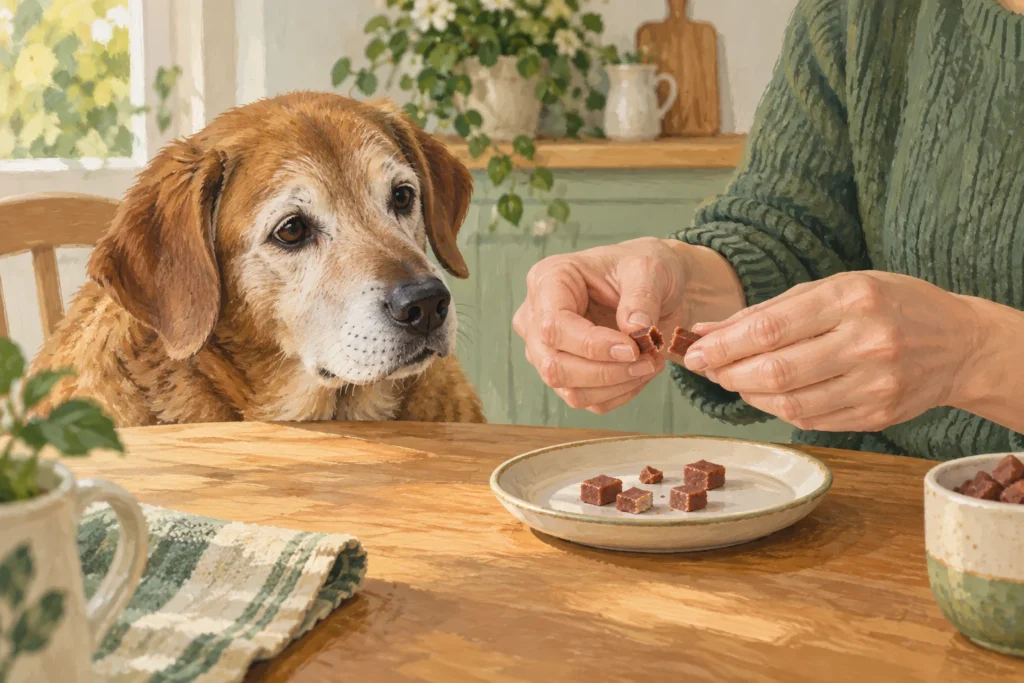
Soft dog treats for older dogs should be easy to divide into a suitable mouthful and fit the dog’s overall diet. Start with a small packet so you can assess the texture yourself. A treat labelled soft can still be too large, sticky or chewy for an individual dog, and changing treats does not address painful teeth or difficulty swallowing.
Age alone does not determine which texture is suitable. Some older dogs comfortably eat their usual food; others need an individual feeding plan. If your dog has begun dropping food, chewing differently or refusing items they used to enjoy, arrange a veterinary assessment before treating it as a shopping problem.
Table of Contents
What does soft actually mean?
There is a difference between a crumbly biscuit, a bendable strip and a moist bite. Try breaking the treat with your fingers. Can you make a small, neat reward without leaving sharp fragments or a sticky mass? Check it again after the packet has been open, because texture can change with storage.
A thin strip that bends may still require prolonged chewing. A large soft piece may encourage gulping. Choose the size and consistency for the dog, follow the packet’s feeding guidance and supervise eating. Where a vet has recommended a particular texture, use that advice rather than broad senior marketing.
| Texture | Potential practical advantage | Check before buying more |
|---|---|---|
| Soft bite | Can divide into several rewards | Whether the centre actually breaks easily |
| Soft strip | Flexible portioning | Whether it becomes a sticky or chewy mouthful |
| Crumbly biscuit | Easy to snap | Whether loose crumbs suit the dog |
| Usual suitable food | Avoids introducing another recipe | Practical handling and the daily allowance |
A UK soft-bite option to investigate
Forthglade describes its Rewards Training Chicken & Liver treats as soft bites designed for portioning. That makes the range worth considering for owners who want to split rewards, rather than giving a whole biscuit each time. It is not a veterinary recommendation for dental disease, and the recipe will not suit every dietary restriction.
This article contains Amazon affiliate links. As an Amazon Associate, we earn from qualifying purchases.
Find Forthglade Chicken & Liver soft training bites on Amazon UK. Match the exact Chicken & Liver training recipe and read the current ingredients and feeding instructions. Buy a modest amount initially, especially if the dog has not tried the recipe. Manufacturer descriptions cannot tell you exactly how a particular bag will feel to your dog.
Forthglade’s current storage instruction is to reseal after opening, keep in a cool dry place and use within two weeks. That short opened-pack period is a useful buying consideration for a small dog receiving tiny portions. A large multipack only saves money if the individual packs remain usable in your routine.
Compare rewards rather than biscuits
A bigger treat is not necessarily better value. Count how many appropriately sized rewards you can comfortably make from it. If one bite divides into four useful pieces, its cost per reward differs from its cost per whole treat. Do not make pieces so small that they become unsuitable for the dog’s eating style.
For illustration, a £3 packet producing 100 suitable rewards costs 3p per reward. A £2 packet producing 40 costs 5p. These figures demonstrate the calculation; they are not current product prices or a suggested daily allowance.
Calories matter alongside cost. Treats contribute to daily intake, particularly for an older dog whose activity has changed. PDSA recommends managing portions and accounting for extras as part of a balanced feeding routine. Our dog food guide can help you examine the main diet, which should remain the nutritional foundation.
Keep the rest of the recipe in view
Read the whole ingredient list if your dog follows a veterinary diet or avoids an ingredient. The named flavour is not an ingredient guarantee. Ask your vet which rewards fit an elimination diet or other therapeutic plan; a small treat still counts as a dietary exposure.
Avoid using terms such as natural, senior or grain-free as shortcuts for suitability. Texture, ingredients, calorie information and the dog’s response are more concrete. A treat marketed for fresh breath is also not a replacement for diagnosing the cause of bad breath.
When the change needs more than a softer snack
PDSA’s dental guidance highlights signs including difficulty eating, drooling and bad breath. Dogs may continue eating despite dental problems, so willingness to accept a soft treat does not rule out pain. Seek veterinary advice if eating changes or the mouth seems uncomfortable.
Once suitability is established, keep rewards enjoyable and modest. An easy-to-break treat is useful because it lets you reward little everyday moments without handing over a large portion each time. The right packet should fit both the dog’s comfort and your ability to use it fresh.