
Last updated: 9 September 2026
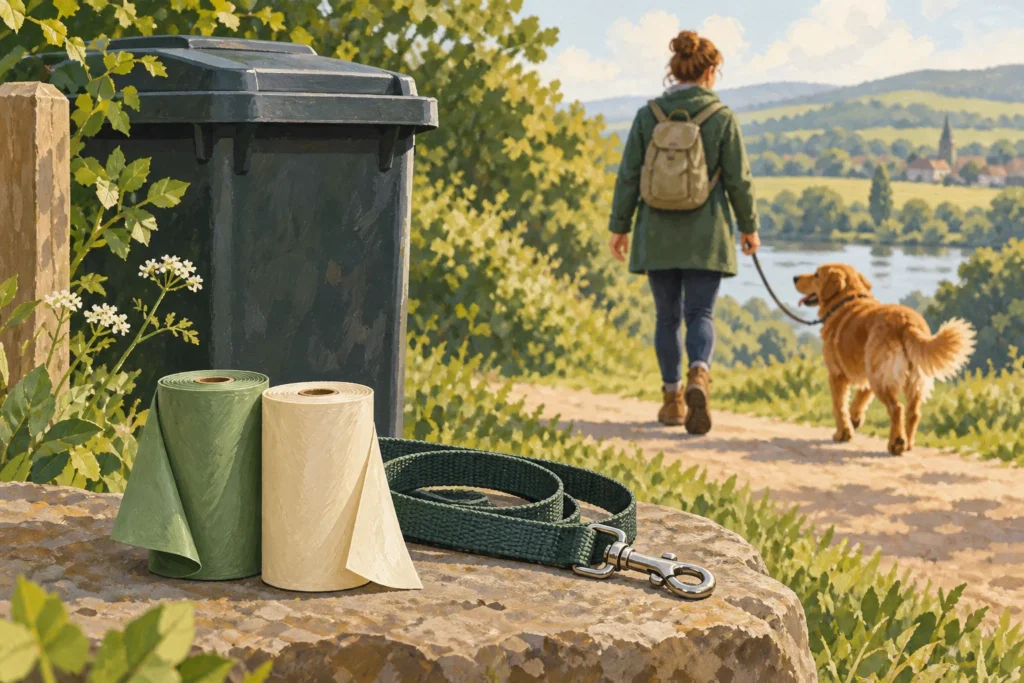
The best dog poo bags are large enough to use comfortably, strong at the seams and easy to open when your other hand is holding the lead. The environmental label also matters, but it only makes sense alongside the disposal route. A compostable bag does not turn a normal street bin into a composting facility.
For ordinary walks where bagged waste goes into an appropriate general-waste or dog-waste bin, a reliable recycled-plastic bag is a practical option. Consider compostable bags when you have checked a suitable accepted disposal route, rather than assuming the word means they can be left outdoors.
Table of Contents
Separate the claims on the pack
| Wording | What to investigate | What it does not establish |
|---|---|---|
| Recycled plastic | Percentage and whether it is post-consumer material | That a used bag belongs in recycling |
| Home compostable | Exact certification and suitability of the proposed system | Permission for a council food or garden bin |
| Industrially compostable | A facility that accepts this bag with dog waste | Breakdown in a park, waterway or ordinary home heap |
| Biodegradable | Specified conditions, evidence and time frame | That littering becomes acceptable |
Two bags from one brand can use different materials. Product ranges also change. Match the claim to the exact pack you are buying, rather than transferring an old review’s description to a new listing.
A current recycled option to compare
Beco’s current poop-bag page describes bags made with 94% post-consumer recycled plastic, with the remaining material comprising additives such as colour and stabilisers. Its headline that all the plastic is recycled refers to the plastic portion; it is not the same as saying the entire finished bag contains nothing else.
This article contains Amazon affiliate links. As an Amazon Associate, we earn from qualifying purchases.
The page lists a 33 × 22.5cm bag and directs used bags to general waste. That gives you useful dimensions and disposal instructions to check against your needs. It does not prove that every seller’s older Beco pack has the same specification. Find Beco recycled dog poo bags on Amazon UK, checking the material wording and pack count before choosing.
Beco also has a separate help page about a compostable range. That is a reason to check the exact SKU carefully, rather than describing every Beco bag as compostable. This comparison does not recommend placing dog waste in a normal household compost heap.
Test opening and tying before buying a large box
A bag can feel thick yet be frustrating if the opening is hard to find with cold fingers. Try a small pack first. Separate it at the perforation, open it without tearing the seam, then see whether enough material remains to tie a secure knot after use. Gloves and wet weather can change the experience.
Longer bags may suit larger waste volumes, while handles can make tying easier for some people. Handles also occupy part of the overall dimensions, so compare the usable bag body. If you use a dispenser, check the roll fits and turns without jamming; the cardboard core and roll width both affect fit.
Scent is a preference, not a substitute for tying and disposing of waste promptly. An unscented option may be more pleasant if you dislike carrying perfumed bags beside treats in a walking pouch.
Calculate cost per usable bag
Divide the delivered pack price by the bag count. As an illustrative example, £9 for 120 bags is 7.5p each; £12 for 240 is 5p each. Those are calculation examples, not current product prices. Include delivery and any subscription commitment before comparing.
Cheap bags lose their advantage if you routinely double-bag because they tear. Equally, a large bulk box is poor value if the bags degrade in unsuitable storage before you use them. Follow the pack’s storage instructions and keep spare rolls somewhere dry, away from children and animals.
Plan where the used bag goes
Follow local bin signs and council guidance. Do not put filled bags in recycling, food-waste or garden-waste collections unless the service explicitly accepts that precise waste. Never flush the bag. If there is no suitable bin on the route, carry it to one; hanging it on a branch for later creates an easily forgotten problem.
Keep spare bags in more than one useful place, such as your coat and dog walking bag. The right pack combines dependable everyday handling with an environmental claim you can understand and a disposal route you will actually use.