
Last updated: 9 September 2026
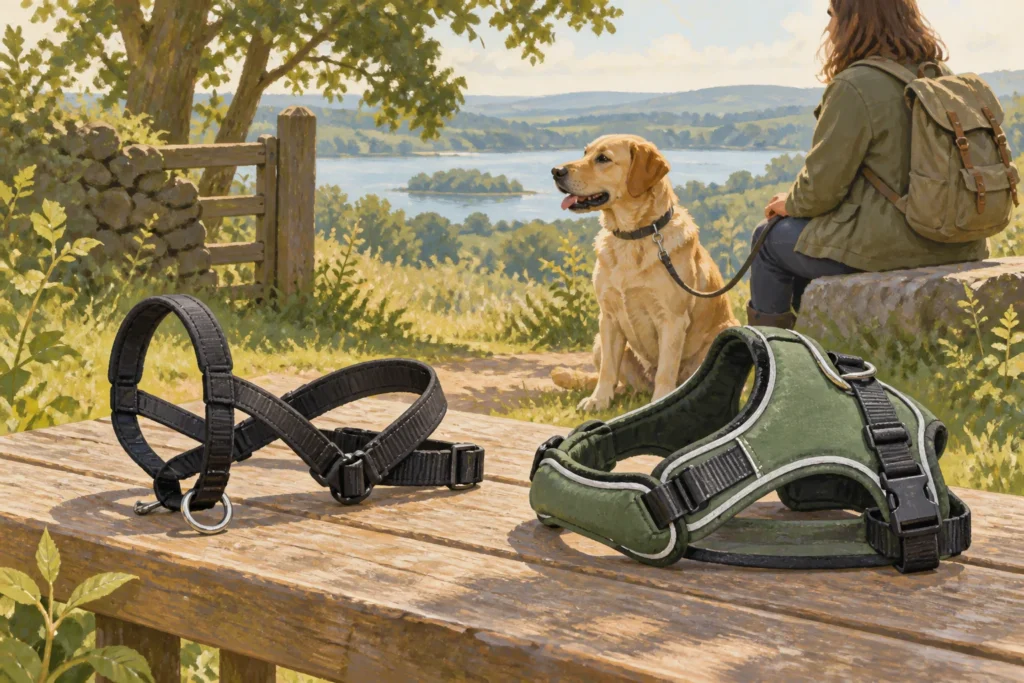
A dog headcollar should be chosen for a suitable fit and a dog who can comfortably learn to wear it. It is a handling aid, not a cure for pulling, fear or barking. For many households, a well-fitted harness and reward-based walking practice are a more comfortable starting point. If you are considering a headcollar because you cannot safely manage your dog, ask a qualified reward-based trainer for help with the whole setup.
Headcollars sit around the muzzle and behind the head. They are different from muzzles: a correctly fitted headcollar is not designed to prevent a bite. Do not use one as a substitute when a properly fitted basket muzzle is needed.
Table of Contents
Compare the options by the problem you need to solve
| Option | Reason to consider it | Important limit |
|---|---|---|
| Headcollar with a documented fitting system | Additional head-direction guidance for a suitable adult dog | Needs careful acclimatisation and gentle handling |
| Well-fitted body harness | Avoids placing the main attachment around the face | Still needs fit checks and loose-lead teaching |
| Trainer-assisted fitting session | Useful when handling, escape risk or distress is already a concern | A product recommendation alone is not a behaviour plan |
Compare our pulling-harness guide before deciding that a face-worn product is necessary. Do not choose equipment by the strength of an instant-results promise.
What is documented for the Halti Headcollar?
Company of Animals describes a padded nose band, reflective webbing and a safety link that connects to the dog’s collar. Its published guidance says the Halti Headcollar and Optifit should not be used on dogs below nine months old. Check the current fitting guide for the exact model; a breed name is only a starting reference, not a substitute for measurements.
The manufacturer also describes the importance of allowing panting, eating and drinking. During fitting, inspect the position of straps around the eyes and mouth, and check the full range of comfortable movement. If the fit cannot meet the instructions, choose another design with professional help instead of improvising a tighter adjustment.
This article contains Amazon affiliate links. As an Amazon Associate, we earn from qualifying purchases.
View Halti Headcollar on Amazon UK
The manufacturer’s Amazon destination may offer different sizes or variants. Compare the selected product name and size chart with the manufacturer’s page before ordering, and check the seller’s return arrangements for a fitting trial. We have not conducted a comparative wear test or established a best headcollar for every head shape.
Introduce it before attaching a lead
Work in a quiet place where your dog can move away. Show the headcollar and reward relaxed interest. Hold it so the dog can voluntarily bring their nose towards or through the opening for a reward; avoid pushing it onto the face. Keep each attempt brief and stop before the dog becomes frustrated.
Build gradually towards fastening it for a very short comfortable period, then removing it. Practise easy movements indoors before expecting the dog to cope with the headcollar and a busy pavement together. Repeated pawing, freezing or rubbing is a reason to pause, check the fit and make the task easier, not a reason to hold the dog still until they give up.
This progression is a starting framework, not a deadline. A dog with a history of face-handling discomfort may need an individual plan. There is no benefit in rushing because a parcel has arrived or a walk is due.
Use it without sudden force
Follow the maker’s attachment instructions, including the safety connection. Keep handling gentle. A dog should not accelerate to the end of a long line attached to a headcollar, and the lead must not be used to jerk the head around. For running, recall practice and activities with sudden movement, discuss a suitable body attachment instead.
Reward the walking position you want and arrange manageable distances from distractions. If your dog lunges at other dogs, change the walking situation and get qualified support; steering the head away does not resolve the underlying emotion. Never leave a dog unattended wearing a headcollar.
What a good purchase looks like
Before paying, you should be able to answer four questions: does the manufacturer support the dog’s age and measurements; can the dog move their mouth normally; can you reproduce the attachment instructions; and do you have time to teach comfortable wearing? If any answer is unclear, postpone the purchase or fitting.
Once in use, inspect the nose band, stitching, buckles and safety link regularly. Recheck fit after adjustments and stop if the dog develops rubbing or discomfort. The aim is secure, considerate handling while teaching useful walking skills, not a stronger device for forcing a dog through difficult situations.