
Last updated: 9 September 2026
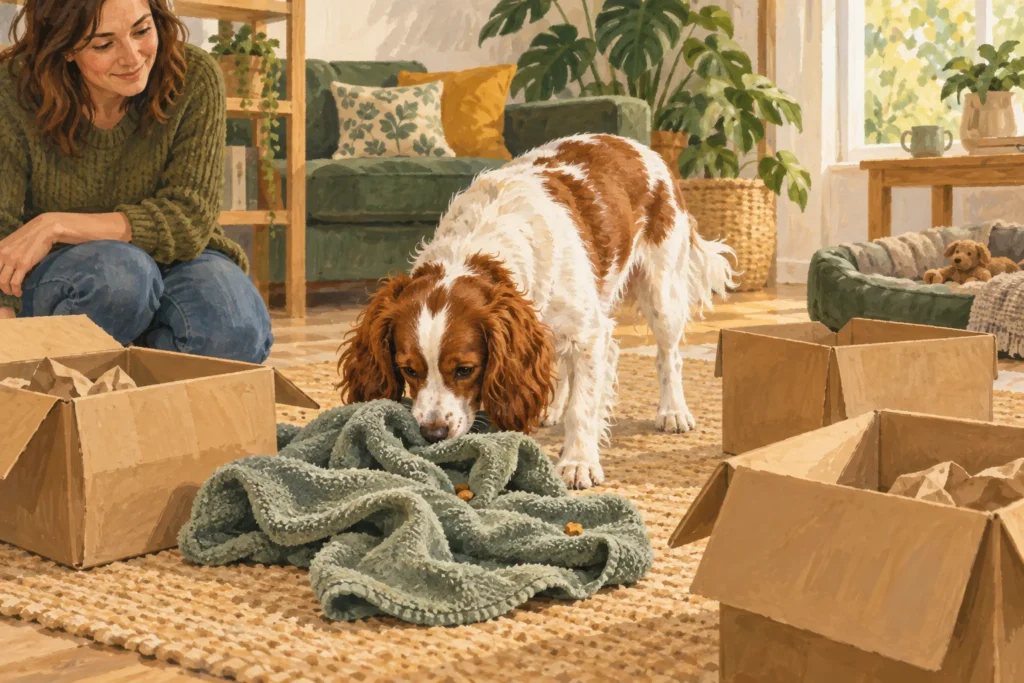
DIY dog enrichment can be as simple as an easy food search, a supervised open rummage box or a new way to play with a familiar toy. Use clean, suitable materials and choose activities your dog enjoys. You do not need to turn every meal or spare minute into a difficult puzzle.
This article contains Amazon affiliate links. As an Amazon Associate, we earn from qualifying purchases.
Table of Contents
Choose the activity before collecting materials
Think about what the dog likes doing: sniffing, carrying, searching for a toy or quietly spending time with you. The best starting point is an existing preference, not whichever craft project looks most impressive online.
Consider physical ability, dietary needs and chewing habits. A box game is unsuitable for a dog who swallows cardboard. A dog on restricted exercise may need a vet-approved activity that keeps movement within their care plan.
Try a simple open rummage box
Use a clean shallow cardboard box with tape, staples, labels and loose plastic removed. Keep the lid open. Add a little plain scrunched paper and a few pieces of suitable food in easy-to-find positions.
Let the dog investigate while you supervise. Make the contents simpler if they seem puzzled or frustrated. Remove the activity if paper or cardboard is being swallowed, and clear the materials away afterwards.
Blue Cross’s destruction-box guidance stresses supervision to prevent swallowing paper. The open, lightly filled version here is a conservative starting arrangement, not a challenge to see how much packaging a dog can dismantle.
Offer an easy towel search
For a dog who does not chew fabric, place a few pieces of food beside gentle folds in a clean towel on a non-slip surface. Keep the food accessible at first, and supervise throughout.
Do not tie tight knots or create a bundle the dog must tear apart. If the towel becomes something to bite and swallow, stop using fabric and offer a simpler open search instead.
The towel needs washing and drying afterwards. Avoid taking one from a cleaning cupboard where it may carry product residue.
Hide a familiar toy in an obvious place
Let the dog see where a toy goes, invite them to find it and enjoy the game they prefer afterwards. Begin with the toy mostly visible and easy to reach. You can gradually change the location while keeping the search area safe.
Do not hide toys under unstable furniture, on counters or in places where the dog must climb. For a dog who values carrying more than fetching, finding and carrying the toy may be the whole activity.
| Household item | Possible use | Reason to skip it |
|---|---|---|
| Clean cardboard box | Open supervised rummage game. | Dog swallows cardboard or cannot comfortably reach inside. |
| Plain towel | Easy food search in loose folds. | Fabric chewing, loose threads or contamination. |
| Existing dog toy | Simple hide-and-find game. | Damage or a size unsuitable for this dog. |
| Empty clear floor space | Food scatter or short training game. | Slippery flooring or competing pets. |
Rotate what you already own
Put a few suitable toys away and bring them back on another day. Rotation changes the available choice without requiring a new purchase every week. Keep favourites available if removing them would make the dog uncomfortable.
Our indoor enrichment-toy guide is useful when a bought item solves a specific problem, such as making cleaning easier. A durable food toy may be an alternative for some dogs who cannot use cardboard; Find KONG Classic (medium example) on Amazon UK. Suitability and supervision still apply.
Keep the food allowance visible
Set aside the food for activities before beginning and count it within the daily ration. Using three separate games should not quietly add three extra meals. Keep fresh water available and respect any dietary restrictions.
Judge the result by the dog’s response
Look for voluntary interest and comfortable participation. Walking away is useful information; the dog may prefer rest or a different activity. If the game causes repeated frustration, simplify it or stop.
Blue Cross describes enrichment as opportunities for natural behaviour, including social and environmental choices. A quiet sniffing walk or relaxed time together can be valuable too. DIY activities add variety; they are not a replacement for appropriate care or a treatment for serious behavioural distress.