
Last updated: 9 September 2026
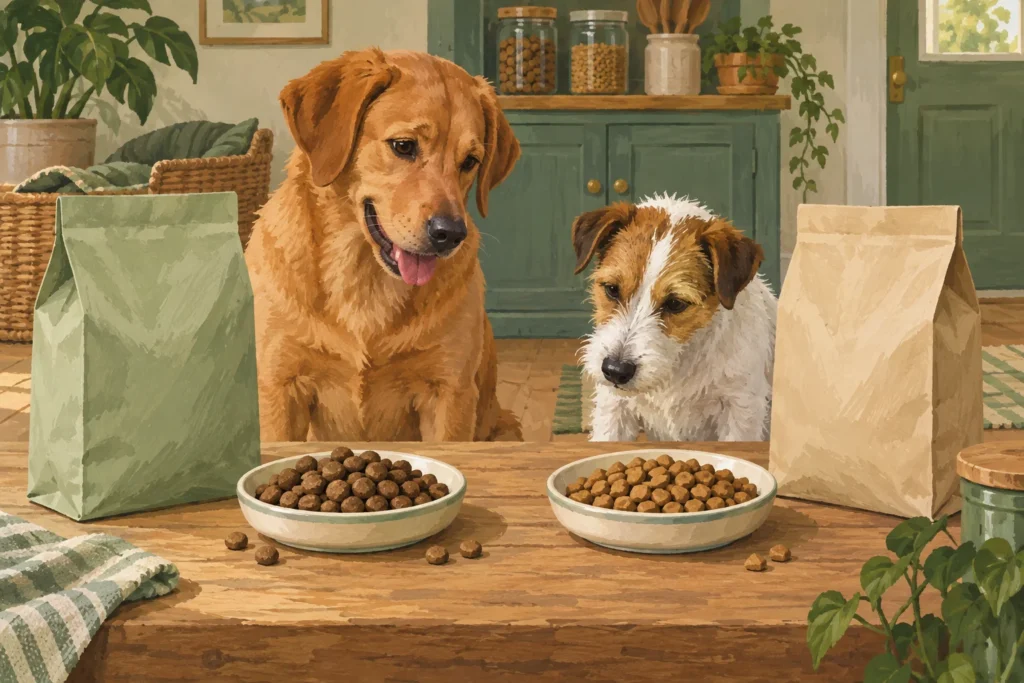
Cold-pressed dog food and conventional kibble are both dry-food options. Their production methods and physical texture differ, but the phrase “cold pressed” does not by itself establish a better diet for your dog. Compare the finished recipe, appropriate daily portion, acceptance, storage and cost before deciding to switch.
This article contains Amazon affiliate links. As an Amazon Associate, we earn from qualifying purchases.
Table of Contents
What cold pressing means in practice
Manufacturers use the term for food pressed into pellets using a different process from conventional extruded kibble. Forthglade, for example, describes heating ingredients that require it before combining and pressing its recipes at a lower temperature. The finished food is therefore not the same thing as an uncooked raw diet.
Methods vary by manufacturer. Be wary of treating one brand’s process as a precise description of every cold-pressed product. A temperature claim alone does not tell you whether the final meal is nutritionally suitable, how well a particular dog will accept it or what its appropriate portion should be.
Start with the finished food’s label
Look for a complete food suitable for your dog’s life stage. Read the ingredients, analytical information and feeding directions, and check any specific exclusions with the manufacturer. Compare actual recipes rather than setting a carefully chosen cold-pressed meal against an undefined category called kibble.
If your dog has a medical condition, follows a veterinary diet or has suspected food reactions, ask your vet before changing. Marketing descriptions such as gentle, natural or good for sensitive stomachs do not establish that a product will treat a particular problem.
| Buying question | Cold-pressed food | Conventional kibble |
|---|---|---|
| How do I assess nutrition? | Check the exact complete-food label and life stage. | Apply the same checks to the exact recipe. |
| How much do I serve? | Use its own gram guidance as a starting point. | Use its own guidance; do not transfer quantities between foods. |
| Will it work in a food toy? | Check pellet size, firmness and how it breaks. | Check kibble dimensions and the toy opening. |
| What does it cost? | Calculate the normal daily feeding cost. | Use the same calculation, not bag price alone. |
Texture can change how you use the food
Before buying a large pack, consider how you normally feed. A pellet that suits a bowl may be too large for a particular treat ball or may break into crumbs in a pouch. Conventional kibble also varies widely, from small pieces to larger shapes.
If your dog normally takes part of a meal on walks or in enrichment activities, check whether the new food is practical for those jobs. You may need a different dispensing opening or a simple bowl serving while you learn the texture. Do not force a food into a toy that cannot release it comfortably.
Compare portions by grams and days
A visually similar scoop of two foods can supply different quantities and energy. Follow the new food’s guidance and monitor your dog’s weight and body condition with appropriate support. Do not assume that the old bowl level remains correct.
For a straightforward cost comparison, divide the bag price by its weight in grams, then multiply by the intended daily grams. An illustrative £30, 3,000g bag used at 150g a day costs £1.50 per day. Those are example numbers, not a current product quotation.
A practical cold-pressed product to investigate
Forthglade’s cold-pressed range is a useful starting point for UK shoppers who want to examine a named manufacturer’s process, recipes and feeding guidance. Find Forthglade cold-pressed dog food on Amazon UK. Check the exact recipe, pack size and life-stage statement on the listing and supplied bag; do not assume every product carrying the brand name is cold pressed.
This is a product to compare, not a claim that it outperforms every kibble. If your existing complete food suits your dog and routine, the process label alone is not a reason to replace it.
Plan storage and any transition
Read the pack’s storage instructions and estimate how long it will take to finish after opening. Keep dry food protected from moisture and contamination, with its label and batch information retained. Buying the largest bag only helps if you can use it appropriately.
Follow a suitable transition plan rather than changing abruptly because two products are both dry. Keep treats and other additions in view when assessing how the new diet is working. Contact your vet about persistent digestive or other health concerns instead of repeatedly switching formats.
Which format should you choose?
Choose the complete recipe your dog can eat comfortably, whose portion and normal cost fit your household, and which you can store and serve consistently. Our broader dog food guide helps compare formats. Cold pressing is one feature of a product; it should sit beside the nutritional and practical checks, not replace them.