
Last updated: 9 September 2026
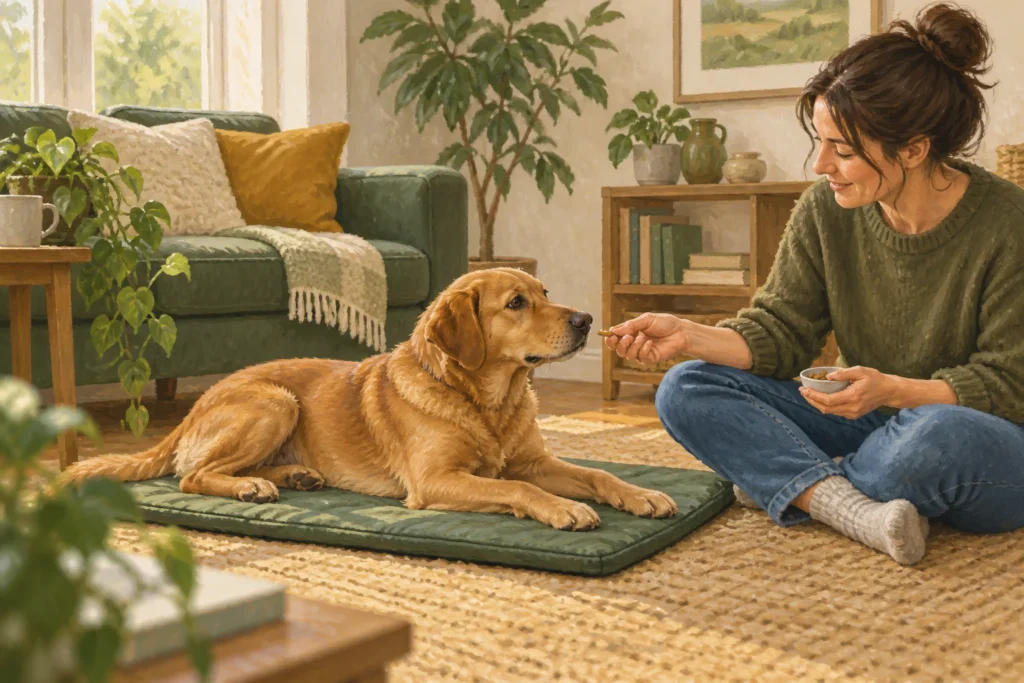
To teach a dog to settle, begin where resting is already easy and reward small signs of relaxation on a comfortable mat. Build time and distractions separately. The aim is a dog who can switch off, not one who must remain motionless while worried, uncomfortable or desperate to investigate.
This article contains Amazon affiliate links. As an Amazon Associate, we earn from qualifying purchases.
Table of Contents
Choose the moment before choosing the cue
Start after your dog has had a suitable opportunity to move, toilet and explore, but before they become overtired or frantic. Use a quiet room with enough space to step away. A cafe at lunchtime is a difficult classroom for a skill your dog has never practised.
Pick a mat large enough for an ordinary relaxed lying position. It should not slide when your dog steps onto it. A familiar towel or piece of bedding can be sufficient at home. If you need a portable option, Find a washable non-slip dog training mat on Amazon UK; check its dimensions and washing instructions rather than buying the smallest one that folds.
Let the mat acquire a pleasant meaning
- Put the mat down without repeatedly calling your dog onto it. Let them notice it.
- Quietly reward voluntary interest, then standing or resting on it. Place rewards where your dog can reach them comfortably.
- As they understand the location, reward easier signs of settling: a less tense posture, a comfortable lie-down or a head resting briefly.
- Pause between rewards. Keep the exercise quiet rather than turning each piece of food into an exciting announcement.
- Finish while your dog is comfortable, and let them move away.
Use small rewards that suit the dog and include them in the day’s allowance. If food creates frantic anticipation, reduce the excitement of the setup and consider professional help with reward choice and timing. Repeatedly withholding a treat while your dog struggles is unlikely to produce the relaxation you want.
Add a cue after the behaviour is familiar
Once your dog regularly chooses the mat and rests, introduce a simple cue such as “settle” as they are about to do it. Say it once. A stream of repeated instructions can become background noise, and it makes it harder to see whether the dog understands the first request.
A release word can make structured practice clearer, but there should still be room for the dog to communicate discomfort. Do not physically hold them down or keep replacing them when they are anxious. If you use a marker, our clicker training guide explains how marking and rewarding work; a quiet verbal marker may suit this particular exercise.
Increase one difficulty at a time
| Next challenge | Make the other parts easier |
|---|---|
| A few more seconds | Remain close in the same quiet room. |
| You stand up | Reward a brief comfortable response rather than demanding a long stay. |
| A different room | Return to short, familiar repetitions. |
| A quiet outdoor location | Allow sniffing first and keep distance from activity. |
For example, a dog who rests beside you during breakfast might initially manage only a moment while another person walks through the room. That is useful information about the training level, not disobedience. Make the next attempt easier instead of adding a firmer command.
Take the skill into daily life carefully
Use your mat during a quiet cup of tea at home before trying a garden visit or a calm corner outside. At a public venue, check dogs are welcome, leave an exit route and avoid blocking staff or other customers. A lead may be needed for safety, but it should not be used to pin the dog to the mat.
Offer breaks. A dog who can rest for a short period has not agreed to spend an entire afternoon under a busy table. Build outings around what your dog can currently manage.
When settling is not the right problem to train
Persistent panting, pacing, repeated position changes or a sudden loss of the ability to rest can warrant veterinary advice, especially if this is new. Fear around visitors, separation distress and resource guarding need their own assessment. Mat training can support a wider plan, but it does not resolve every reason a dog struggles to relax.