
Last updated: 9 September 2026
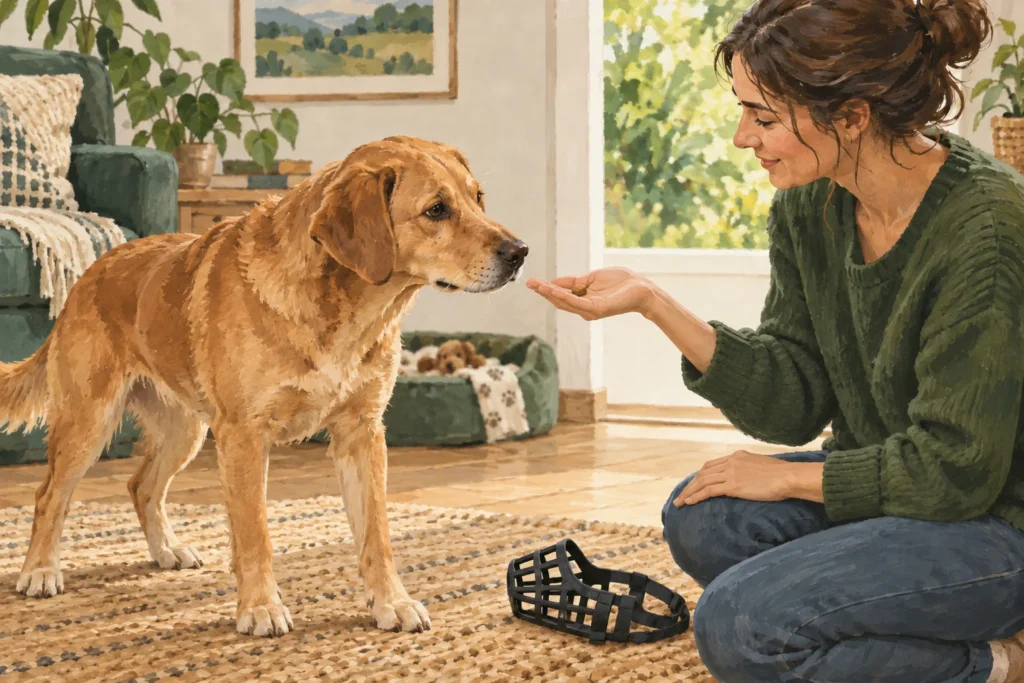
Muzzle training works best when the dog chooses to approach the muzzle and gradually learns that wearing it predicts good things. Start before you need it, work in short sessions and progress according to the dog’s comfort. Fastening a new muzzle and waiting for the dog to stop struggling is not a training plan.
Battersea recommends a series of positive sessions over days rather than a rushed introduction. Some dogs need considerably longer. If the muzzle is needed urgently, discuss immediate handling and management with your vet or qualified behaviour professional instead of compressing the process.
Table of Contents
Begin with a suitable fit and a quiet setup
Choose a basket design that gives the dog room to pant, drink and receive rewards, with clearance around the nose. Check the exact product’s measurements and intended use. A dog who can only hold their mouth shut is not ready for ordinary walking in that equipment.
This article contains Amazon affiliate links. As an Amazon Associate, we earn from qualifying purchases.
Baskerville Ultra is one basket-style option to assess for fit; the maker describes access for panting, drinking and treats. Find Baskerville Ultra dog muzzle on Amazon UK if you need a starting point for comparison. Individual face shape matters more than the brand, and a correctly sized alternative may suit better.
Arrange a non-slip surface, suitable small rewards and space for the dog to move away. Work when the dog is settled. If reaching towards their face is unsafe, or food near your hands creates guarding concerns, obtain professional help before practising.
Separate the process into small decisions
- Investigate: let the dog notice the stationary muzzle and reward comfortable interest. Keep it low and still rather than advancing it onto the face.
- Enter voluntarily: begin with a reward near the opening, gradually making nose entry comfortable. Leave the straps open.
- Reward after entry: once the dog readily puts their nose in, deliver a reward through the basket. Let them withdraw.
- Add brief duration: reward comfortable moments with the nose inside before asking for more.
- Introduce straps separately: practise the buckle sound at a comfortable distance and gradually introduce the feel of the straps.
- Fasten briefly: when earlier stages are easy, fasten, reward and remove calmly. Build wearing time gradually.
Dogs Trust and Battersea describe this gradual progression, including rewarding voluntary entry and introducing straps before longer wearing. The stages are milestones to revisit, not six boxes that must be completed in one session.
Make one change at a time
Suppose your dog comfortably puts their nose into the open muzzle in the kitchen. Adding a clipped strap, a longer wait and a walk into the garden all at once makes it difficult to know which change was too much. Practise the new element in the familiar setting first.
Keep a simple note such as “nose in willingly; comfortable with strap resting; clip next time only if still relaxed”. This is more useful than recording only the number of minutes trained. Start the next session with an easy success rather than immediately testing the hardest stage.
A familiar marker word can identify the moment you want to reward. Our clicker training guide explains the same timing principle. You do not need to buy a clicker if a quiet word works well for your dog.
Respond to discomfort instead of waiting it out
| What happens | What to reassess |
|---|---|
| The dog moves away when the muzzle appears | Distance, previous experience and whether the starting step is too difficult |
| Nose entry is easy but straps cause withdrawal | Separate strap handling from wearing time |
| Pawing starts after fastening | Fit, duration and whether fastening was introduced too quickly |
| Comfort at home does not carry over outside | The new setting and surrounding triggers |
Stop and make the next attempt easier if the dog is worried. Do not hold their head in place, restrain them to complete a repetition or punish pawing. Persistent discomfort, suspected pain or a history of biting warrants individual professional guidance.
Practise movement and useful everyday skills
Once comfortable wearing the muzzle, introduce a few relaxed steps in a familiar place, easy rewards and opportunities to drink. Check that the equipment stays positioned without rubbing. Extend into quiet real-life settings before expecting comfort in a busy one.
A muzzle is one part of management. It does not change how the dog feels about a frightening situation or make unwanted contact appropriate. Maintain space, use suitable lead control and tell other people what your dog needs. Continue enjoyable practice between occasions when wearing it is necessary, and supervise use.