
Last updated: 9 September 2026
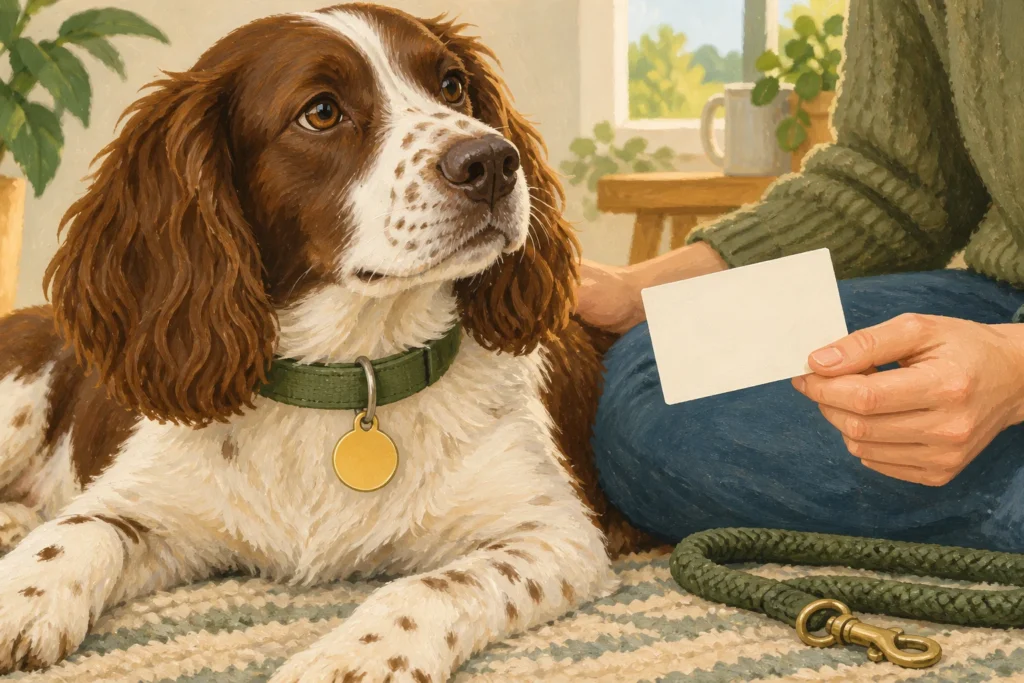
For an ordinary pet dog out in public in the UK, the core identification is the owner’s name and address on the collar or an attached plate or tag. Add a current telephone number as a useful extra. A microchip is important, but it does not replace visible collar identification.
The dog’s name is optional. It should not take up the space needed for the owner’s details. Choose a tag large enough to keep the important information readable, rather than shrinking the text to fit an elaborate design.
Table of Contents
Required information versus helpful extras
| Information | Role on the tag |
|---|---|
| Owner’s name | Part of the core identification requirement |
| Owner’s address | Part of the core identification requirement |
| Telephone number | Useful for quickly reaching you |
| Second contact number | Optional backup if space allows |
| Dog’s name | Optional and lower priority than contact details |
| QR code or tracking-service details | Optional addition, not a substitute for the required wording |
GOV.UK states that a dog must still wear a collar and tag with the owner’s name and address in public even when microchipped. Local-authority guidance explains that the information can be inscribed on the collar or carried on an attached plate or disc. Use a full, clear postal address, including postcode, rather than relying on an ambiguous abbreviation.
A readable engraving layout
For a two-sided tag, one practical arrangement is the owner’s name and telephone number on one side, with the full address on the other. Ask the engraver to show the layout before production if the address is long. Check spelling, every phone digit and the postcode separately.
For example, your order instructions could say: “Side one: owner’s full name, then mobile number. Side two: house name or number and street, locality or town, postcode.” This is a layout plan, not a requirement that the information be divided exactly this way.
This article contains Amazon affiliate links. As an Amazon Associate, we earn from qualifying purchases.
Find engraved dog ID tag two sided name address phone on Amazon UK. Compare engraving capacity, material and attachment type. A decorative tag with very few available characters may not be the right product for a long address.
Collar plate or hanging tag?
A hanging disc is easy to transfer to another collar, but the connecting ring needs inspection. A slide-on or fixed collar plate may reduce dangling and noise, provided it fits the collar securely and remains readable. Check that edges are smooth and that the tag does not interfere with the collar buckle.
The size and weight should suit the dog. Do not solve a tiny tag’s space problem by omitting the address; consider a suitable collar plate or another readable format. If you use a walking harness, keep the required identification on a suitable collar rather than assuming a harness alone fulfils the collar wording.
Northern Ireland has separate licensing rules
NI Direct also states that dogs generally need a collar bearing the owner’s name and address, or an attached plate or badge. Its guidance includes specific exemptions and separate licensing and microchipping requirements. If an exemption may apply to your dog, check the actual conditions rather than assuming breed or occupation removes the ordinary rule.
This guide focuses on everyday pet identification. Specialist working situations and individual legal restrictions can need additional checks with the relevant authority. Keep local licensing requirements separate from the engraving decision; buying a tag does not obtain a dog licence.
Microchip and tag details should work together
A visible number lets a finder contact you without a scanner. A registered microchip offers another route when the collar is missing or unreadable. Keep the microchip database details current when you move house or change phone number, and update the tag at the same time.
If you do not know which database holds the record, use the official guidance or ask your vet for help. Do not assume the details automatically change because you told the veterinary practice your new address.
Check before holidays and collar changes
Make sure the main contact can answer during the trip. An additional temporary contact tag can be useful when someone else is caring for your dog, while retaining the core owner identification. Check any boarding-provider requirements separately.
Read the tag in ordinary light every so often. Replace it if engraving wears away, the ring opens or the plate loosens. Good recall training and secure walking management help reduce losing a dog, but clear identification is still a practical backup. The best tag is one a finder can read and use immediately.