
Last updated: 9 September 2026
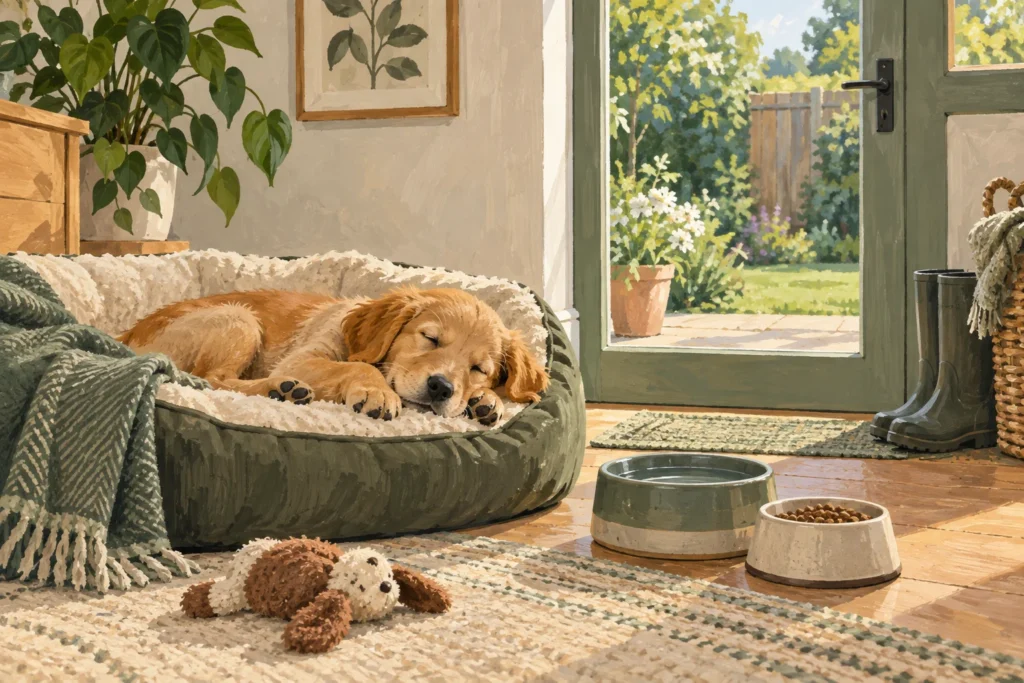
A useful puppy daily routine repeats a simple pattern: wake, toilet, eat or enjoy a short activity, toilet again when needed, then rest. Fit meals to your puppy’s age and feeding plan, provide frequent toilet opportunities and leave plenty of quiet time. The sequence should respond to the puppy, rather than forcing them to meet a clock.
Your first routine is a working draft. A puppy who has just arrived may need more support and different timings from the same dog several weeks later. Keep the important events predictable while allowing the details to change.
Table of Contents
Build the day around events
| Event | What usually follows | What to watch |
|---|---|---|
| Waking from a nap | A prompt toilet opportunity | Do not wait for a full training session first |
| A meal or drink | Supervision and another toilet opportunity | The puppy’s individual timing |
| Play or excitement | A pause, toilet chance and calmer activity | Escalating biting or inability to settle |
| A short learning session | Break and relaxed time | Stop while engagement remains comfortable |
| Evening wind-down | Quiet company and bedtime preparation | A tired puppy may still need reassurance |
Dogs Trust highlights toilet opportunities after sleep, eating, drinking, play and excitement. Keep a close eye on the puppy rather than relying only on a timer. Sniffing, circling or moving away can give you useful information once you learn the individual pattern.
An example morning, without universal times
On waking, take the puppy to the safe toilet area. After breakfast, stay available for another trip. Offer a brief period of gentle play or a simple learning exercise, then help the puppy settle in their comfortable resting space. When they wake, begin with the next toilet opportunity.
For one puppy, an activity might be investigating a cardboard box under supervision; for another, it may be a few rewarded responses to their name. Neither needs to become a long lesson. Rotate small experiences across the week rather than cramming them into one morning.
Arrange work calls and household jobs around likely waking periods where possible. If you cannot be available, organise a suitable person to help. A routine cannot make a young puppy ready for long stretches without care.
Keep meals clear and measurable
Use an appropriate complete puppy food and follow the feeding plan agreed with your veterinary team or the manufacturer’s guidance. Check how many meals suit your puppy’s age and needs. Do not copy an adult dog’s twice-daily pattern without considering the puppy.
Weigh the daily ration and set aside any food used for training. Then everyone knows what remains for bowls. Keep fresh water available; withholding it to reduce accidents is not a toilet-training strategy.
This article contains Amazon affiliate links. As an Amazon Associate, we earn from qualifying purchases.
Find digital kitchen scales with tare for puppy food on Amazon UK. Simple gram scales with a tare function can make the daily allowance easy to divide. A shared note beside the food container helps prevent two family members feeding the same meal.
Make rest possible
Choose a comfortable area away from constant traffic, and teach children and visitors to leave the puppy alone when resting. A puppy who is repeatedly woken may struggle to settle again. Quiet time with someone nearby can be more useful than expecting immediate independence.
Use a crate or pen only if it has been introduced positively and the puppy is comfortable there. Do not close an exhausted, distressed puppy inside and assume the schedule will teach them to relax. Look at the environment and level of support they need.
Evening excitement does not always mean more exercise is required. Lower the household activity, offer a toilet break and help the puppy wind down. Avoid adding a vigorous game simply to reach a target number of active minutes.
Track patterns for a few days
A short record of waking, meals, toileting and rest can reveal practical changes. If accidents often happen immediately after play, offer a toilet trip sooner. If visitors consistently interrupt naps, move visits or protect the resting area. Record what happened without labelling the puppy naughty.
Reward toileting in the intended place after the puppy finishes. Clean accidents calmly and adjust supervision. Straining, pain, unusual thirst, diarrhoea or a sudden change in toilet habits needs veterinary advice rather than a stricter timetable.
Let the routine grow with the puppy
Revisit the pattern as feeding needs, confidence and stamina change. Introduce safe outings in line with your vet’s vaccination advice, and build skills in short sessions. Our puppy class guide can help you find practical reward-based support.
Keep the household consistent about meals, rest and toilet trips, but do not worry if lunch happens slightly later one day. A good routine makes the puppy’s needs easier to meet and gives you information when something changes.