
Last updated: 9 September 2026
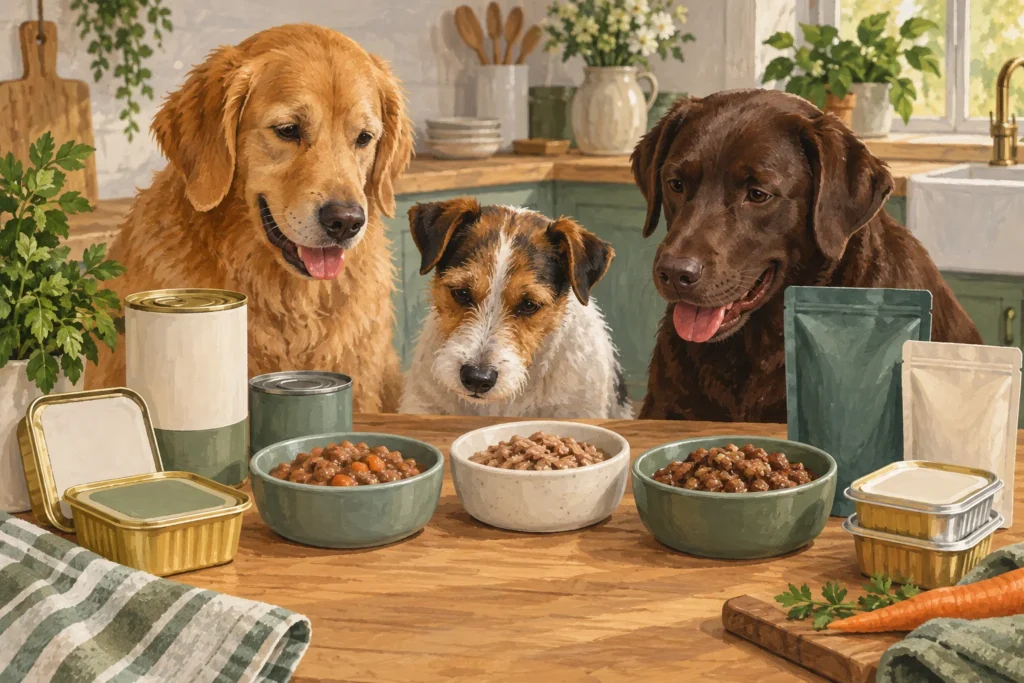
The best wet dog food in the UK is a complete recipe suited to your dog’s life stage that also works with your budget and storage routine. Tins, trays and pouches can all be convenient. The useful comparison is how much food you need each day and how much of an opened pack you can use, not which container looks more premium.
For dogs on a veterinary diet, keep to the prescribed plan unless the practice advises a change. This guide compares everyday buying decisions and does not rank foods as treatments for digestive, skin or dental conditions.
Table of Contents
Choose complete meals first
Check the exact product description. Forthglade sells complete wet recipes and a separate complementary Just range; the brand name alone does not tell you whether a tray is a whole meal. The same check applies to toppers, broths and meat pouches from any manufacturer.
Wet food contains substantially more water than dry food, so grams are not interchangeable across the two formats. A smaller protein percentage on a wet label is not by itself evidence of less protein relative to dry matter or energy.
A practical shortlist by format
| Product example | Format | Useful reason to compare it | Check carefully |
|---|---|---|---|
| Lily’s Kitchen Chicken & Turkey Casserole | 400g tin | A complete wet recipe with published composition and energy information | It contains both chicken and turkey, plus grains |
| Forthglade adult Turkey & Brown Rice | 395g tray | A complete wholegrain meal in a near-400g format | Choose the complete recipe rather than a complementary tray |
| Smaller complete trays or pouches | Exact pack size varies | Potentially easier portions for a small daily wet-food allocation | Compare price per daily portion and packaging count |
This article contains Amazon affiliate links. As an Amazon Associate, we earn from qualifying purchases.
Find Lily’s Kitchen Chicken & Turkey Casserole (6 × 400g) on Amazon UK. For the tray option, Find Forthglade Turkey & Brown Rice complete food (18 × 395g) on Amazon UK. These links open example listings for the named foods; inspect the listing’s recipe, life stage and multipack contents before ordering.
Neither named product wins simply because of its meat percentage. The decision should also account for complete status, the dog’s feeding needs, acceptance and practical cost. We have not carried out feeding trials or taste tests.
Compare the amount you will actually serve
Use the manufacturer’s daily guide or the portion already agreed for your dog, then calculate how many packs that amount uses. Do the exercise for each recipe separately. A 400g tin and a 395g tray look almost identical in size but need not supply identical calories.
Here is a hypothetical example: a dog allocated 300g of a particular wet food each day uses three 400g tins over four days. At an illustrative £2 per tin, that is £1.50 a day before delivery. It is a budgeting example, not a recommended feeding amount or current product price.
If you add dry food, calculate the wet and dry shares as parts of the intended total ration. Adding a full wet allowance to a full dry allowance is not mixed feeding in the portioning sense; it doubles two independently calculated meals.
Think about the opened pack
A small dog eating a little wet food alongside dry may take longer to finish a large tin than you expect. Check the exact label’s refrigeration and use-after-opening instructions. Choose a format you can finish within those instructions rather than extending storage to make a bulk purchase appear economical.
Consider the fridge space, the lid or clean covered container needed, and whether a household member can clearly see when the food was opened. Avoid keeping unlabelled half-packs whose age depends on everyone remembering the previous meal.
For a larger dog, the opposite problem appears: small pouches can mean opening many individual packs every day. A format that is tidy for one meal may become fiddly and expensive across a week.
Trial one recipe before buying a large variety pack
A variety pack spreads the purchase over several recipes. That is useful only if each recipe is suitable and accepted. Start with a manageable quantity, introduce food gradually as appropriate, and keep track of what the dog actually eats.
Do not keep adding richer toppers to work around a new loss of appetite. Seek veterinary advice when appetite changes are persistent or accompanied by illness. The answer may not be another brand.
Choose a repeatable everyday routine
Write the daily wet-food amount where everyone who feeds the dog can see it. Include food used in enrichment toys and treats in the overall plan. Keep fresh drinking water available even when much of the meal is wet.
Our wider dog food guide covers the choice of format. For a wet-only shortlist, favour a suitable complete recipe with a manageable daily cost, clear portion information and packaging that fits your real routine. A cupboard full of discounted food is poor value if it creates waste or constant feeding changes.