
Last updated: 9 September 2026
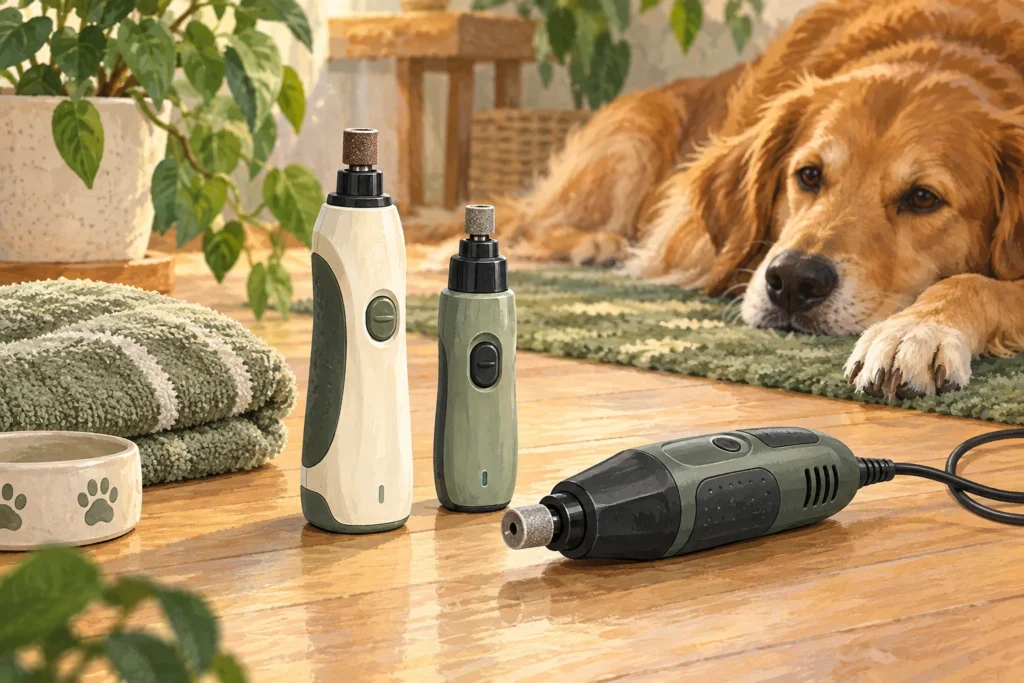
The best dog nail grinder is one you can control comfortably, maintain with the correct accessories and introduce without frightening your dog. Compare the mains-powered Wahl ZX795 with the cordless Dremel 7350 PET as two different arrangements. Do not choose by the largest speed number or assume a grinder removes the risk of cutting too far.
This article contains Amazon affiliate links. As an Amazon Associate, we earn from qualifying purchases.
This buying guide uses manufacturer specifications and instructions. It does not rank measured noise, battery endurance or trimming performance. A veterinary nurse or experienced groomer can demonstrate the technique and assess whether grinding is appropriate for your dog.
Table of Contents
Two practical options
| Model | Power and control arrangement | What to check |
|---|---|---|
| Wahl Electric Nail Grinder ZX795 | Mains-powered pet grinder. | A safe cable route, suitable working position and correct replacement grinding accessories. |
| Dremel 7350 PET, UK kit | USB-recharged cordless tool with a single 12,000rpm speed. | Included nail guard and accessories, charging arrangements and model-specific instructions. |
Find Wahl ZX795 pet nail grinders on Amazon UK or Find Dremel 7350 PET on Amazon UK. Choose the pet kit and exact UK model, not a general rotary tool that happens to share a brand. Dremel kits differ by market and version, including the accessories supplied.
A cordless design removes a trailing power cable during use but introduces a charging routine. A mains tool avoids waiting for a charge but requires an appropriate socket and cable management. Neither arrangement guarantees that a dog will tolerate the sound or vibration.
Look for usable control
Consider the grip, switch position and whether you can see the nail clearly while holding the tool. The dog must also be comfortable with paw handling. A tool that feels manageable in an empty hand may feel different when your other hand is supporting a paw.
Do not equate higher speed with better care. Different tools and accessories remove material differently. Follow the exact instructions and the technique demonstrated for your dog, using brief contact and pauses rather than pressing continuously against the nail.
A guard can help guide positioning, but it cannot identify the sensitive quick for you or make an unsuitable technique safe. If you cannot judge how much nail can be removed, ask for a demonstration before attempting it.
Check replacement parts before checkout
Find the part numbers for compatible stones, bands, discs or other consumables. Check how they are fitted and whether the manufacturer still supports the model. A cheap grinder with no identifiable replacements may be inconvenient once its supplied surface wears.
Compare the complete starting cost: tool, required power accessories and compatible consumables. Do not add speculative annual replacement costs unless you have a real usage record. For illustration, a £35 tool plus £8 of required accessories starts at £43; a £45 complete kit starts at £45. Those are example figures, not product prices.
Introduce sound separately from nail contact
- First establish calm paw handling without the grinder.
- Let the dog notice the switched-off tool at a comfortable distance.
- Introduce its sound briefly at a distance the dog tolerates.
- Reward relaxed participation and stop before the dog becomes worried.
- Progress to the demonstrated handling and nail technique only when the earlier steps are comfortable.
Do not turn a struggling dog’s first session into a test of endurance. If the dog retreats, stiffens or becomes distressed, stop and seek help with a gradual plan. Buying a product described as quiet does not eliminate the need for introduction.
Keep hair and rotating parts apart
Read the manual’s safety instructions for loose hair, jewellery and clothing. Long paw hair can become caught in rotating equipment. If you cannot keep the area clear and the dog comfortable, have the job done professionally rather than improvising restraints.
Switch the tool off before changing accessories or cleaning it. Inspect fitted parts before each session and use only the compatible accessories the maker specifies. General craft or workshop attachments are not automatically suitable for pet nails.
Know when to stop
Pain, a split or injured nail, bleeding or an unwillingness to bear weight calls for veterinary advice. A grinder is not a treatment for those problems. You also do not need to finish every nail in one sitting if the dog needs a break.
Our nail-clippers guide covers the alternative tool category. Some owners use professional nail care, some use clippers after instruction and some prefer a grinder. Choose the method you can use safely and calmly, with the correct support.