
Last updated: 9 September 2026
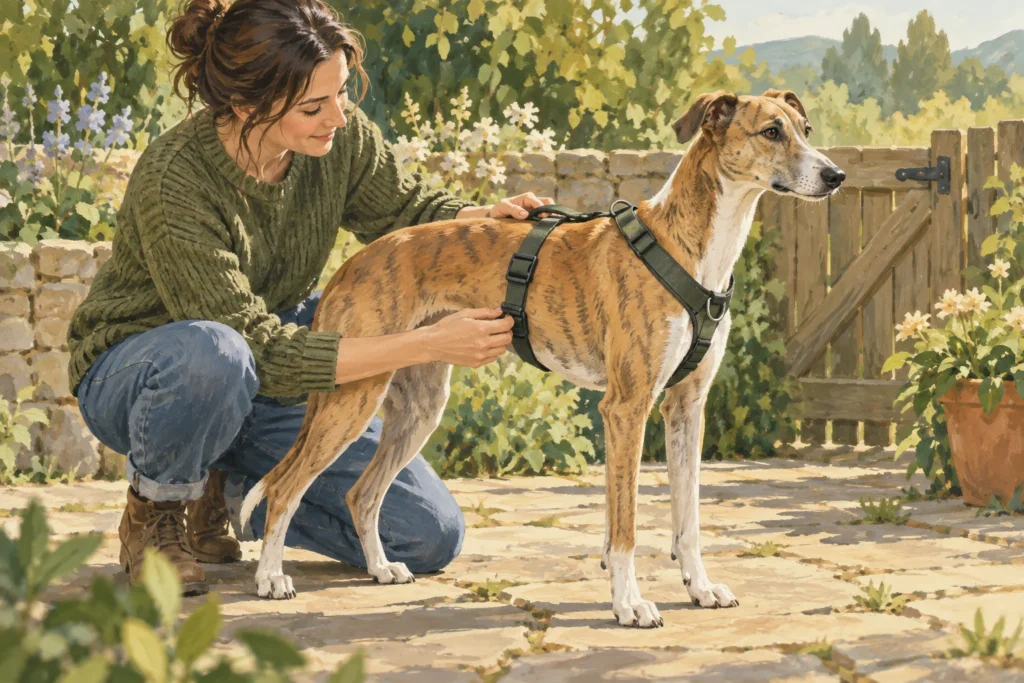
If you are searching for an escape-proof dog harness, treat that phrase as a shopping aim rather than a guarantee. A correctly fitted three-strap design can be worth considering for a dog that backs out of ordinary equipment, but the individual fit, handling and circumstances still matter. Start with the Ruffwear Flagline and current Web Master as two designs to investigate.
This article contains Amazon affiliate links. As an Amazon Associate, we earn from qualifying purchases.
This is a manufacturer-information comparison, not an escape test. For a dog with a history of slipping equipment or panicking outdoors, arrange fitting and handling help from an appropriately qualified reward-based professional.
Table of Contents
Compare these two designs
| Model | Published features relevant to the decision | Check on your dog |
|---|---|---|
| Ruffwear Flagline | Lightweight construction, six adjustment points and a padded handle with chest/belly panel. | Strap positions, stability and whether the body length suits your dog. |
| Current Ruffwear Web Master | Three-strap design, a neck buckle, structured padded back and four adjustment points. | Whether the newer neck-buckle version is the one being sold, and how its structure sits. |
Find Ruffwear Flagline (medium, Basalt Grey) on Amazon UK or Find Ruffwear Web Master harnesses on Amazon UK. Match photographs, features and instructions to the exact version. Older Web Master descriptions may refer to a different buckle and adjustment arrangement, so a familiar model name alone is insufficient.
A rear body strap is one reason owners investigate these designs, but simply adding more straps does not establish an appropriate fit. The harness must sit where its maker intends and allow comfortable movement without being tightened excessively.
Understand the escape situation
Write down what happened during the previous incident: the direction of movement, lead tension, nearby trigger and which part of the harness moved first. Did the dog reverse while frightened? Did a strap loosen? Was the lead attached to the intended ring? This record helps a fitter address the actual problem.
Do not deliberately reproduce an escape near traffic or an open gate. Check equipment in a secure environment with suitable help. If handling makes the dog more frightened, stop and simplify the situation.
Our harness-versus-collar guide provides background, while the pulling-harness guide addresses a different training and equipment question.
Measure and fit the selected model
- Use the manufacturer’s current measuring diagram and size chart.
- Record the required measurements with the dog standing naturally.
- Fit every strap in its intended position before attaching the lead.
- Check the manufacturer’s guidance on snugness and adjustment.
- Watch the dog walk, turn, sit and lower their head in a secure space.
- Recheck the fit after movement, growth, coat changes or weight change.
A chart is the first filter, not the final verdict. If one part fits but another sits poorly, seek fitting help or choose another design. Over-tightening an unsuitable harness is not a sound way to prevent slipping.
Do not confuse modular pieces with extra body straps
PerfectFit’s signature harness uses separately selectable top, front and girth pieces. That modular approach can help address unusual proportions, but three pieces does not mean the same structure as a three-strap body harness. Compare the actual layout and fit, not the number three in the description.
If your dog falls between ordinary sizes, a supported fitting service can be more valuable than buying multiple speculative accessories. Explain the escape history when asking for advice so the recommendation considers more than chest measurement alone.
Keep the whole walking system consistent
Inspect buckles, stitching, adjustment sliders and the lead clip before use. A loose or damaged connection can undermine an otherwise suitable harness. Attach only to the manufacturer’s designated lead points, and check that the clip closes fully.
A secondary connection may be appropriate in an individual handling plan, but do not improvise a tangle of straps. Ask the professional helping your dog how to arrange compatible equipment and manage the lead without uncomfortable pressure or entanglement.
Choose calm routes and enough distance from known triggers while training progresses. Equipment can support management; it does not change the reason a worried dog is trying to get away. The useful purchase is the model that fits securely and comfortably within that broader plan.