
Table of Contents
As an Amazon Associate, we earn from qualifying purchases. This means we may receive a small commission at no extra cost to you when you buy through links on this page.
Understanding Your Poodle’s Nutritional Needs
Poodles, known for their intelligence and hypoallergenic coats, require a specifically tailored diet to thrive. Their nutritional needs vary based on age, size (Standard, Miniature, and Toy), and activity level. Standard Poodles, being larger, need more calories and a controlled calcium intake during puppyhood to prevent rapid growth, which can contribute to joint problems later in life. Miniature and Toy Poodles, while smaller, are prone to dental issues, so kibble size and texture are important considerations. All poodles can be susceptible to health concerns like bloat (gastric dilatation-volvulus), particularly Standard Poodles, and progressive retinal atrophy (PRA), where diet rich in antioxidants may play a preventative role. A quality diet is paramount for maintaining their coat health, supporting their active minds, and preventing breed-specific ailments.
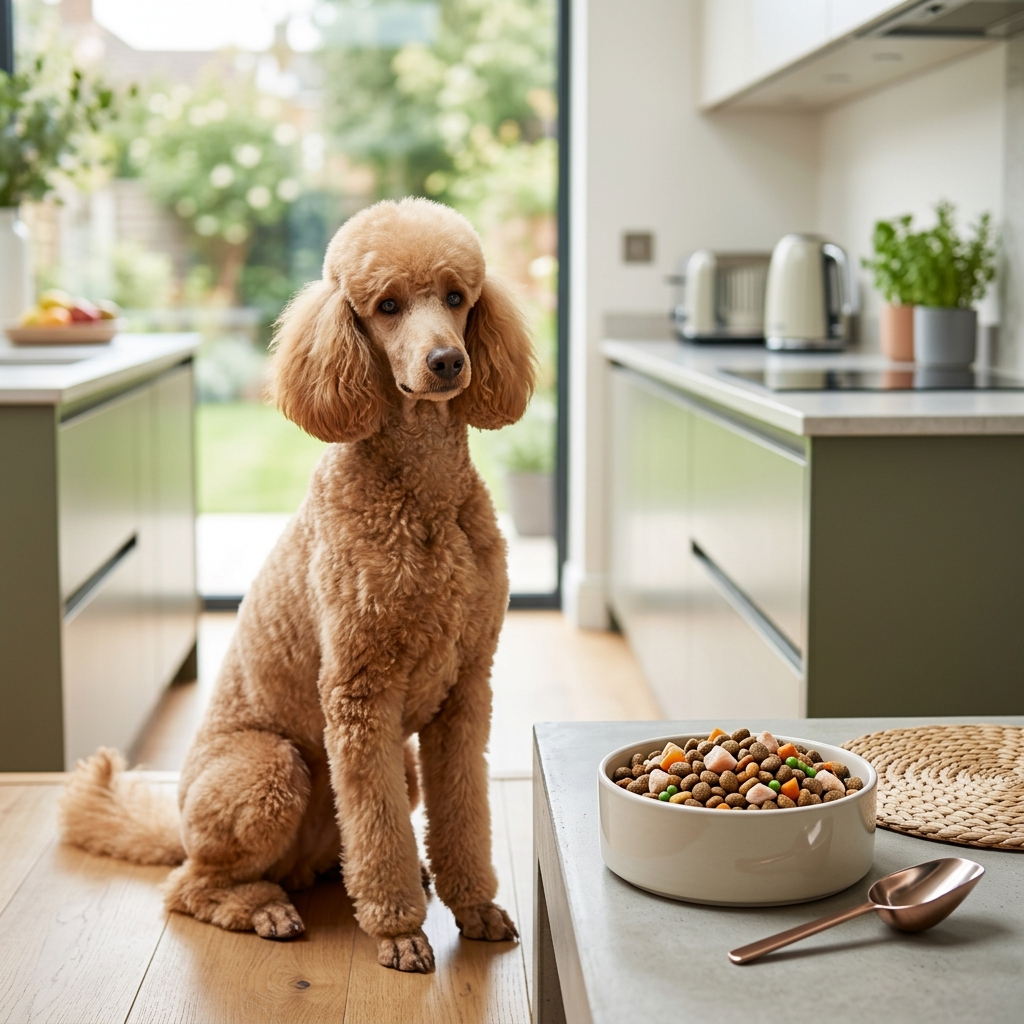
Poodle Puppy Food: Fueling Growth (0-12 Months)
Poodle puppies require a diet rich in high-quality protein (around 30-35%), healthy fats (15-20%), and moderate levels of calcium and phosphorus. DHA (docosahexaenoic acid) is crucial for brain and eye development. Look for puppy-specific formulas designed for medium to large breeds (depending on your poodle’s size) to avoid excessive calcium, which can lead to skeletal problems. Feeding guidelines should be followed carefully, and avoid overfeeding to prevent rapid growth. Harringtons Grain Free Puppy Food 12kg (£48.00) is a good starting point, offering a balanced formula. Remember to transition to adult food around 12 months for Standard Poodles, and slightly earlier for Miniature and Toy varieties.
Adult Poodle Food: Maintaining Health & Vitality (1-7 Years)
Adult poodles need a diet that maintains their lean muscle mass, supports their energy levels, and keeps their coats gleaming. Protein sources like chicken, lamb, fish, and salmon are excellent choices. Ensure the food contains a good balance of omega-3 and omega-6 fatty acids for coat health. Poodles can be prone to weight gain if overfed, so monitoring portion sizes is essential. Royal Canin Poodle Adult Dry Dog Food 12kg (£65.00) is specifically formulated for the breed, taking into account their unique needs, while Lily’s Kitchen Salmon & Vegetable Recipe Dry Dog Food 10kg (£55.00) provides a natural, wholesome alternative.
Senior Poodle Food: Supporting Golden Years (7+ Years)
As poodles age, their metabolism slows down, and they become less active. Senior formulas typically contain fewer calories to prevent weight gain and added supplements like glucosamine and chondroitin for joint health. Digestibility is also important, as older dogs may have difficulty processing food. Look for formulas with easily digestible protein sources and added fiber. YuMOVE Joint Care for Dogs (£30.00) can be added to their regular food to further support joint health. A diet with antioxidants can also help support their immune system.
Types of Poodle Dog Food: A Breakdown
Choosing the right *type* of dog food is as important as choosing the right formula. Here’s a breakdown:
- Dry Kibble: Convenient, affordable, and helps maintain dental health.
- Wet Food: More palatable, higher moisture content, good for picky eaters or dogs with dental issues.
- Raw Food: Biologically appropriate, but requires careful handling and preparation.
- Fresh Food: Like Butternut Box (Starting from £35.00/week), offers human-grade ingredients, tailored to your dog’s needs, delivered to your door.
For poodles, dry kibble is a popular choice due to its dental benefits. However, a mix of wet and dry food can provide variety and ensure adequate hydration.
Special Dietary Considerations for Poodles
Poodles can be prone to sensitivities and allergies, often manifesting as skin issues or digestive upset. Common allergens include beef, dairy, wheat, and soy. If you suspect your poodle has a food allergy, consider a grain-free, hypoallergenic, or limited ingredient diet. Canidae Grain Free PURE Limited Ingredient Diet Salmon & Sweet Potato 11.34kg (£70.00) is a good option. Work with your vet to identify the allergen and create an appropriate elimination diet.
Top 10 Best Dog Foods for Poodles in the UK (2026)
Puppy Food
- Harringtons Grain Free Puppy Food 12kg (£48.00) – Excellent value, grain-free, suitable for all puppy sizes.
Adult Food
- Royal Canin Poodle Adult Dry Dog Food 12kg (£65.00) – Breed-specific formula for optimal health.
- Purina Pro Plan Optiweight Large Breed Adult Dog Food 14kg (£58.00) – Good for larger Standard Poodles needing weight management.
- Hill’s Science Diet Sensitive Stomach & Skin Adult Dog Food 12kg (£62.00) – Ideal for poodles with digestive sensitivities.
- Lily’s Kitchen Salmon & Vegetable Recipe Dry Dog Food 10kg (£55.00) – Natural, wholesome ingredients.
- Wainwrights Sensitive Indoor Adult Dry Dog Food 10kg (£45.00) – Designed for less active poodles.
- Canidae Grain Free PURE Limited Ingredient Diet Salmon & Sweet Potato 11.34kg (£70.00) – Excellent for allergies and sensitivities.
Senior Food & Supplements
- Forthglade Natural Wet Dog Food Variety Pack (£20.00) – Palatable and easy to digest for senior dogs.
- YuMOVE Joint Care for Dogs (£30.00) – Essential for supporting joint health in older poodles.
- Butternut Box (Personalised Fresh Dog Food) – Starting from £35.00/week – Tailored nutrition for senior poodles.
- Hill’s Science Diet Senior 11+ Dry Dog Food 1.5kg (£28.00)- Specifically designed for older dogs.
How to Choose the Right Dog Food for Your Poodle: A Checklist
- Ingredient Quality: Look for named meat sources as the first ingredient.
- Nutritional Analysis: Ensure the food meets AAFCO standards.
- Breed Specificity: Consider breed-specific formulas like Royal Canin.
- Age and Activity Level: Choose a formula appropriate for your poodle’s life stage and energy expenditure.
- Budget: Find a food that fits your budget without compromising quality.
- Allergies/Sensitivities: Opt for limited ingredient or hypoallergenic formulas if needed.
Transitioning Your Poodle to a New Food
A sudden change in diet can cause digestive upset. Transition gradually over 7-10 days:
- Days 1-2: 25% new food, 75% old food
- Days 3-4: 50% new food, 50% old food
- Days 5-6: 75% new food, 25% old food
- Days 7-10: 100% new food
Monitor your poodle’s stool for any signs of digestive upset during the transition.
Frequently Asked Questions (FAQs)
Q: How much should I feed my poodle?
Portion sizes vary based on age, weight, activity level, and the specific food. Always follow the feeding guidelines on the food packaging and adjust as needed based on your poodle’s body condition.
Q: What is the best feeding schedule for my poodle?
Puppies need to be fed more frequently (3-4 times a day). Adult poodles typically thrive on two meals a day. Senior poodles might benefit from smaller, more frequent meals.
Q: My poodle is a picky eater. What can I do?
Try warming the food slightly to enhance the aroma. Adding a small amount of wet food or a healthy topper (like a spoonful of plain yogurt) can also entice them. Rule out any underlying medical issues with your vet.
Q: Is grain-free dog food always better for poodles?
Not necessarily. While grain-free can be beneficial for poodles with grain allergies, it isn’t inherently healthier for all poodles. Look for balanced formulas with high-quality ingredients, regardless of grain inclusion.
Q: How can I tell if my poodle has a food allergy?
Symptoms of food allergies include itching, skin rashes, ear infections, digestive upset (vomiting, diarrhea), and excessive gas. Consult your vet for diagnosis and treatment.