
Table of Contents
As an Amazon Associate, we earn from qualifying purchases. This means we may receive a small commission at no extra cost to you when you buy through links on this page.
Understanding Puppy Bladders & Bowels
Potty training a puppy requires patience and understanding. It’s crucial to remember that puppies aren’t born knowing where to eliminate. Their bladder and bowel control are underdeveloped, and they physically *can’t* hold it for long periods, especially when young. A general rule of thumb is that a puppy can hold their bladder roughly for one hour per month of age (e.g., a 2-month-old puppy can typically hold it for about 2 hours). This is just a guideline, and individual puppies will vary.
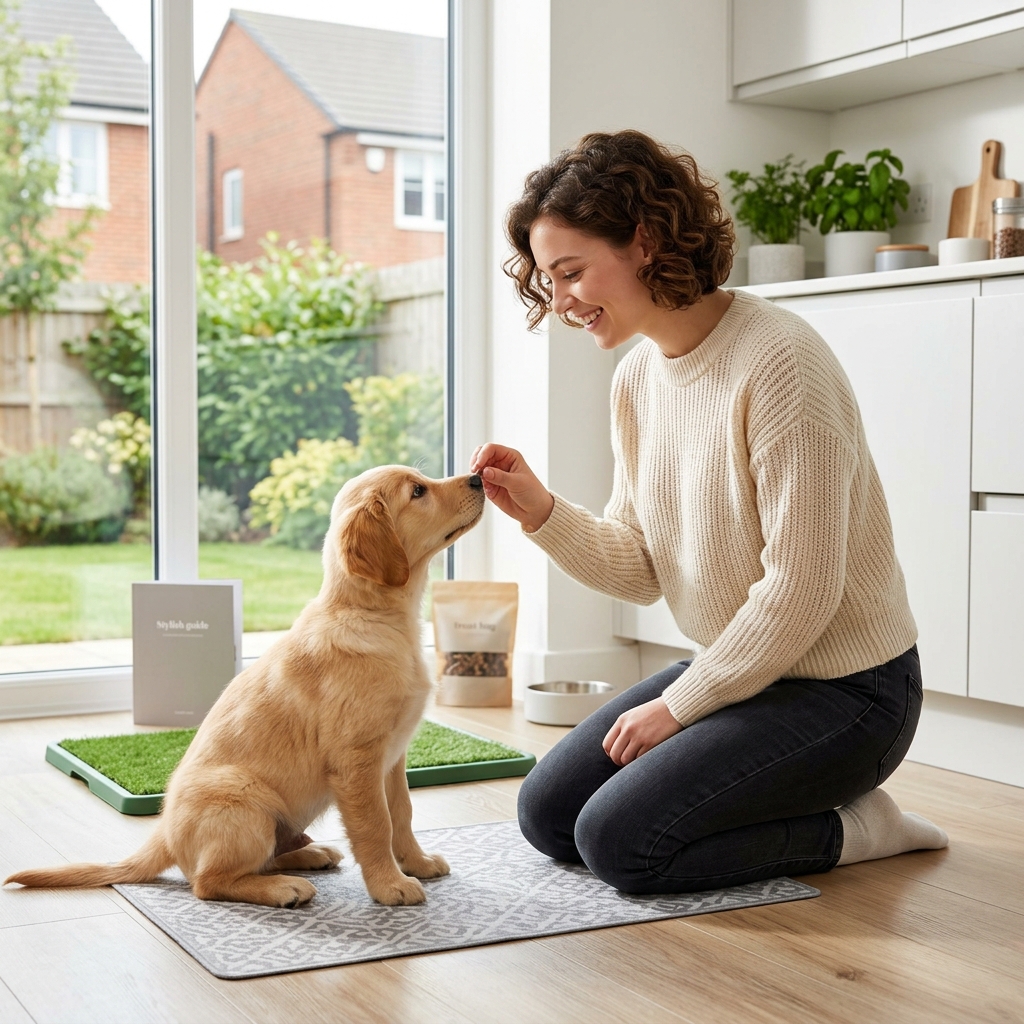
Accidents will happen. They aren’t a sign of disobedience; they’re a normal part of the learning process. Understanding your puppy’s physical limitations and responding with patience and positive reinforcement is the key to success. Factors like breed, size, diet, and activity levels also play a role in bladder control. Smaller breeds, for example, often have smaller bladders and may need more frequent potty breaks.
Essential Supplies for Potty Training
Having the right tools can make potty training significantly easier. Here’s a breakdown of must-have items:
- Puppy Pads: Useful for initial training, especially for puppies in flats or during inclement weather.
- Enzymatic Cleaner: Absolutely vital! Regular cleaners won’t eliminate the odour that attracts your puppy back to the same spot.
- Crate: A crate provides a den-like space and can be a powerful aid in potty training (more on that later).
- Lead: Essential for taking your puppy to their designated potty spot.
- High-Value Treats: Small, tasty treats are crucial for rewarding successful potty breaks.
Product Comparison: Potty Training Essentials (2026 Prices)
| Product | Price (GBP) | Key Features | Pros | Cons |
|---|---|---|---|---|
| Nature’s Miracle Advanced Stain & Odour Remover (750ml) | £12.99 | Specifically formulated to eliminate pet odours and stains. | Highly effective at removing odour, preventing repeat accidents. | Can be relatively expensive compared to standard cleaners. |
| Amazon Basics Pet Training and Puppy Pads (100 count) | £15.49 | Absorbent, leak-proof, and designed for puppy training. | Cost-effective, readily available. | Not environmentally friendly (disposable). |
| Rosewood Eco Puppy Training Crate (Medium) | £64.99 | Durable, comfortable, and promotes a sense of security. | Great for crate training and potty training. | Can be bulky to store when not in use. |
| Lily’s Kitchen Puppy Training Treats (80g) | £4.29 | Small, soft, and highly palatable for puppies. | Delicious and motivating for training. | Can be higher in calories; use in moderation. |
| Ancol Timeless Comfort Waterproof Puppy Training Mat | £22.50 | Waterproof, washable and provides a designated area for accidents. | Useful for initial training or puppies prone to accidents. | Can be cumbersome to wash. |
Choosing a Potty Spot & Establishing a Routine
Select a specific outdoor location for your puppy to use as their designated potty spot. The scent will encourage them to go there in the future. Consistency is key! Take your puppy out at key times:
- Immediately after waking up
- After every meal
- After playtime or any exciting activity
- Before bedtime
- Approximately every 2-3 hours (adjust based on age)
Use a specific cue phrase, like “Go potty,” when you take your puppy to the spot. This will eventually associate the phrase with the action.
Positive Reinforcement: The Key to Success
When your puppy eliminates outside, reward them *immediately* with enthusiastic praise, a high-value treat, or both! Timing is crucial – the reward needs to be delivered within a few seconds of the desired behaviour. Focus on positive reinforcement. Never scold or punish your puppy for accidents. Punishment creates fear and anxiety, which can hinder the training process and damage your bond. It teaches your puppy *what not to do in your presence*, not *where to go*.
Consider incorporating a clicker (like the Company of Animals Smart Clicker (£7.99)) to mark the exact moment your puppy begins to eliminate. This helps them understand precisely what behaviour is being rewarded.
Crate Training & Potty Training: A Powerful Combination
Puppies naturally avoid soiling their den. A properly sized crate (just large enough for them to stand up, turn around, and lie down) can help leverage this instinct. The crate should be a comforting space, *never* used as punishment. If your puppy has an accident in their crate, it could indicate the crate is too large or they were left in it for too long.
Take your puppy out to their potty spot immediately after removing them from the crate.
Dealing with Accidents: Clean-Up & Prevention
Accidents happen. When they do, avoid any reaction. Clean the area thoroughly with an enzymatic cleaner (like Nature’s Miracle Advanced Stain & Odour Remover (£12.99)) to eliminate all traces of odour. Regular cleaners simply mask the smell; enzymatic cleaners break down the organic compounds that attract your puppy back to the same spot.
Identify potential accident triggers. Is your puppy getting excited when visitors arrive? Do they have a full bladder after a long nap? Adjust your routine to address these triggers and prevent future accidents.
Potty Training Challenges & Troubleshooting
Submissive Urination: Some puppies may urinate when greeted or approached, often due to fear or anxiety. Avoid direct eye contact and approach them calmly and slowly.
Excitement Urination: Similar to submissive urination, this occurs when a puppy gets overly excited. Keep greetings calm and low-key.
Regressions: It’s not uncommon for puppies to have setbacks, especially during periods of stress or change. Go back to basics and reinforce the training routine.
If you’re consistently struggling with potty training, consult with a qualified dog trainer or veterinary behaviourist. They can help identify underlying issues and develop a tailored training plan.
Nighttime Potty Training
Limit your puppy’s water intake a couple of hours before bedtime. Ensure they have a final potty break right before you go to sleep. If your puppy is still having accidents overnight, you may need to set an alarm to take them out for a potty break during the night, especially when they are very young. Gradually increase the time between nighttime potty breaks as their bladder control improves.
Potty Training While You’re at Work
If you’re away from home for extended periods, you’ll need a plan. Options include:
- Puppy Pads: A temporary solution, but not ideal for long-term training.
- Dog Walker: Hiring a dog walker to provide midday potty breaks is a great option.
- Doggy Daycare: Doggy daycare provides socialization and regular potty breaks.
Ensure your puppy has access to water and a comfortable resting area while you’re away.
FAQ
Q: How long does potty training usually take?
Potty training can take anywhere from a few weeks to several months, depending on the puppy’s age, breed, and individual learning speed. Consistency and patience are key.
Q: What should I do if my puppy has an accident in the house?
Clean it up immediately with an enzymatic cleaner and avoid scolding your puppy. Focus on preventing future accidents by adjusting your routine and increasing supervision.
Q: Is punishment an effective way to potty train?
No. Punishment is counterproductive and can create fear and anxiety, hindering the training process. Positive reinforcement is far more effective.
Q: How often should I take my puppy out to potty?
As a general guideline, take your puppy out immediately after waking up, after meals, after playtime, before bedtime, and approximately every 2-3 hours. Adjust based on your puppy’s age and individual needs.
Q: Can I use a pet door to help with potty training?
Yes, a microchip pet door (like the PetSafe Staywell Deluxe Microchip Pet Door (£89.99)) can provide your puppy with independent access to the outdoors. However, ensure your garden is secure and safe before allowing unsupervised access.