
Table of Contents
As an Amazon Associate, we earn from qualifying purchases. This means we may receive a small commission at no extra cost to you when you buy through links on this page.
Why Use a Puppy Playpen?
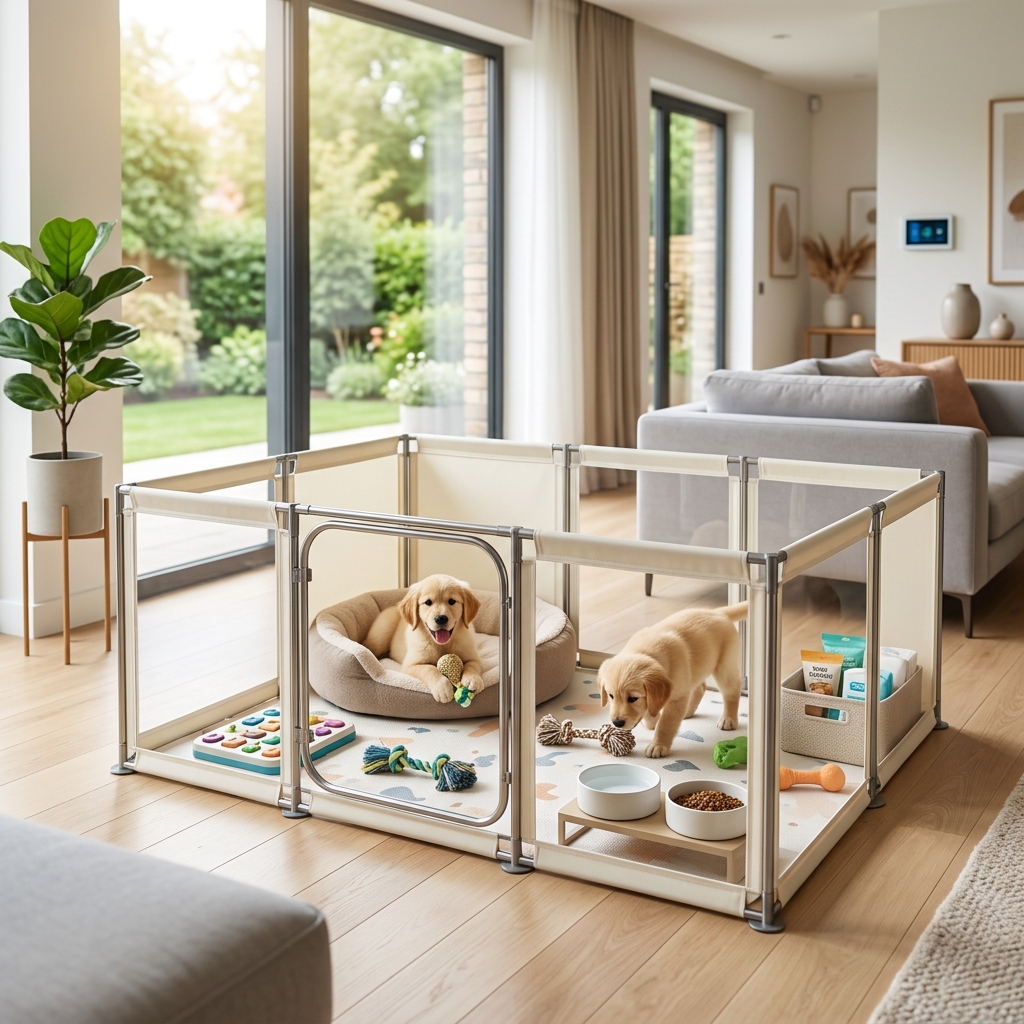
Bringing a puppy into your home is a joyful experience, but it also comes with responsibilities. A puppy playpen is an invaluable tool for any UK dog owner, particularly those living in terraced houses or flats where space is at a premium. Playpens offer a safe, contained environment for your new companion, protecting them from household hazards like electrical cables, cleaning products, and potentially dangerous furniture. Beyond safety, playpens are brilliant for house training. By confining your puppy to a manageable area, accidents are easier to clean and less likely to happen outside designated potty spots. They also help prevent destructive behaviours – puppies explore with their mouths, and a playpen protects your belongings while allowing your pup to investigate safely. In 2026, with increasing awareness of responsible pet ownership, playpens are becoming an increasingly popular and recommended solution for puppy management.
Choosing the Right Puppy Playpen: Types & Materials
The UK market in 2026 offers a wide range of puppy playpens, each with its own strengths and weaknesses. Here’s a breakdown of the common types:
Fabric Playpens
Often made with a breathable mesh and durable nylon, fabric playpens are lightweight and portable. They’re ideal for taking to friends’ houses or on holidays. However, they may not be as durable against determined chewers.
- Pros: Lightweight, portable, affordable, good ventilation.
- Cons: Less durable, may not withstand strong chewing, can be difficult to fully sanitise.
Metal Playpens
Typically constructed from powder-coated steel, metal playpens are robust and long-lasting. They’re a good choice for larger breeds or puppies prone to chewing. They can sometimes be heavier and less visually appealing.
- Pros: Durable, secure, easy to clean, good for larger breeds.
- Cons: Heavier, can be more expensive, potential for sharp edges (check for smooth welds).
Wooden Playpens
Wooden playpens offer a more aesthetically pleasing option, blending in better with home décor. They can be quite sturdy, but they’re typically more expensive and less portable than other types. Wood needs to be treated with non-toxic finishes.
- Pros: Attractive, sturdy (depending on wood type), can be more spacious.
- Cons: Expensive, less portable, requires regular maintenance, potential for splintering (ensure smooth finish).
Material Safety Standards (UK, 2026): It’s crucial to ensure any playpen you purchase meets current UK safety standards. Look for products that comply with BS EN 71-3 (safety of toys – migration of certain elements) and are free from harmful chemicals like phthalates and lead. Always check product labeling for compliance information.
Key Features to Look For in a UK Puppy Playpen (2026)
When selecting a playpen, consider these essential features:
- Height: Ensure the playpen is tall enough to prevent your puppy from jumping over it, especially as they grow. Generally, 75-90cm is sufficient for most breeds.
- Size: The size depends on your puppy’s breed and expected adult size. A small breed puppy can start with a smaller playpen (approx. 1.2m x 1.2m), while a larger breed will need more space (approx. 1.8m x 1.8m or larger).
- Gate Security: The gate should have a secure locking mechanism that your puppy cannot easily open. Double-locking mechanisms are ideal.
- Waterproof Base: A waterproof base or the option to add one is essential for containing accidents and making cleaning easier.
- Portability: If you plan to move the playpen frequently, choose a lightweight model with a foldable design.
- Ease of Assembly: Look for a playpen that is easy to assemble and disassemble without requiring special tools.
UK Safety Regulations (2026): The UK has strict regulations regarding pet product safety. Ensure the playpen is free from small parts that could be swallowed, has smooth edges, and is made from non-toxic materials.
Top Puppy Playpen Recommendations UK (2026)
Here’s a comparison of some leading puppy playpen brands available in the UK:
| Playpen | Price Range (GBP) | Material | Suitable Breed Size | Pros | Cons |
|---|---|---|---|---|---|
| Rosewood Freestanding Puppy Playpen | £65 – £120 | Metal | Small to Medium | Durable, good value, foldable | Can be a bit flimsy for very strong puppies |
| Amazon Basics 8-Panel Exercise Pen | £50 – £80 | Metal | Small to Large | Affordable, versatile, configurable | Can be a bit basic, requires a separate base |
| PetSafe Happy Play Puppy Pen | £70 – £130 | Plastic/Metal | Small to Medium | Easy to clean, durable plastic panels | Less breathable than fabric options |
| Trixie Puppy Playpen | £60 – £110 | Metal | Small to Medium | Good size, secure gate, foldable | Base sold separately |
Essential Accessories for Your Puppy Playpen
To make your puppy’s playpen a comfortable and enriching space, consider these accessories:
- Comfortable Bedding: A soft, washable puppy bed or blanket.
- Food and Water Bowls: Non-tip bowls are ideal.
- Toys: A variety of toys to keep your puppy entertained – chew toys, puzzle toys, and soft toys. (e.g. Kong Puppy Goodie Bone – £10-£15)
- Pee Pads: For house training, especially during initial stages. (Puppy Training Pads – Pack of 100 – £15-£25)
- Cleaning Supplies: An enzymatic cleaner specifically designed for pet messes.
- Behavioural Aid: A Snuggle Puppy Behavioral Aid Toy (£35-£50) can help with anxiety during the initial adjustment.
- Weatherproof Cover: If the playpen is used outdoors. (Weatherproof Puppy Playpen Cover – £30-£50)
Puppy Playpen Setup: A Step-by-Step Guide
- Choose a Location: Select a safe, well-ventilated area away from hazards. Avoid direct sunlight or drafts.
- Assemble the Playpen: Follow the manufacturer’s instructions.
- Add a Base (Optional): If using a waterproof base, ensure it fits snugly inside the playpen.
- Place Bedding and Bowls: Arrange the bedding in a comfortable corner and place the food and water bowls within easy reach.
- Add Toys: Scatter toys around the playpen to encourage play and exploration.
Playpen Training: Introducing Your Puppy to Their Safe Space
Introduce the playpen gradually and positively. Start by tossing treats inside and encouraging your puppy to enter. Feed your puppy meals inside the playpen. Initially, stay with your puppy while they’re in the playpen, gradually increasing the duration of time you leave them alone. If your puppy whines or displays anxiety, don’t immediately rush in. Wait for a moment of quiet before rewarding them with praise and a treat. Consult a qualified UK-based dog trainer for personalised advice.
Playpen Dos and Don’ts: Keeping Your Puppy Safe
- Do: Supervise your puppy while they’re in the playpen, especially initially.
- Do: Regularly check the playpen for damage or potential hazards.
- Do: Provide plenty of enrichment and stimulation within the playpen.
- Don’t: Use the playpen as punishment.
- Don’t: Leave your puppy in the playpen for excessive periods.
- Don’t: Place the playpen near dangerous items or areas.
Cleaning & Maintaining Your Puppy Playpen
Clean the playpen regularly with a pet-safe disinfectant. Wash bedding frequently. Check for and repair any damage promptly. Avoid harsh chemicals that could be harmful to your puppy. UK-approved pet cleaning products are readily available at most pet stores.
Troubleshooting Common Puppy Playpen Problems
- Escaping: Ensure the gate is securely locked. If your puppy is a determined escape artist, consider a more robust playpen or adding extra security measures.
- Destructive Chewing: Provide plenty of appropriate chew toys. If your puppy is chewing on the playpen itself, supervise them closely and redirect their attention to a chew toy.
- Anxiety: Use positive reinforcement techniques, provide a comfortable bedding, and consider a Snuggle Puppy to help alleviate anxiety. If anxiety persists, consult your vet.
FAQ
How long can I leave my puppy in a playpen?
Puppies shouldn’t be left in a playpen for extended periods. As a general guideline, no more than 2-4 hours at a time, depending on their age and bladder control. Regular potty breaks and interaction are essential.
What size playpen do I need for a Labrador puppy?
Labrador puppies grow quickly! Start with at least a 1.8m x 1.8m playpen, and consider a larger size as they mature. You’ll want enough space for them to comfortably stand, turn around, and play.
Are fabric playpens safe for chewers?
Fabric playpens are generally not recommended for puppies who are strong chewers. They can easily tear the fabric and potentially ingest it. A metal playpen is a more durable option in this case.
How do I stop my puppy from crying in the playpen?
Crying is common initially. Ignore the crying if you know your puppy’s needs are met (potty break etc). Reward quiet behaviour with treats. Introduce the playpen gradually and associate it with positive experiences.
Where can I find UK safety standards information for pet products?
You can find information on UK pet product safety standards on the website of the Pet Industry Federation (PIF) and the Trading Standards Institute.