
Table of Contents
As an Amazon Associate, we earn from qualifying purchases. This means we may receive a small commission at no extra cost to you when you buy through links on this page.
Why Elderly Dogs Need Help with Stairs
As our canine companions age, their mobility often declines. Common age-related issues like arthritis, hip dysplasia, and general muscle weakness can make navigating stairs a significant challenge – and potentially painful experience. These conditions cause inflammation and stiffness in joints, making each step difficult. What once was a simple activity can become a source of anxiety and discomfort for your beloved pet. Ignoring these needs can lead to a decrease in activity, further muscle loss and a reduced quality of life. Dog stairs offer a solution, providing a safe and manageable way for senior dogs to access their favourite spots without straining their bodies. Keeping them active, even with limited mobility, is crucial for their physical and mental wellbeing.
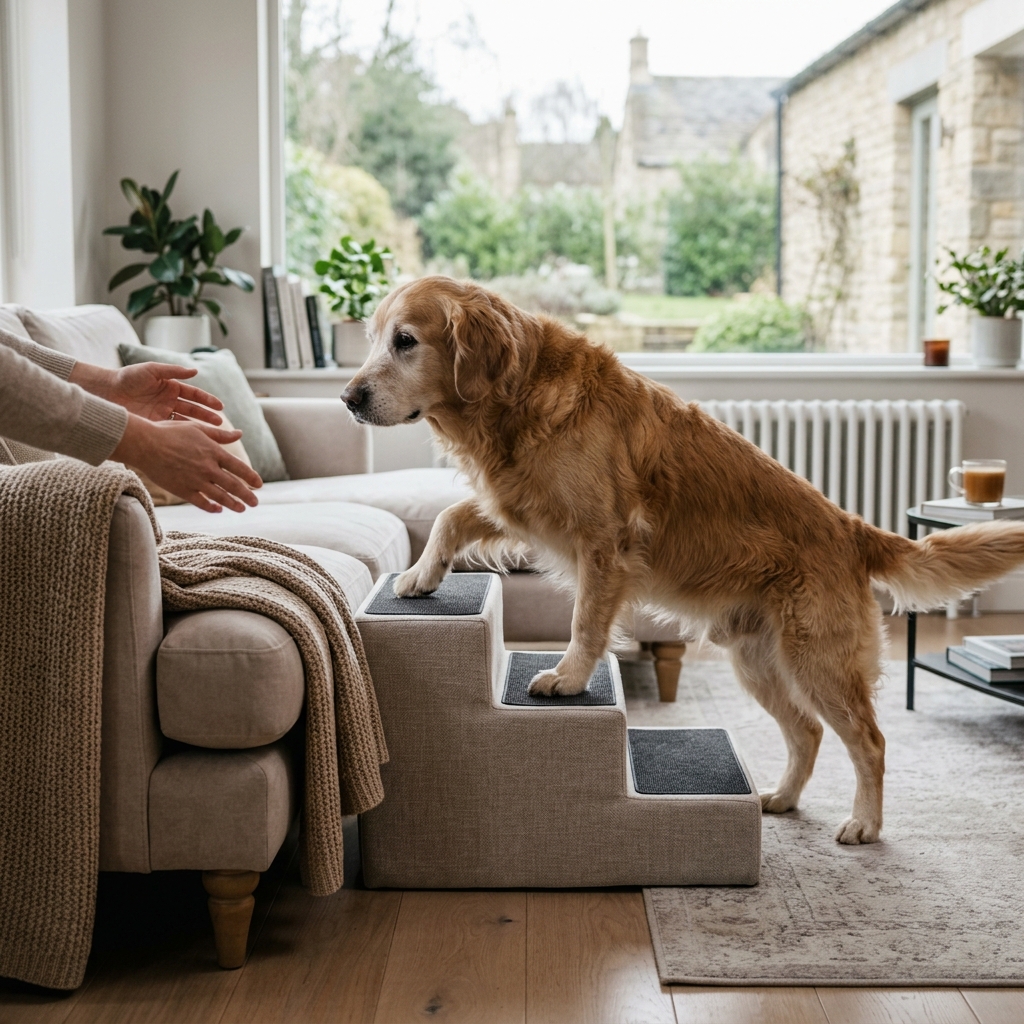
Benefits of Using Dog Stairs for Senior Dogs
Investing in dog stairs can offer a wealth of benefits for your elderly dog:
- Reduced Strain on Joints: The gentle incline of stairs significantly reduces the impact on hips, knees, and spine compared to jumping or attempting to climb regular stairs.
- Increased Independence: Stairs allow your dog to maintain access to places they love – the sofa for a cuddle, the bed for a nap, or even just up to greet you – without needing constant assistance.
- Continued Access to Favourite Spots: Maintaining access to familiar and comforting locations reduces stress and anxiety, contributing to a happier and more relaxed dog.
- Preventing Falls & Injuries: Attempting to jump or climb can easily result in falls, especially for dogs with weakened muscles or compromised balance. Stairs provide a stable and secure alternative.
- Improved Mental Wellbeing: Being able to participate in daily life and maintain a level of independence boosts a senior dog’s confidence and cognitive function.
Types of Dog Stairs Available in the UK
The UK market offers several types of dog stairs, each with its own advantages and disadvantages:
Traditional Stairs
These are the most common type and generally feature a fixed set of steps. They offer stability and are suitable for larger dogs.
- Pros: Very stable, good for larger breeds, often aesthetically pleasing.
- Cons: Can take up a lot of space, not portable.
Ramp Stairs (Combo)
Some models combine stairs with a ramp section, offering a gentler incline for particularly challenged dogs.
- Pros: Provides options for different levels of mobility, easier for dogs with severe arthritis.
- Cons: Can be bulky, more expensive than standard stairs.
Folding Stairs
Designed for portability and storage, folding stairs are ideal for travel or smaller homes.
- Pros: Easy to store, portable, convenient for travel.
- Cons: May be less stable than fixed stairs, weight capacity may be lower.
Adjustable Height Stairs
These offer flexibility to accommodate different furniture heights.
- Pros: Versatile, can be used with various sofas and beds, adaptable as your dog’s needs change.
- Cons: Can be more expensive, the adjustment mechanism needs to be reliable.
Key Features to Consider When Buying Dog Stairs
Choosing the right dog stairs requires careful consideration of several factors:
- Height: Crucially, the stairs must reach the desired height of your furniture.
- Width & Depth of Steps: Wider and deeper steps are more comfortable and secure, especially for larger breeds.
- Weight Capacity: Ensure the stairs can safely support your dog’s weight.
- Materials: Carpeted steps offer better grip and cushioning. Wood and plastic stairs are easier to clean but may require a non-slip surface.
- Stability: The stairs should be robust and not wobble when your dog uses them.
- Non-Slip Base: Essential to prevent sliding on hard floors.
- Ease of Cleaning: Consider how easy it will be to remove pet hair and dirt.
Top 5 Dog Stairs for Elderly Dogs in the UK (2026 Review)
Here’s a comparison of five leading dog stair models available in the UK in 2026:
| Product | Price (GBP) | Height Reach | Weight Capacity | Pros | Cons | Suitability |
|---|---|---|---|---|---|---|
| PetSafe Happy Ride Folding Dog Stairs | £89.99 | 45cm | 80kg | Lightweight, foldable, good for travel, sturdy construction. | Can be slightly wobbly on very smooth surfaces. | Small to medium breeds, travel. |
| Amazon Basics Padded Pet Stairs | £54.99 | 40cm | 68kg | Affordable, padded steps for comfort, compact design. | Not ideal for very large dogs, limited height reach. | Small to medium breeds. |
| Rosewood Dog Stairs – 3 Step | £65.00 | 40cm | 60kg | Durable construction, carpeted steps for grip, good value. | Fixed design, less portable. | Small to medium breeds. |
| PawHut 3-Step Pet Staircase | £72.99 | 50cm | 70kg | Stylish design, sturdy construction, covered steps. | Can be a bit bulky. | Small to medium sized breeds |
| TRIXIE Pet Steps – 3 Step | £95.50 | 45cm | 80kg | Robust build, non-slip feet, carpeted surface. | More expensive than some alternatives. | Medium to large breeds. |
Measuring Your Dog & Choosing the Right Stair Height
Accurate measurement is vital. Here’s a step-by-step guide:
- Measure your dog’s height: Have your dog stand normally. Measure from the floor to the top of their shoulder.
- Measure the furniture height: Measure from the floor to the top of the sofa or bed cushion.
- Calculate the difference: Subtract your dog’s shoulder height from the furniture height. This is the rise your stairs need to cover.
- Consider the ‘run’: The ‘run’ is the depth of each step. A shallower run (around 15-20cm) is easier for older dogs.
- Step Count: Divide the total rise by the run to determine the number of steps needed. Fewer, wider steps are generally better for senior dogs.
Dog Stair Safety Tips
- Introduce gradually: Don’t force your dog. Encourage them with treats and praise.
- Start with low heights: Begin with a single step or a very low incline.
- Supervise initially: Ensure your dog is comfortable and confident before leaving them unsupervised.
- Non-slip surface: Ensure the stairs are stable and have a non-slip surface.
- Regular cleaning: Keep the stairs clean and free of debris.
Alternatives to Dog Stairs: Ramps & Orthopedic Dog Beds
Ramps offer a gentler incline than stairs and can be a good option for dogs with severe mobility issues. However, they require more floor space. Orthopedic dog beds, while not a substitute for stairs, provide crucial support and cushioning for joints, alleviating pain and improving sleep quality.
Caring for Your Dog Stairs
Maintenance varies depending on the material:
- Carpeted stairs: Vacuum regularly to remove pet hair and dirt. Spot clean stains promptly.
- Wood stairs: Wipe down with a damp cloth. Avoid harsh chemicals.
- Plastic stairs: Clean with mild soap and water.
Frequently Asked Questions (FAQs)
How much do dog stairs typically cost in the UK?
Prices range from around £50 for basic models to over £100 for more robust or adjustable stairs.
How durable are dog stairs?
Durability depends on the materials and construction. Look for stairs made from sturdy materials with a good weight capacity.
Are dog stairs suitable for all breeds?
Dog stairs can benefit most breeds, but the size and height need to be appropriate for your dog’s size and mobility level. Large and giant breeds will need more robust stairs.
What if my dog is afraid of the stairs?
Patience is key. Use positive reinforcement (treats, praise) and start with very low steps. Never force your dog onto the stairs.
How often should I replace my dog stairs?
With proper care, dog stairs can last for several years. However, inspect them regularly for signs of wear and tear, and replace them if they become unstable or damaged.