
Table of Contents
As an Amazon Associate, we earn from qualifying purchases. This means we may receive a small commission at no extra cost to you when you buy through links on this page.
Why Puzzle Toys are Essential for Your Dog’s Wellbeing
We all want our canine companions to live happy, fulfilling lives. While walks, playtime, and cuddles are crucial, providing mental stimulation is just as important, and that’s where dog puzzle toys come in. Beyond simple entertainment, these toys offer a wealth of benefits for dogs of all ages and breeds. They actively prevent destructive behaviours born from boredom, such as chewing furniture or excessive barking. Puzzle toys are fantastic for reducing anxiety, particularly in dogs prone to separation anxiety, by providing a focused and engaging activity.
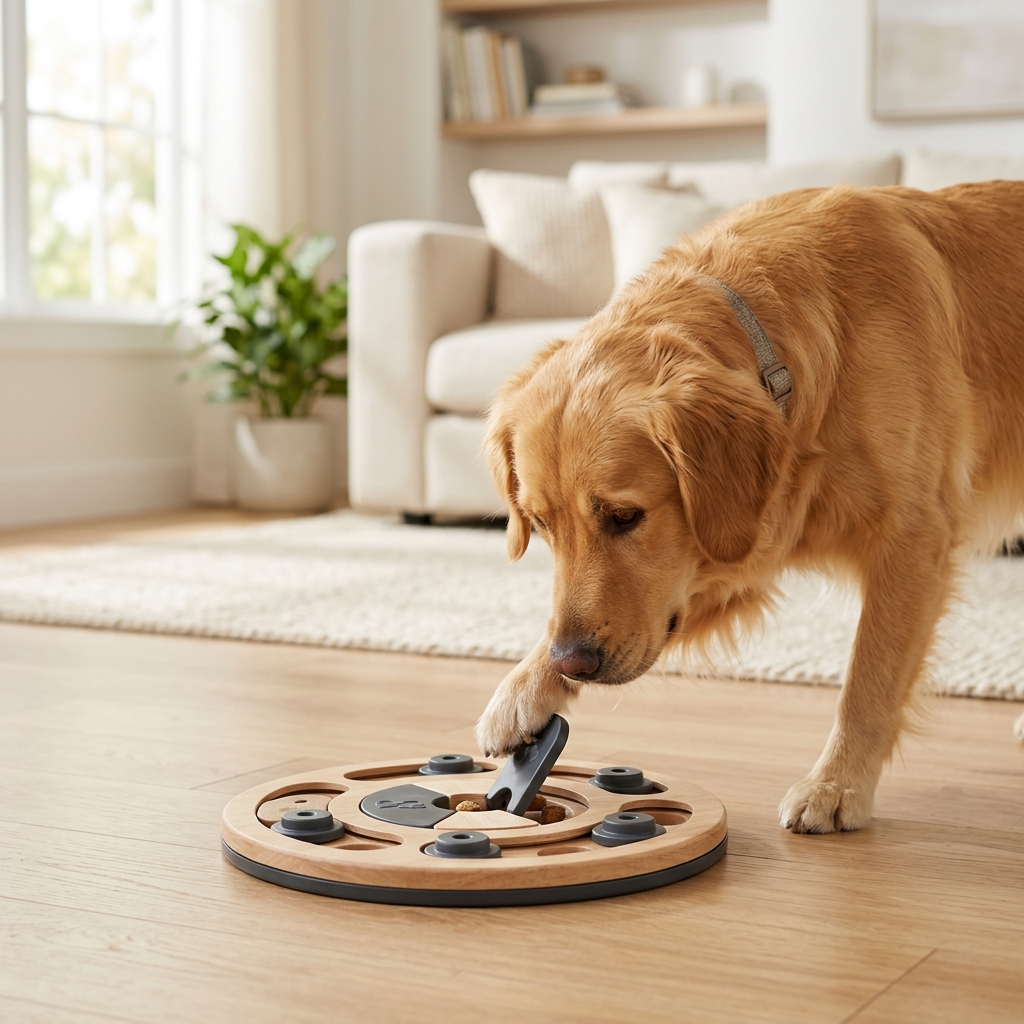
The core benefit lies in cognitive enrichment. Just like humans, dogs need to exercise their brains. Puzzle toys challenge them to problem-solve, encouraging critical thinking and keeping their minds sharp. This is especially vital as dogs age. Canine Cognitive Dysfunction (CCD), often referred to as dog dementia, is a growing concern as our dogs live longer. Regular mental stimulation, provided by puzzle toys, can help slow the progression of CCD and improve quality of life in senior dogs.
Understanding Different Types of Dog Puzzle Toys
The world of dog puzzle toys is surprisingly diverse. Here’s a breakdown of the main categories:
Food Dispensing Puzzles
These toys require your dog to manipulate the toy to release hidden treats or kibble. They slow down fast eaters and provide a mental workout. Examples include the Kong Wobbler and Nina Ottosson by Outward Hound Dog Brick.
Hide-and-Seek Puzzles
These involve hiding treats under flaps, in drawers, or within compartments. They tap into a dog’s natural foraging instincts. The Trixie Pet Products Dog Activity Flip Board is a popular example.
Rotating Puzzles
These puzzles typically feature rotating layers or sections that need to be moved in a specific order to reveal hidden treats. The Gamewright Dog Tornado Puzzle Toy demonstrates this type.
Interactive Treat Balls
These are hollow balls with holes that dispense treats as the dog rolls them around. They encourage physical activity alongside mental stimulation. The PetSafe Busy Buddy Barnacle falls into this category.
Snuffle Mats
These mats have fabric strips where you hide kibble or treats. Dogs use their nose to ‘snuffle’ and find the hidden rewards. The SnuffleMat Dog Puzzle Mat and PAW5 Wooly Snuffle Mat are leading choices.
Choosing the Right Puzzle Toy: A Breed & Age Guide
Not all puzzle toys are created equal, and the best choice for your dog will depend on their individual needs and abilities.
Breed Considerations: Herding breeds (Border Collies, Australian Shepherds) often excel at more complex puzzles, as they are naturally intelligent and enjoy a challenge. Scent hounds (Beagles, Bloodhounds) will thrive with snuffle mats and hide-and-seek puzzles, leveraging their incredible sense of smell. Brachycephalic breeds (Pugs, Bulldogs) might struggle with puzzles requiring a lot of physical manipulation, so simpler options are best.
Age Considerations: Puppies need simpler puzzles to start with, focusing on basic concepts like lifting flaps. Adult dogs can handle more complex challenges. Senior dogs may benefit from puzzles that don’t require a lot of physical exertion, and are easier to manipulate.
Experience Level: Start with easy puzzles and gradually increase the difficulty as your dog gains confidence. Observe your dog’s reaction – frustration is a sign to simplify the puzzle.
Top 10 Dog Puzzle Toys for 2026 (UK Market)
Here’s our selection of the best dog puzzle toys available in the UK as of 2026:
| Toy Name | Price (GBP) | Difficulty | Durability | Pros | Cons |
|---|---|---|---|---|---|
| Nina Ottosson by Outward Hound Dog Brick Interactive Treat Puzzle | £25 – £40 | Medium | Good | Multiple compartments, adjustable difficulty, good for beginners. | Plastic construction, may be chewed by strong chewers. |
| Trixie Pet Products Dog Activity Flip Board | £30 – £45 | Medium-High | Very Good | Variety of challenges, sturdy construction, mentally stimulating. | Can be difficult for some dogs to master. |
| Kong Wobbler Treat Dispensing Dog Toy | £20 – £30 | Easy-Medium | Excellent | Durable, classic design, encourages activity. | Can be noisy on hard floors. |
| PetSafe Busy Buddy Barnacle Treat Dispensing Dog Toy | £15 – £25 | Medium | Good | Adjustable treat dispensing, keeps dogs engaged. | Can be tricky to clean thoroughly. |
| SnuffleMat Dog Puzzle Mat | £35 – £50 | Easy | Good (washable) | Excellent for scent work, calms anxious dogs. | Requires regular washing. |
| PAW5 Wooly Snuffle Mat | £28 – £40 | Easy | Good (washable) | Deep pile encourages thorough snuffling, good for all ages. | Can shed wool initially. |
| Northmate Bravo Interactive Dog Puzzle | £40 – £55 | Medium-High | Very Good | Multiple hiding spots, adjustable difficulty, durable. | Requires some initial setup. |
| iDig GO Digging Dog Puzzle Toy | £35 – £45 | Medium | Good | Satisfies digging instincts, good for energetic dogs. | Can be messy with kibble or treats. |
| Benebone Wishbone Durable Dog Chew Toy | £10 – £20 | Easy | Excellent | Long-lasting, durable, can be used to hide treats between the prongs. | Not a traditional puzzle, more of a chew with a puzzle element. |
| Gamewright Dog Tornado Puzzle Toy | £20 – £30 | Medium-High | Good | Rotating layers provide a good challenge, adjustable difficulty. | Plastic construction, may be chewed by strong chewers. |
DIY Dog Puzzle Toy Ideas (Budget-Friendly Options)
You don’t need to spend a fortune on puzzle toys! Here are some simple DIY options:
- Cardboard Box Puzzle: Hide treats inside a cardboard box and fold the flaps loosely. Your dog needs to figure out how to open the box.
- Muffin Tin Puzzle: Place treats in some of the muffin tin cups and cover them with tennis balls or toys.
- Towel Roll Puzzle: Roll treats up inside a towel and tie the ends loosely.
- Plastic Bottle Puzzle: Cut holes in a plastic bottle (ensure edges are smooth and safe) and fill with kibble.
Important: Always supervise your dog when using DIY puzzle toys to ensure they don’t ingest any materials.
Troubleshooting: What to Do If Your Dog Gets Frustrated
It’s common for dogs to get frustrated with puzzle toys, especially when starting out. Here’s how to help:
- Positive Reinforcement: Encourage your dog with praise and treats when they make progress.
- Simplify the Puzzle: Make the puzzle easier by removing layers or showing them how to solve the first step.
- Avoid Frustration: If your dog is consistently getting frustrated, take a break and try again later with a simpler puzzle.
- Recognize Stress: Look for signs of stress, such as yawning, lip licking, or panting, and stop the activity if you notice them.
Cleaning and Maintenance of Dog Puzzle Toys
Keeping puzzle toys clean is essential for your dog’s health. Wash plastic toys with warm soapy water. Fabric toys (like snuffle mats) can usually be machine washed. Regularly inspect toys for damage and replace them if necessary. Pay attention to any areas where food accumulates, as these are breeding grounds for bacteria.
Future Trends in Dog Puzzle Toy Technology (2026 & Beyond)
The future of dog puzzle toys is exciting! We’re seeing the emergence of:
- App-Controlled Puzzles: Puzzles that can be controlled remotely via a smartphone app, allowing you to adjust the difficulty and monitor your dog’s progress.
- Smart Toys with Progress Tracking: Toys that track your dog’s puzzle-solving performance and provide insights into their cognitive abilities.
- Sustainably-Sourced Materials: A growing demand for puzzle toys made from eco-friendly and sustainable materials, such as recycled plastics and bamboo.
- Personalised Puzzles: Puzzle toys tailored to a dog’s breed, age and cognitive ability, creating a unique learning experience.
FAQ
Q: How often should I give my dog puzzle toys?
Ideally, offer puzzle toys daily for at least 10-15 minutes. Incorporate them into their routine, such as during mealtimes or as a calming activity before you leave the house.
Q: My dog gives up easily on puzzle toys. What can I do?
Start with very simple puzzles and gradually increase the difficulty. Show them how to solve the first step and offer plenty of encouragement. A high-value treat can also help motivate them!
Q: Are puzzle toys suitable for all dogs?
Generally, yes. However, dogs with certain medical conditions (e.g., dental problems) may not be able to use some puzzle toys. Always consult with your vet if you have any concerns.
Q: How do I know when a puzzle toy is too difficult for my dog?
If your dog shows signs of frustration (yawning, lip licking, giving up quickly), the puzzle is likely too challenging. Simplify it or choose an easier one.
Q: Can I use puzzle toys with my dog’s regular food?
Yes! Using their usual kibble or treats is perfectly fine. It makes the puzzle even more rewarding.