
Table of Contents
Why Does Your Dog Need a First Aid Kit?
As responsible dog owners, we all want to ensure our furry companions live long, healthy, and happy lives. Accidents happen, even with the most careful supervision. Whether it’s a cut paw on a woodland walk, a sting from a wasp in the garden, or a minor scrape during playtime, being prepared with a well-stocked dog first aid kit can be the difference between a manageable incident and a serious emergency. The initial minutes following an injury are critically important. Providing immediate first aid can stabilise your dog, reduce pain, and potentially prevent a condition from worsening before you can reach a veterinary professional. In rural areas, or during busy veterinary periods, response times can be extended; making self-reliance even more important.
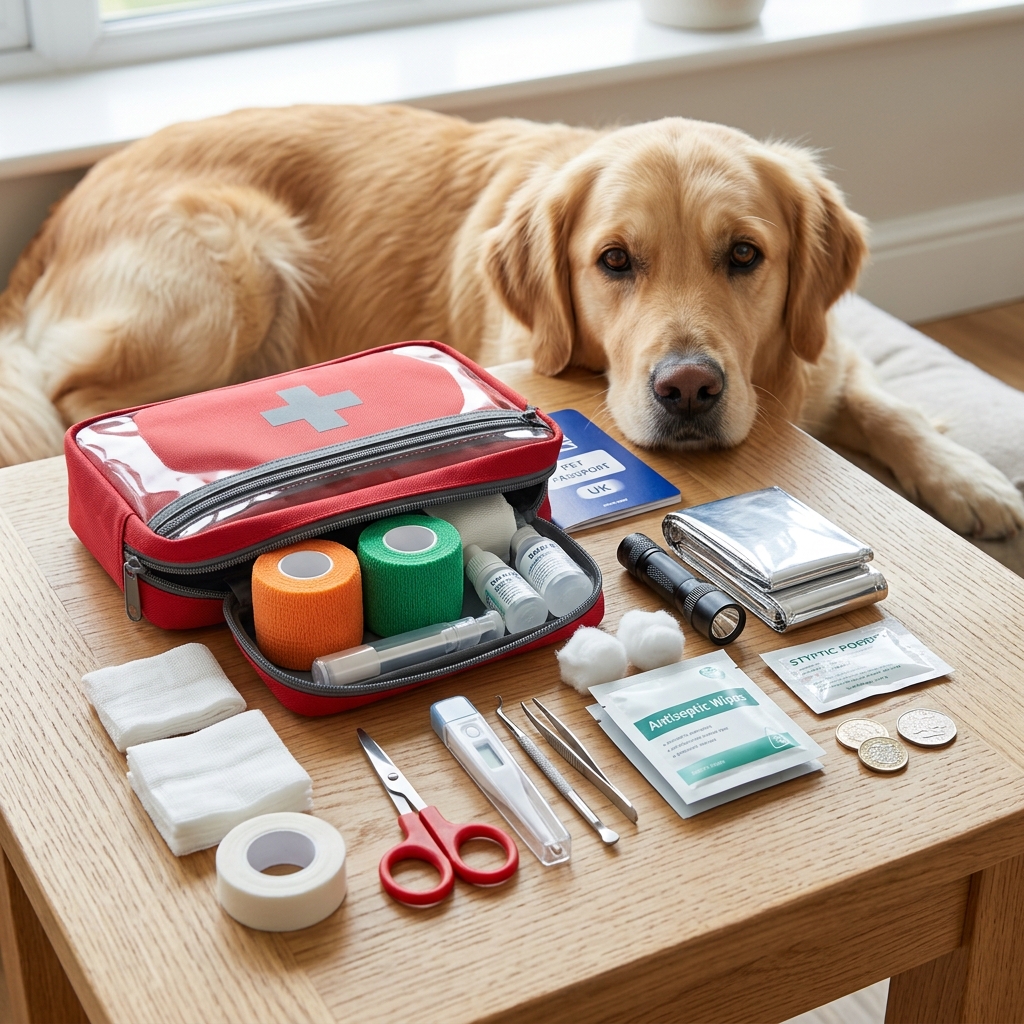
Essential Items for Your Dog First Aid Kit (UK Specific)
Building a comprehensive dog first aid kit doesn’t have to be expensive. Here’s a breakdown of the essential items, with quantities and considerations specific to the UK environment:
- Sterile Gauze Pads: Assorted sizes (5cm x 5cm, 10cm x 10cm) – at least 10 of each. For cleaning and covering wounds.
- Non-Stick Wound Pads: 5cm x 5cm & 10cm x 10cm – 5 of each. Essential for preventing bandages from sticking to wounds.
- Bandage Roll (Vet Wrap): 7.5cm width, 4.5m length – 2 rolls. Self-adhesive bandage for securing dressings.
- Self-Adhesive Bandage (Cohesive Bandage): 5cm width, 4.5m length – 1 roll. Useful for lighter support and securing dressings.
- Low-Adherent Dressing: 10x20cm – 2 dressings. For larger wounds where a non-stick base is needed.
- Chlorhexidine Antiseptic Solution: 100ml. For cleaning wounds. Dilute as directed, never use full strength.
- Sterile Saline Solution: 250ml. For flushing eyes and wounds.
- Styptic Powder or Pencil: For stopping bleeding from nail trims.
- Blunt-Ended Scissors: For cutting bandages and removing fur around wounds.
- Tweezers: For tick removal (essential in the UK due to tick prevalence and Lyme disease risk).
- Disposable Gloves: Latex-free, at least 6 pairs. For hygiene and protection.
- Digital Thermometer (Rectal): For checking temperature. A normal dog temperature is 38.3°C – 39.2°C.
- Lubricant: Water-based, for use with the thermometer.
- Eye Wash: Sterile solution for flushing irritants from the eyes.
- Emergency Blanket: Foil blanket to help maintain body temperature.
- Muzzle: Even the friendliest dog may bite when in pain. Essential for safety. (Ensure the dog can still pant).
- Dog First Aid Guide: A basic guide to refresh your knowledge.
Wound Care: Cleaning & Bandaging
Cleaning a wound is the first crucial step. Gently flush the area with sterile saline solution to remove dirt and debris. Then, apply diluted chlorhexidine antiseptic solution (follow product instructions carefully). Once clean, apply a non-stick wound pad, followed by gauze pads, and secure with a bandage roll or self-adhesive bandage. Avoid bandaging too tightly, as this can cut off circulation. Important: Do *not* bandage deep wounds, puncture wounds, or wounds with exposed bone – these require immediate veterinary attention. Monitor the wound for signs of infection (redness, swelling, pus, heat) and consult a vet if concerned.
Controlling Bleeding in Dogs
If your dog is bleeding, act quickly. Apply direct pressure to the wound using a clean gauze pad. Elevate the injured limb if possible. If bleeding continues, apply more pressure and consider using styptic powder or a styptic pencil for minor cuts (like nail bleeding). Severe bleeding (bright red, spurting blood, or significant blood loss) requires immediate veterinary attention. Do not attempt to treat severe bleeding yourself.
Dealing with Bites, Stings & Allergic Reactions
Insect Bites & Stings: Remove any stingers carefully with tweezers. Wash the area with cool water. Monitor for signs of allergic reaction (see below). In the UK, be aware of the risk of tick-borne diseases like Lyme disease. Remove ticks promptly and correctly using a tick removal tool.
Minor Animal Bites: Clean the wound thoroughly with saline and chlorhexidine. Monitor for signs of infection. If the bite is deep, puncture-like, or from an unknown animal, seek veterinary attention.
Allergic Reactions: Signs include facial swelling, hives, difficulty breathing, vomiting, and collapse. Anaphylaxis is a life-threatening emergency. Contact your vet immediately. Disclaimer: Antihistamines can *sometimes* be used under the guidance of a veterinarian, but should *never* be administered without professional advice. Do not self-medicate your dog.
Other Important First Aid Supplies
Beyond the basics, these items can be invaluable:
- Blunt-Ended Scissors: Crucial for safely removing fur around wounds and cutting bandages.
- Digital Thermometer: Essential for monitoring your dog’s temperature. Insert gently into the rectum, lubricated with water-based lubricant. Wait for a stable reading.
- Lubricant (Water-Based): Make thermometer use more comfortable.
- Eye Wash: For flushing out irritants without causing further damage.
- Disposable Gloves: Protect yourself and your dog from infection.
- Muzzle: A safety precaution, even for generally friendly dogs, when they are injured and in pain.
Creating a Portable Dog First Aid Kit
Your first aid kit should be easily accessible. Consider these options:
- Home Kit: A larger, more comprehensive kit kept in a central location.
- Car Kit: A smaller, portable kit for travel.
- Walk Kit: A very basic kit (gauze, antiseptic wipes, tweezers) carried in a backpack or bum bag on walks.
Choose a durable, waterproof bag with clear labeling (“Dog First Aid Kit”). Regularly check the kit to ensure supplies are not expired and are in good condition.
Dog First Aid Training & Resources (UK)
A first aid kit is only as good as the person using it. Consider taking a dog first aid course. Here are some UK resources:
- British Red Cross: Offers canine first aid courses. https://www.redcross.org.uk/
- St John Ambulance: Also provides dog first aid training. https://www.sja.org.uk/
- Animal Welfare Foundation: Offers online resources and courses.
Remember to check expiry dates on all medications and supplies in your kit at least twice a year.
Comparison of Pre-Made Dog First Aid Kits (2026)
| Product Name | Price (GBP) | Contents Highlights | Portability | Overall Rating (out of 5) |
|---|---|---|---|---|
| Pet First Aid Kit – Adventure Medical Kits | 45.99 | Comprehensive, includes wound irrigation syringe, blister treatment. | Good – compact and durable bag. | 4.5 |
| Pawfect First Aid Kit for Dogs | 32.5 | Good basic coverage, includes tick remover. | Average – larger bag. | 4.0 |
| Beco Pets Travel First Aid Kit | 28.0 | Eco-friendly materials, compact size. | Excellent – very portable. | 3.5 |
| VetUK Dog First Aid Kit | 39.99 | Veterinarian-approved contents, includes wound spray. | Good – sturdy bag. | 4.2 |
| Animed Veterinary Wound Spray 200ml (Separate Purchase) | 12.75 | Advanced wound care spray. | N/A – Add to existing kit. | 4.8 |
FAQ
- How often should I check my dog first aid kit? At least twice a year, to check expiry dates and ensure all items are present and in good condition.
- Can I use human antiseptic on my dog? Some human antiseptics are toxic to dogs. Stick to veterinary-approved products like diluted chlorhexidine.
- What should I do if my dog won’t let me examine their injury? Prioritize your safety. Use a muzzle (if safe to do so) and seek veterinary attention. Do not risk being bitten.
- Is it necessary to take a dog first aid course? Highly recommended! A course will provide you with the knowledge and confidence to handle emergencies effectively.
- Where can I find a 24/7 vet in the UK? Vets Now operates 24/7 clinics in many locations. You can find your nearest clinic on their website: https://www.vetsnowuk.com/